
The Supreme Court of India has expressed support for a Uniform Civil Code while reviewing a case challenging provisions of the 1937 Muslim Personal Law
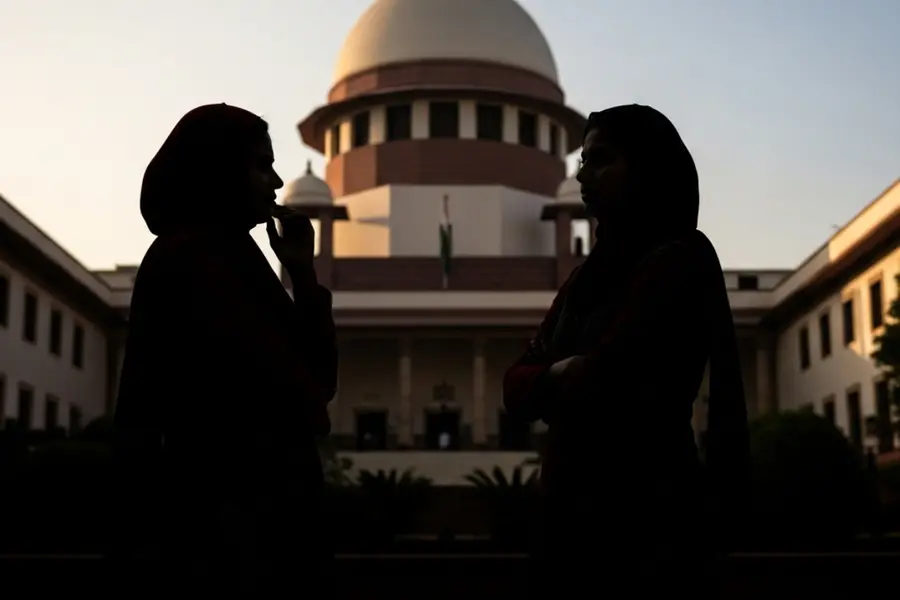
New Delhi: India’s Supreme Court on Tuesday, highlighted the need for a Uniform Civil Code (UCC) while hearing a petition challenging discriminatory aspects of the 1937 Muslim Personal Law (Shariat) Act. The case focuses on inheritance rights for Muslim women, which are currently unequal compared to men.
India’s Supreme Court has signalled strong support for a Uniform Civil Code (UCC) while reviewing a case challenging the 1937 Muslim Personal Law (Shariat) Act. The case revolves around inheritance rights, highlighting that Muslim women often receive unequal shares compared to men under current law. Chief Justice of India Surya Kant and Justice Joymalya Bagchi acknowledged the importance of ensuring fairness, but also stressed that reforms must be handled carefully to avoid legal confusion.
Also Read

Why Muslim women are challenging the Shariat Act
The petitioners argue that certain provisions of the 1937 Shariat Act deny Muslim women equal inheritance rights, which they claim is discriminatory and unconstitutional. Advocate Prashant Bhushan, representing the petitioners, referred to the landmark 2017 Shayara Bano judgment that struck down triple talaq, asserting that the Court has previously intervened when personal laws violated fundamental rights.
Bhushan emphasised that inheritance is a civil matter and should not be protected under Article 25 of the Constitution, which guarantees religious freedom. “We cannot have a situation where Muslim women are treated differently from Muslim men in matters of inheritance,” he told the bench.
Court warns against creating a legal vacuum
While the judges were sympathetic to the petitioners, they cautioned against striking down the Shariat Act without a clear replacement. CJI Surya Kant said, “In our over-anxiety for reforms, we may end up depriving women and they might get less than what they already have.” The bench explored whether existing civil laws, like the Indian Succession Act, could temporarily cover inheritance if the Shariat provisions were removed, but stressed the need for careful legislative planning.
The role of the legislature and Uniform Civil Code
Justice Bagchi highlighted that reforming personal laws is ultimately a task for the legislature. The Constitution’s Directive Principles recommend a Uniform Civil Code, which would replace religion-specific personal laws with a single set of rules for marriage, divorce, inheritance, and adoption. “Judicial intervention is limited. The answer lies in legislative wisdom,” she observed.
CJI Kant reinforced this, noting that a uniform code could address inconsistencies, such as unequal rules on bigamy and marriage rights across different communities. The judges reiterated that legislative enactment of the UCC is essential for nationwide equality and long-term legal clarity.
What happens next
The Court asked the petitioners to amend their filing with suggestions on remedies if the discriminatory inheritance provisions are struck down. The hearing was adjourned, leaving open the possibility of judicial intervention to grant immediate relief to Muslim women, while legislative action is awaited for broader reforms.
Why this matters
This case is more than a legal dispute—it touches the everyday lives of millions of Indian women. A Uniform Civil Code could ensure that every citizen, regardless of religion, enjoys equal rights in family and inheritance matters. It also reflects India’s ongoing struggle to balance religious practices with constitutional guarantees of equality. For Muslim women, this could mark a historic step toward justice and financial security.
Published: 10 Mar 2026, 03:27 pm IST
Related Topics
Disclaimer: Kindly avoid objectionable, derogatory, unlawful and lewd comments, while responding to reports. Such comments are punishable under cyber laws. Please keep away from personal attacks. The opinions expressed here are the personal opinions of readers and not that of Mathrubhumi.