
Amid rising environmental concerns, the Supreme Court has stepped in to examine the controversial redefinition of the Aravalli Hills, scheduling a suo motu hearing before a Special Vacation Bench.
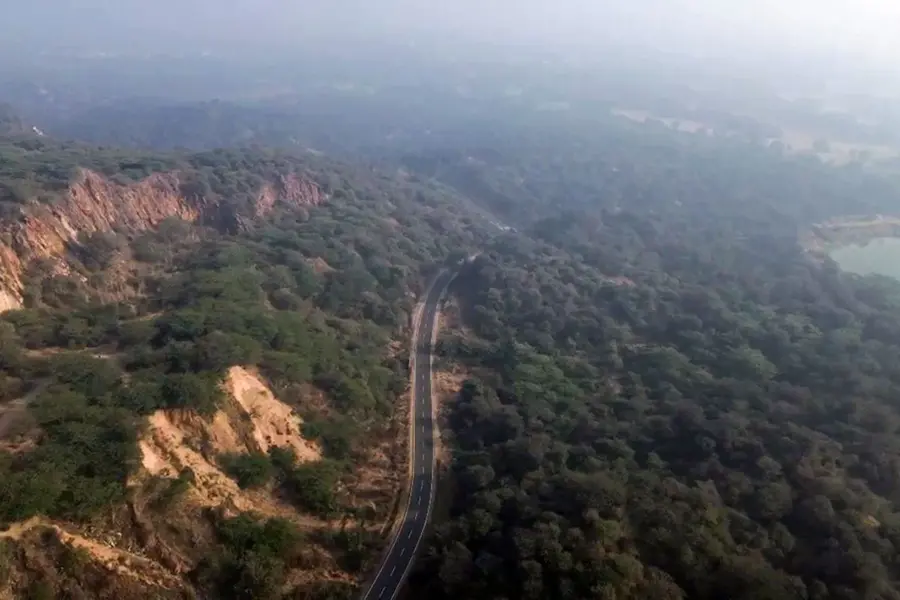
The Supreme Court of India has taken suo motu cognisance of growing concerns over the controversial redefinition of the Aravalli Hills and Ranges, scheduling a hearing for Monday, 29 December 2025.
A three-judge Vacation Bench led by Chief Justice of India Surya Kant, along with Justices JK Maheshwari and AG Masih, will hear the matter titled “In Re: Definition of Aravalli Hills and Ranges and Ancillary Issues.”
This intervention comes amid escalating protests from environmental groups, civil society, and political leaders who argue that the new definition could weaken protection for ecologically sensitive parts of the Aravalli range and potentially open them up to expanded mining and construction activities.
Under the revised criteria accepted by the court in November 2025, any landform in designated Aravalli districts with an elevation of at least 100 metres above the local relief is considered an Aravalli Hill, and two or more such hills within 500 metres of each other constitute an Aravalli Range.
Critics say this height-based classification risks excluding many lower but ecologically important hillocks from legal protection.
The bench is expected to grapple with these objections — including fears of unchecked mining and environmental damage — and may clarify or review the definition. Authorities have already temporarily paused new mining leases in the region pending a sustainable mining management plan.
The hearing comes as public mobilisations — including marches and protests in Rajasthan and letters from political leaders to the Environment Ministry — highlight nationwide concern over the future of the Aravalli ecosystem, which spans Gujarat, Rajasthan, Haryana, and Delhi and plays a critical role in groundwater recharge, biodiversity support and buffering against desert spread.
Stay tuned — this hearing could be a turning point in how India legally defines and protects one of its most important ecological landscapes.
Published: 29 Dec 2025, 09:40 am IST
Related Topics
Disclaimer: Kindly avoid objectionable, derogatory, unlawful and lewd comments, while responding to reports. Such comments are punishable under cyber laws. Please keep away from personal attacks. The opinions expressed here are the personal opinions of readers and not that of Mathrubhumi.
