
UK court orders SpiceJet to pay $8 million, deepening financial concerns amid operational challenges.
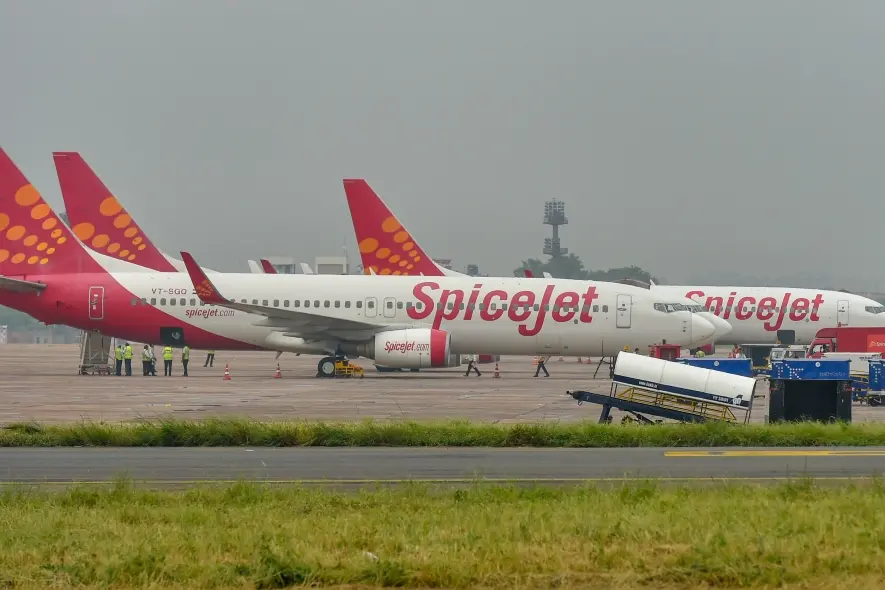
In a fresh blow to SpiceJet, a UK court has ordered the airline to pay around $8 million to Sunbird France 02 SAS, an aircraft engine lessor, deepening concerns over its already fragile financial position.
The ruling was delivered by London’s Commercial Court in favour of Sunbird, which had filed a claim over unpaid lease rentals and maintenance accruals linked to three aircraft engines. The court granted a summary judgment, observing that SpiceJet had “no realistic prospect” of defending the claim, effectively closing the door on any substantive legal challenge from the airline.
The dispute dates back several years, underlining the long-standing nature of SpiceJet’s financial stress. According to court filings, unpaid engine lease rentals date back to January 2022, while maintenance accrual obligations remained outstanding from as early as November 2020. The lessor had issued default notices in July 2022, before proceeding to repossess all three engines in phases between late 2022 and mid-2023.
What has further complicated the situation for the airline is its legal response or the lack of it. While SpiceJet had initially engaged British legal counsel, it failed to file a formal defence or respond to the lessor’s application. This procedural lapse played a decisive role in the court granting summary judgment, effectively fast-tracking the ruling in favour of the lessor. As of now, the airline has not issued an official response to the judgment.
This development is not an isolated setback but part of a broader pattern of financial challenges facing the airline. SpiceJet has been under sustained pressure since the grounding of the Boeing 737 MAX fleet, followed by the severe disruptions caused by the COVID-19 pandemic. These structural shocks significantly weakened its balance sheet, from which recovery has been uneven.
Adding to the pressure is intensifying competition in the domestic market, particularly from newer entrants such as Akasa Air, which have steadily gained market share. SpiceJet, once a strong low-cost player, has seen its position erode amid capacity constraints and financial limitations.
The airline’s financial health has already been flagged by auditors, who have raised concerns about its ability to continue as a “going concern.” Recent financial results indicate rising losses and a widening gap between current liabilities and assets, signaling that liquidity stress remains acute.
From an operational standpoint, the $8 million payout, while not extraordinarily large in global aviation terms, comes at a time when SpiceJet’s cash flows are already under strain. The immediate impact is likely to be on liquidity management, as the airline will have to either settle the dues or make provisions, further tightening its working capital position.
More critically, such legal rulings can have a cascading effect on the airline’s relationships with lessors and suppliers. Aircraft and engine leasing is heavily dependent on trust and timely payments.
Given that fleet availability directly impacts route networks and frequency, any constraints in leasing could translate into reduced operational flexibility. This, in turn, may impact on-time performance, route coverage, and overall competitiveness.
The judgment also sends a wider signal to the aviation ecosystem. Legal enforcement by lessors is becoming more assertive, particularly in a post-pandemic environment where global leasing firms are tightening risk controls. For SpiceJet, repeated disputes and enforcement actions risk reinforcing a perception of financial instability.
This comes at a time when the Indian aviation market itself is expanding rapidly, with demand holding strong. However, growth in such an environment tends to favour financially stable carriers that can scale capacity quickly. Airlines facing balance sheet stress may struggle to fully capitalise on this demand.
Separately, the airline has also faced operational challenges. In February, a SpiceJet flight (SG121) from Delhi to Leh, operated using a Boeing 737 aircraft, was forced to return shortly after take-off due to a technical issue. While the aircraft landed safely and no passengers were harmed, such incidents add to operational scrutiny at a time when the airline is already under financial and regulatory watch.
The latest court ruling underscores how SpiceJet’s challenges are no longer limited to short-term disruptions but are increasingly structural. While the airline continues to operate and maintain its network, its ability to stabilise finances, rebuild lessor confidence, and secure consistent fleet availability will be key to its survival and recovery.
In the near term, the focus will remain on liquidity management and damage control. In the longer term, however, SpiceJet may need deeper financial restructuring and strategic recalibration to remain competitive in an increasingly consolidated and capital-intensive aviation market.
Published: 09 Apr 2026, 08:44 pm IST
ABOUT THE AUTHOR

Disclaimer: Kindly avoid objectionable, derogatory, unlawful and lewd comments, while responding to reports. Such comments are punishable under cyber laws. Please keep away from personal attacks. The opinions expressed here are the personal opinions of readers and not that of Mathrubhumi.