
Sonam Wangchuk's hospitalisation after his removal from the Jantar Mantar protest site has sparked a fresh legal battle, with his wife moving the Delhi High Court over what she calls an unlawful restriction of his freedom.
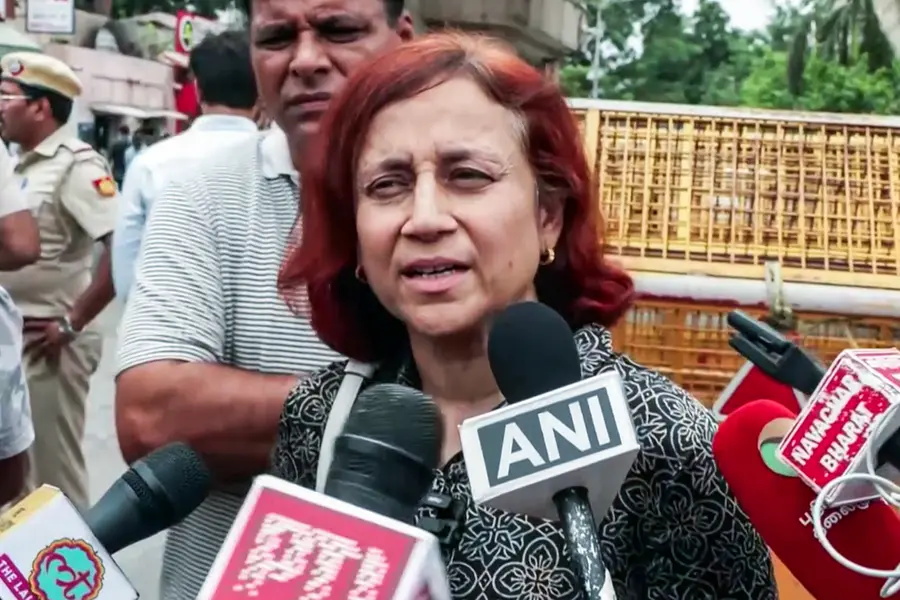
New Delhi: The controversy over Sonam Wangchuk's removal from his Jantar Mantar hunger strike has intensified after his wife, Dr Gitanjali J Angmo, approached the Delhi High Court seeking his immediate transfer from Safdarjung Hospital, alleging that he is being kept there against his wishes.
Dr Gitanjali J Angmo, wife of climate activist and educationist Sonam Wangchuk, has moved the Delhi High Court seeking his discharge from Safdarjung Hospital and permission to shift him to a medical facility chosen by the family.
In her petition, Angmo alleged that Wangchuk's continued stay at the government hospital amounted to "illegal and unconstitutional confinement" under the cover of medical treatment.
She has sought directions for unrestricted access to Wangchuk for his family members, lawyers and doctors who were monitoring his health during his hunger strike.
Wife alleges forced removal from Jantar Mantar
According to the petition, Wangchuk was removed from his protest site at Jantar Mantar on July 18 and taken to Safdarjung Hospital without his consent or prior information to his family.
Wangchuk had been on an indefinite hunger strike since June 28 in support of students protesting alleged irregularities in competitive examinations, including the NEET-UG controversy.
The plea claims that he was already under medical supervision at the protest site and that there was no emergency requiring his removal.
Legal dispute over Delhi HC order
The petition challenges the authorities' interpretation of a Delhi High Court order passed on July 16.
The court had earlier recorded the government's assurance that doctors would monitor Wangchuk's health daily and provide medical assistance if required.
However, Angmo's plea argues that the order only allowed medical monitoring and did not permit authorities to forcibly remove him from the protest location or keep him hospitalised without consent.
The petition states that neither Wangchuk nor his wife were parties to the earlier proceedings.
Questions raised over medical condition
The plea has also raised concerns over Wangchuk's medical reports, particularly regarding his potassium levels.
According to the petition, hospital authorities informed the family that his potassium level had fallen to 2.9, while an earlier report showed a level of 4.3.
The petition claims that after repeated requests, a blood sample was provided nearly 10.5 hours later and an independent laboratory reportedly found the potassium level to be 3.6.
The family has questioned whether the medical findings justified continued hospitalisation.
Family alleges denial of access to doctors and lawyers
Angmo has alleged that hospital authorities refused requests to discharge Wangchuk or allow his transfer to another hospital despite written representations.
The petition also claims that his lawyers and doctors who had been monitoring him during the hunger strike were denied access, while complete medical information was not shared with the family.
The plea argues that such actions violate Wangchuk's constitutional rights related to personal liberty, bodily autonomy and peaceful protest.
Opposition criticised removal, BJP defended action
Wangchuk's removal from Jantar Mantar had triggered a political debate, with opposition leaders accusing the government of suppressing a peaceful protest.
Leaders including Rahul Gandhi, Mallikarjun Kharge and Arvind Kejriwal questioned why authorities removed Wangchuk instead of engaging with him.
The BJP defended the move, saying the action was taken to protect Wangchuk's health following court directions and that he was shifted after his condition required medical attention.
What happens next?
The Delhi High Court will now examine the allegations raised by Wangchuk's wife and decide whether further directions are required regarding his treatment, hospitalisation and access to family-appointed doctors.
The case has added another layer to the ongoing debate over protest rights, medical intervention and government responsibility during hunger strikes.
Published: 19 Jul 2026, 10:43 am IST
Disclaimer: Kindly avoid objectionable, derogatory, unlawful and lewd comments, while responding to reports. Such comments are punishable under cyber laws. Please keep away from personal attacks. The opinions expressed here are the personal opinions of readers and not that of Mathrubhumi.
