
Sonam Wangchuk's indefinite hunger strike has entered Day 2 at Delhi's Jantar Mantar. Here's why the activist is protesting and how the movement is expanding beyond the NEET controversy.
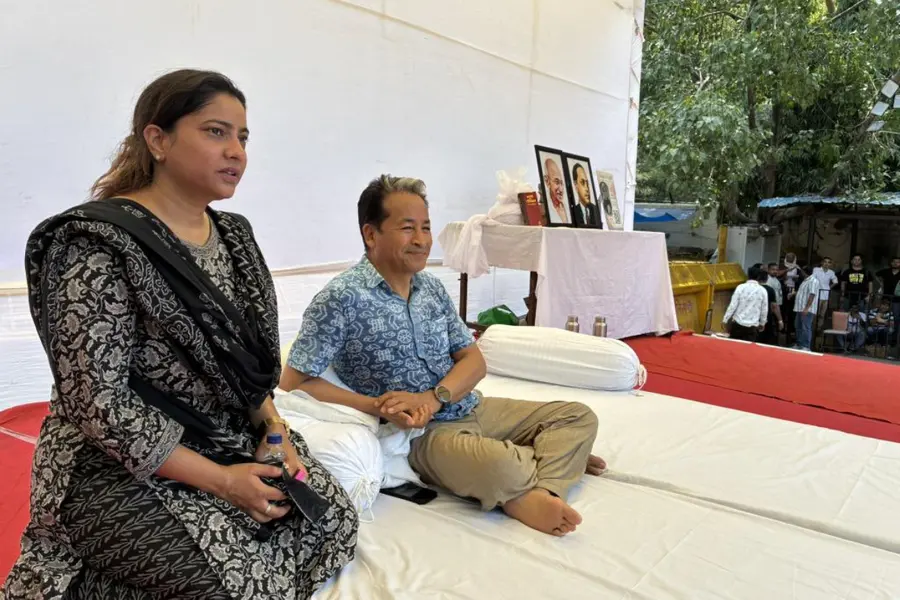
New Delhi: Climate activist and education reform advocate Sonam Wangchuk has entered the second day of an indefinite hunger strike at Delhi's Jantar Mantar, intensifying pressure on Union Education Minister Dharmendra Pradhan amid growing outrage over alleged examination irregularities, including the NEET paper leak controversy.
The protest, which began as a campaign seeking accountability in the education system, is rapidly evolving into a broader movement focused on governance, transparency and public accountability. Wangchuk has declared that he will continue his fast until the Education Minister resigns, according to organisers of the agitation.
Why is Sonam Wangchuk on hunger strike?
Wangchuk says the ongoing crisis in India's examination system has shaken students' faith in merit and fairness. Joining the protest on Sunday (June 28), he said education has remained one of his lifelong concerns and that he could not ignore the growing frustration among students and young people.
The activist argued that when institutions fail to address public concerns, peaceful democratic protest becomes necessary.
"Education and environment are my issues, truth and peace are my path, justice is my destination,"
Wangchuk told supporters gathered at the protest site.
His participation has brought national attention to a movement that was initially centred on alleged irregularities in competitive examinations but is now raising wider questions about accountability in public institutions.
What are the protesters demanding?
The primary demand remains the resignation of Education Minister Dharmendra Pradhan over allegations of mismanagement and failures linked to examination controversies.
However, protest organisers have made it clear that their campaign extends beyond education.
According to organisers, the movement is seeking:
- Accountability for alleged examination irregularities and paper leak scandals.
- Greater transparency in the education system.
- Institutional reforms to protect students' interests.
- Action against what they describe as failures of governance and oversight.
- Wider reforms related to electoral accountability and democratic processes.
Organisers have also indicated that issues linked to electoral roll revisions and broader governance concerns could become part of future phases of the movement.
Abhijeet Dipke, founder of the Cockroach Janata Party (CJP), said the agitation should not be viewed as a single-issue campaign.
Addressing supporters, Dipke argued that accountability must be demanded across multiple sectors, including elections and public administration. He claimed the movement would continue raising concerns related to democratic institutions and electoral reforms in addition to education-related grievances.
The remarks signal an effort by organisers to transform the protest into a larger accountability movement rather than limiting it to the NEET controversy.
Students join Wangchuk's fast
The protest drew participation from students, civil society groups, farmer leaders and activists, with thousands gathering at Jantar Mantar by evening.
Six student leaders from various organisations joined the hunger strike in solidarity with Wangchuk's call for action. They sat on a separate stage dedicated to student participants while supporting the broader campaign.
Wangchuk urged citizens across the country to participate symbolically by observing a one-day fast and turning the agitation into a community-led movement.
Wangchuk links education and environmental justice
While education remains the immediate trigger for the hunger strike, Wangchuk also connected the issue to his long-running campaigns on environmental protection and cultural preservation.
The activist, who has spent years advocating for Ladakh's ecological and cultural concerns, said accountability is equally important in environmental governance and public policy.
He argued that unresolved public concerns often leave citizens with no option other than peaceful democratic resistance.
With agency inputs
Published: 29 Jun 2026, 01:07 pm IST
Disclaimer: Kindly avoid objectionable, derogatory, unlawful and lewd comments, while responding to reports. Such comments are punishable under cyber laws. Please keep away from personal attacks. The opinions expressed here are the personal opinions of readers and not that of Mathrubhumi.
