
Seema Khanna, the Election Commission’s Director General of IT, has come under scrutiny after two Election Commissioners raised concerns over centralised control of electoral-roll software.
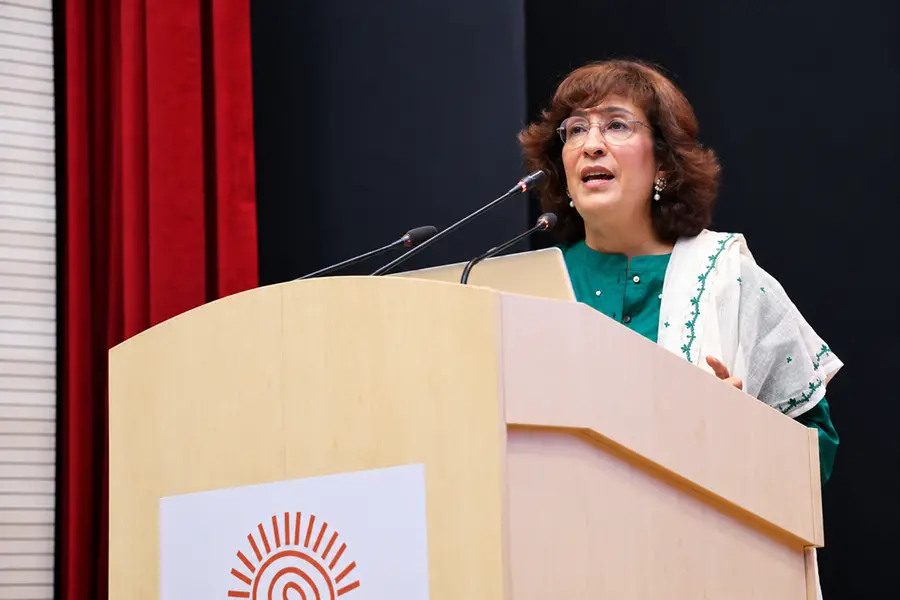
New Delhi: Seema Khanna, the Election Commission of India’s Director General of Information Technology, has come under scrutiny after two Election Commissioners raised concerns over the centralised control of the technology systems used to manage electoral rolls.
Election Commissioners Sukhbir Singh Sandhu and Vivek Joshi have, in separate communications, flagged concerns over the alleged restriction of access available to statutory election officials dealing with voter rolls.
Their objections have brought the functioning of the ECI’s IT division and Khanna’s role in managing electoral-roll software into sharper focus.
The controversy centres on ERONet, the system used for electoral-roll management and now incorporated into the broader ECINet platform.
The Election Commission launched ECINet in January 2026, bringing more than 40 applications and portals under a single digital platform.
Khanna had described cybersecurity as one of the key pillars of ECINet and said technology had become a strategic enabler for the poll panel.
According to an investigation by The Indian Express, Sandhu and Joshi repeatedly raised concerns that powers legally assigned to Electoral Registration Officers, or EROs, were being increasingly centralised through the IT system.
Sandhu questioned whether the ECI’s Director General of IT had the legal authority to restrict the access and freedom of operation granted to statutory election officials. In one communication, he called for full access to be restored to officials responsible for electoral-roll work.
The concerns were not limited to ECINet. Records cited in the report show that questions over the IT system’s control of ERO functions had emerged while ERONet was still the principal platform.
In November 2025, a senior Commission official had written that statutory functions of EROs, District Election Officers and Chief Electoral Officers had to be exercised by those authorities and that IT systems should not restrict their powers.
What happened in Goa?
The dispute over software access also surfaced in Goa.
The Supreme Court had directed that voters flagged for so-called ‘logical discrepancies’ during the revision process should be allowed to submit documents and be heard before the final electoral roll was published.
Goa’s EROs subsequently examined cases and found 97 voters eligible for inclusion in the final roll.
However, according to the Indian Express report, the software did not have a mechanism to record the EROs’ decisions.
Between February 11 and 17, the Goa Chief Electoral Officer’s office repeatedly wrote to Senior Deputy Election Commissioner Gyanesh Bharti seeking a rollback facility that would allow the deleted names to be restored. Khanna was copied on the communications.
The requested facility was not activated before the deadline, and the 97 voters were consequently left out of the final electoral roll, the report said.
Why is Seema Khanna important in the controversy?
Khanna is the ECI’s senior technology official. The Commission’s own officers directory lists Dr Seema Khanna as Director General (IT).
Her department has a central role in the technology infrastructure supporting electoral services.
ECINet, which integrates more than 40 ECI applications and portals, was presented by the Commission as a platform aimed at improving transparency, efficiency and public trust.
The present dispute, however, is about who should control access to the electoral-roll database and whether software controls can limit powers assigned to statutory election officials.
The issue has also acquired a political dimension. Trinamool Congress leader Abhishek Banerjee had previously questioned Khanna’s role while raising questions about the speed with which electoral data was being analysed.
The party has since linked those earlier allegations to the concerns raised by Sandhu and Joshi.
TMC leaders have made further allegations against Khanna and the functioning of the electoral-roll software.
Those claims remain political allegations and should be distinguished from the concerns formally recorded by the two Election Commissioners.
The Election Commission’s technology architecture is therefore now at the centre of a wider institutional dispute, with Sandhu and Joshi questioning whether electoral-roll management has become too centralised and whether statutory officials continue to have the level of access required to perform their duties.
Published: 23 Sept 2026, 09:55 pm IST
ABOUT THE AUTHOR

Related Topics
Disclaimer: Kindly avoid objectionable, derogatory, unlawful and lewd comments, while responding to reports. Such comments are punishable under cyber laws. Please keep away from personal attacks. The opinions expressed here are the personal opinions of readers and not that of Mathrubhumi.