
Saudi Arabia’s low-cost airline flyadeal will begin flights to India by early 2026, starting with Mumbai and Delhi. The Jeddah-based carrier aims to strengthen links between India and the Kingdom.
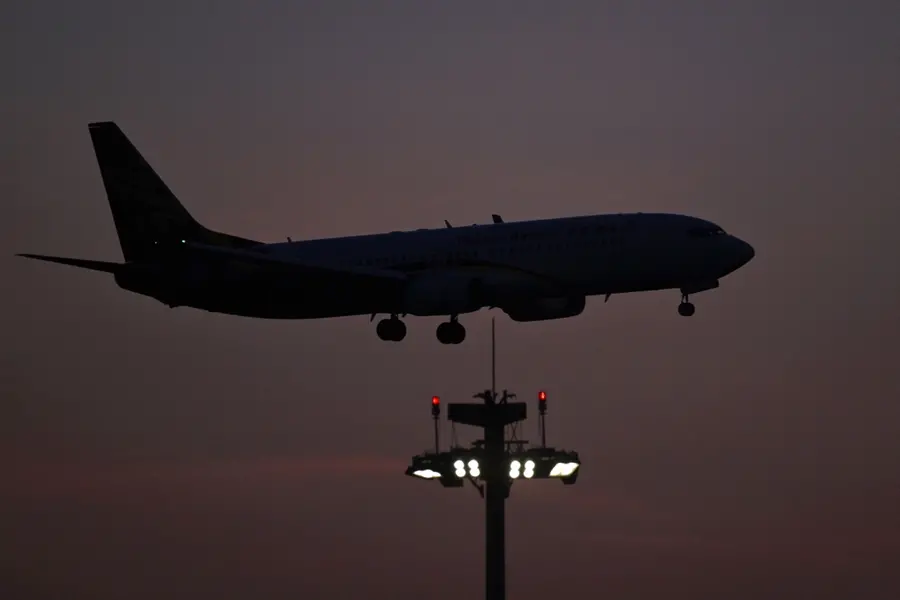
Saudi Arabia’s low-cost airline, flyadeal, is preparing to launch flights to India by the first quarter of 2026, marking a major step in its regional expansion strategy. The Jeddah-based carrier plans to begin operations with Mumbai, followed by Delhi and other secondary Indian cities by the end of next year.
Flyadeal CEO Steven Greenway told PTI that India represents both a huge opportunity and a tough challenge. “India is one of the most hyper-competitive markets in the world, and there is a need to have an absolute, brutal focus on unit cost,” he said, highlighting the efficiency-driven mindset required to compete in the country’s crowded aviation space.
A sister airline of Saudia, the national carrier, flyadeal has been operating successfully for over eight years. It currently flies 42 Airbus A320 family aircraft and expects to have 46 planes by the end of 2025. The airline has also placed orders for 10 Airbus A330neo wide-body jets, which will begin joining the fleet from July 2027.
“Our intent is to start operating (in India in the quarter of next year… We expect to do the metropolises like Mumbai and Delhi, and also, our focus will be on the secondary cities in India... I think Mumbai would be the first one,” Greenway said.
flyadeal currently serves 25 destinations within Saudi Arabia, and plans to expand its international network using its hubs in Jeddah, Riyadh, and Dammam. By the end of 2026, the airline hopes to connect to up to six Indian destinations, including routes that cater to Hajj and Umrah pilgrims.
To strengthen its network in India, Greenway revealed that flyadeal is exploring a codeshare partnership with a domestic carrier. Such a partnership would enable passengers to book connecting flights within India and Saudi Arabia on a single ticket, a model increasingly used by international low-cost carriers.
When asked why flyadeal is entering the Indian market now, Greenway responded with a smile, “Why not? Well, let’s have a look at it (the market). You have three million Indians in the Kingdom of Saudi Arabia itself… (then there are) trading partnerships and strong bilaterals.”
India is one of the few aviation markets globally where low-cost carriers dominate, led by IndiGo, which commands over 65% of the domestic market. Greenway acknowledged this unique dynamic, noting that “an airline cannot just go into India saying there are over a billion people and we will make it work. You have to be very well-run.”
With growing discussions about Gulf carriers diverting international traffic from India, Greenway offered a different perspective, arguing that both India and Saudi Arabia have underdeveloped direct air links. “We haven’t been strong in offering direct offerings between both countries, and we think there’s a lot of room for development there,” he said.
He added that, unlike smaller Gulf hubs such as Dubai or Doha, both India and Saudi Arabia have strong domestic markets that can sustain two-way traffic. “There is a natural affinity between our two countries in terms of direct services. Will some passengers elect to fly over Saudi Arabia to and from destinations like the United States? Yeah, sure. Will Saudis potentially elect to fly over India and carry on to Southeast Asia or China? Yeah, absolutely,” he said.
With its planned entry into India, flyadeal joins a growing list of Middle Eastern carriers targeting the country’s rapidly expanding aviation sector. As both nations deepen trade and travel links, the move could also enhance connectivity for millions of Indian expatriates living in Saudi Arabia, strengthening economic and cultural ties between the two countries.
Published: 03 Nov 2025, 02:05 pm IST
Related Topics
Disclaimer: Kindly avoid objectionable, derogatory, unlawful and lewd comments, while responding to reports. Such comments are punishable under cyber laws. Please keep away from personal attacks. The opinions expressed here are the personal opinions of readers and not that of Mathrubhumi.
