
Chowdhury earned widespread recognition for his distinctive paintings, which frequently explored social inequalities, political realities and the complexities of human life through satire and expressive imagery.
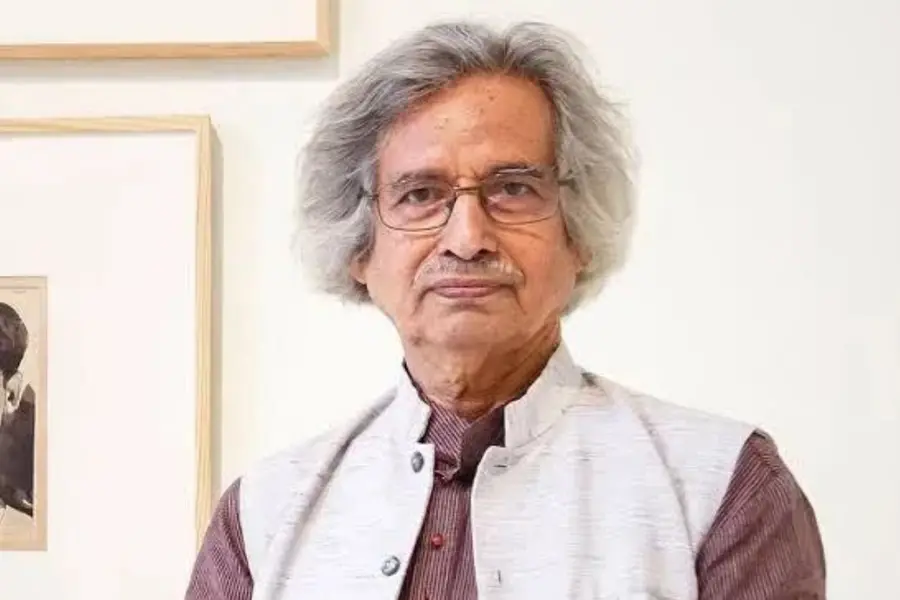
Kolkata: Eminent painter and former Trinamool Congress (TMC) Rajya Sabha MP Jogen Chowdhury died at a private hospital in Kolkata on Sunday (October 25) following a prolonged battle with cancer. He was 87.
Chowdhury, one of India's most celebrated contemporary artists, had been undergoing treatment for blood cancer for the past 14 months. He was also suffering from a urinary tract infection, which further complicated his condition.
According to family sources, the veteran artist breathed his last on Sunday morning.
Hospital sources said Chowdhury had been receiving chemotherapy for cancer. His health deteriorated on October 16, coinciding with Shasthi, following which he was admitted to the hospital in critical condition.
Doctors reportedly detected signs of sepsis associated with the infection. His condition worsened on Saturday, prompting doctors to place him on ventilator support. Despite medical intervention, he died the following morning.
Born on February 16, 1939, in Daharpara village in Faridpur, then part of British India, Chowdhury developed an early fascination with art through his family. His father, Pramathanath Chowdhury, was a landlord, while his mother was skilled in creating alpana, a traditional form of decorative floor and wall painting.
Following the Partition of India, Chowdhury's family relocated to Kolkata, where he pursued his artistic education and gradually established himself in the world of painting.
He began his professional career as a drawing teacher at Howrah District School before joining the Kolkata Handloom Board as a designer in 1962.
In 1965, he travelled to Paris to pursue advanced studies in art, an experience that helped shape his distinctive artistic language. He later served as a curator at the art gallery of the Presidential Palace.
Chowdhury earned widespread recognition for his distinctive paintings, which frequently explored social inequalities, political realities and the complexities of human life through satire and expressive imagery.
His artistic approach drew inspiration from both Indian traditions and European art movements, helping him develop a recognisable style that secured his place among India's leading contemporary painters.
Beyond galleries and exhibitions, Chowdhury also contributed to Bengal's Durga Puja celebrations by conceptualising themes and designing idols for several prominent community pujas.
In 2017, he designed the idol for Behala Nutan Dal's Durga Puja. He was also associated with the idol design for Thakurpukur State Bank Park Sarbajanin Durga Puja.
His influence extended beyond the art world into public life when the Trinamool Congress nominated him to the Rajya Sabha from West Bengal in 2014. He served in the Upper House of Parliament until 2020.
Published: 25 Oct 2026, 02:28 pm IST
ABOUT THE AUTHOR

Related Topics
Disclaimer: Kindly avoid objectionable, derogatory, unlawful and lewd comments, while responding to reports. Such comments are punishable under cyber laws. Please keep away from personal attacks. The opinions expressed here are the personal opinions of readers and not that of Mathrubhumi.