
Born on December 25, 1924, Vajpayee went on to become India’s tenth Prime Minister, serving briefly in 1996 and later completing a full five-year term from 1999 to 2004...
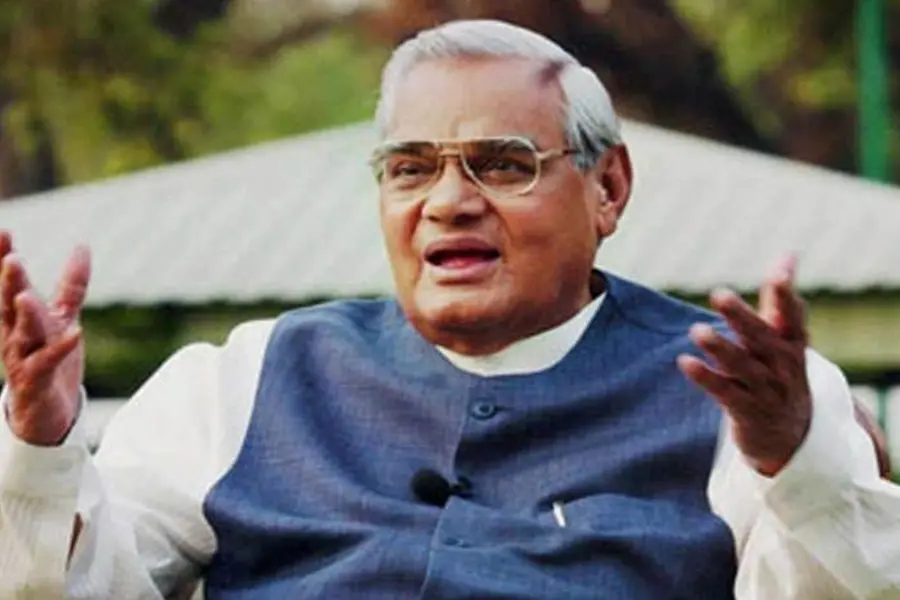
As India marks the birth anniversary of Atal Bihari Vajpayee, one of its most respected Prime Ministers, it is a moment to look beyond his political milestones and remember the many dimensions of the man whose life blended power with poetry, discipline with compassion.
Born on December 25, 1924, Vajpayee went on to become India’s tenth Prime Minister, serving briefly in 1996 and later completing a full five-year term from 1999 to 2004, the first non-Congress leader to do so. A founding member of the Bharatiya Janata Party, he played a defining role in shaping India’s contemporary political landscape.
A Brahmin who broke conventions
Despite being born into a Brahmin family, Vajpayee was known for flouting orthodox norms. He enjoyed non-vegetarian food, with prawns being his favourite, and was fond of dining at Delhi’s iconic Karim’s. He also did not shy away from enjoying whisky, a habit that set him apart from many of his contemporaries in the RSS.
A poet at heart
Long before he became Prime Minister, Vajpayee was deeply in love with poetry. He wrote his first poem while still in Class 10 and continued to write throughout his life. His verses later reached a wider audience when ghazal legend Jagjit Singh set his poems to music. The album Samvedna (2002), featuring Vajpayee’s work, had music by Singh, a video directed by Yash Chopra, Shah Rukh Khan on screen and a preface narrated by Amitabh Bachchan — an extraordinary cultural collaboration for a sitting Prime Minister.
A poignant love story
Though Vajpayee never married, his younger years carried a quiet romance. While studying in Gwalior, he fell in love with his college friend Rajkumari Kaul and wrote her letters, one of which he tucked inside a library book. Her reply, however, never reached him, leading Vajpayee to believe she did not reciprocate his feelings. He chose to remain unmarried. When she died on 3 May 2014, Vajpayee, bedridden after his stroke, could not attend her last rites due to ill health.
Courage beyond politics
Vajpayee’s moral courage was evident even outside Parliament. In the aftermath of Indira Gandhi’s assassination in 1984, when mobs targeted Sikh taxi drivers near his Raisina Road residence, Vajpayee stepped out alone to confront the crowd. His presence was enough to disperse them, and he stayed until the drivers were safe. As foreign minister in the late 1970s, Vajpayee ordered the restoration of Jawaharlal Nehru’s portrait after it went missing from South Block.
Historic firsts and lasting legacy
Vajpayee was the first Indian leader to address the United Nations General Assembly in Hindi and the only parliamentarian elected from four different states. Under his leadership, India conducted the 1998 Pokhran nuclear tests, asserting itself as a nuclear power. He also guided the nation through the Kargil conflict with restraint and resolve.
Later years and remembrance
After announcing his retirement from active politics in 2005, Vajpayee suffered a stroke in 2009 that impaired his speech and movement. He passed away on August 16, 2018, leaving behind a legacy that transcended ideology.
His life was revisited in the 2024 biopic Main Atal Hoon, starring Pankaj Tripathi, which traced his journey from RSS activism to Prime Ministership, highlighting his poetry, struggles and statesmanship.
Published: 25 Dec 2025, 11:18 am IST
Related Topics
Disclaimer: Kindly avoid objectionable, derogatory, unlawful and lewd comments, while responding to reports. Such comments are punishable under cyber laws. Please keep away from personal attacks. The opinions expressed here are the personal opinions of readers and not that of Mathrubhumi.
