
Delhi’s iconic Red Fort, a UNESCO World Heritage Site and symbol of India’s independence, is slowly losing its trademark red hue and turning black
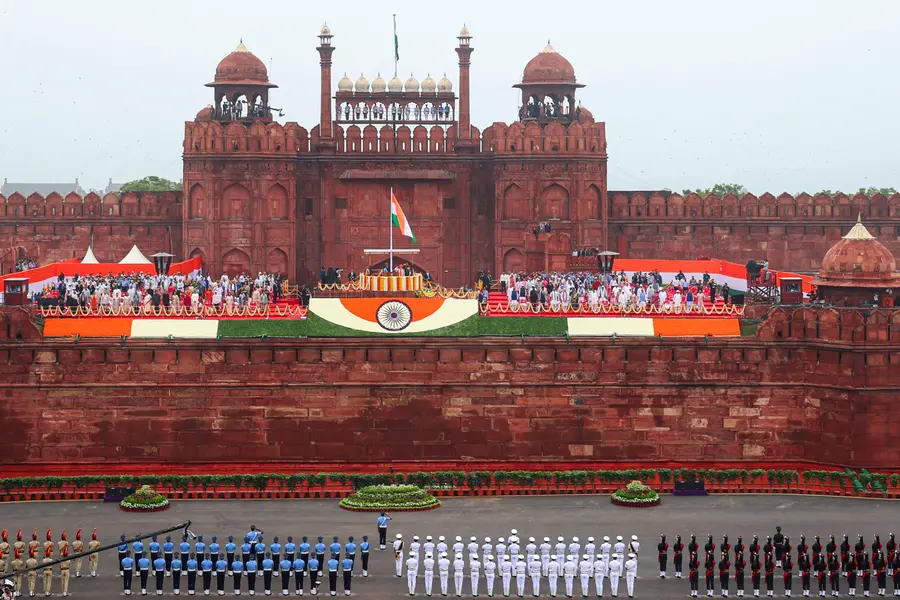
New Delhi: Delhi’s historic Red Fort, a UNESCO World Heritage Site, is slowly turning black as air pollution eats away at its red sandstone walls, according to a new Indo-Italian study.
Pollution turning Red Fort black
Also Read

A joint study by Indian and Italian researchers has confirmed that the Red Fort’s red sandstone is darkening due to black crusts formed by pollutants and heavy metals. The study, published in Heritage Journal, shows that toxic deposits of gypsum and dust are corroding the monument’s surface, causing cracks and irreversible damage.
Centuries-old monument under threat
Built by Mughal emperor Shah Jahan between 1639 and 1648, the Red Fort once stood beside the Yamuna river. Today, it faces constant exposure to vehicle exhaust and industrial pollution from nearby roads. Experts say the monument’s surface is reacting chemically with pollutants, weakening the stone and fading its colour.
Experts warn of urgent conservation need
Environmental scientists and conservationists have urged authorities to act quickly. “The Red Fort is losing its natural strength and colour. Without strong conservation efforts, it may soon suffer permanent damage,” the study warns. Poor maintenance and heavy tourist traffic have added to the problem.
Also read: Delhi Police uncover ISIS module, arrest 2 suspected operatives in major operation
Delhi’s worsening air quality
Every winter, Delhi’s air quality declines sharply due to stubble burning, vehicle emissions, and industrial smoke. During Diwali, the city’s air turns thick with pollutants, trapping toxic particles that harm both people and monuments.
Health and environmental fallout
Between 2022 and 2024, over two lakh Delhi residents were hospitalised for pollution-related illnesses, and around 2.2 million children suffered lung damage, according to hospital data. Experts also link air pollution to premature ageing and other health problems.
Microplastics and toxic particles in the air
Recent research shows that Delhi’s air also contains microplastics — tiny plastic particles invisible to the naked eye. Adults in the city may inhale up to 5,600 microplastic particles each year, worsening health risks.
A call to save India’s heritage
Experts say that the Red Fort’s condition is a visible warning of how pollution is destroying India’s heritage. Without immediate restoration and stricter control of emissions, Delhi’s iconic Lal Qila could soon lose its legendary red glow — and be remembered instead as the “Black Fort.”
Published: 24 Oct 2025, 02:59 pm IST
Disclaimer: Kindly avoid objectionable, derogatory, unlawful and lewd comments, while responding to reports. Such comments are punishable under cyber laws. Please keep away from personal attacks. The opinions expressed here are the personal opinions of readers and not that of Mathrubhumi.