
The car's ownership trail led to a Pulwama resident, with a module member believed to have been the bomber.
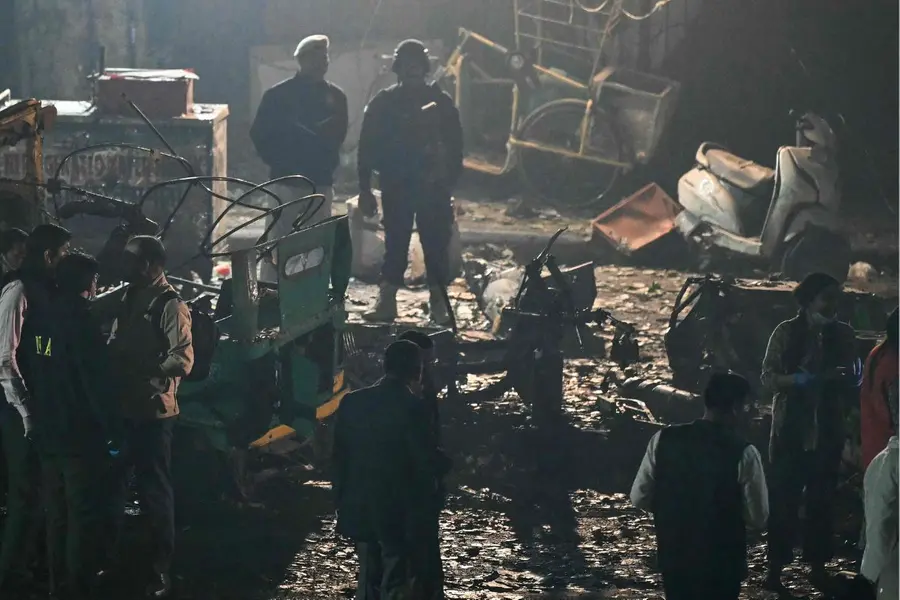
New Delhi: A preliminary investigation into Monday’s car explosion outside Delhi’s Red Fort points to a possible act of terror. Officials confirmed that a Hyundai i20 packed with explosives was deliberately detonated near Gate No. 1 of the Red Fort Metro Station, killing at least nine people and injuring over 30.
Investigators believe it was a suicide attack potentially linked to the Faridabad module, which was recently busted by the Jammu and Kashmir Police. Forensic experts at the scene found traces of high-grade explosives, including ammonium nitrate and RDX, suggesting that a powerful device was used.
Authorities revealed that the car’s ownership had changed hands multiple times—an established tactic used in suicide vehicle-borne IED (SVB-IED) operations. The vehicle was last traced to Tariq, a resident of Pulwama, Jammu and Kashmir, who is now being questioned for his suspected links to the Faridabad module.
The blast occurred around 6:52 pm, triggering a fire that engulfed nearby vehicles. Investigators suspect the Faridabad module not only supplied the explosives but also helped plan the attack. One of its members, identified as Dr Umar Mohammad, is believed to have been inside the car at the time of the explosion. DNA tests are underway to confirm this.
Police sources indicate that Dr Mohammad, an active member of the module, was involved in terror financing and arms smuggling. The car’s trail of ownership shows it was originally registered to Mohammad Salman before passing through multiple owners—including Nadeem and a Faridabad car dealer—before reaching Tariq and eventually Mohammad.
Investigations revealed that the car had been parked near the Red Fort for nearly three hours before being driven out and detonated amid heavy traffic, apparently to maximise casualties. Authorities are still probing whether the explosion was pre-timed or triggered prematurely after the Faridabad module’s exposure.
An investigating officer described the blast as a “Fedayeen-style” attack but noted that it appeared rushed and might not have gone as planned. The explosion comes days after the arrest of Dr Muzzamil Shakeel, from whom police seized 2,900 kilograms of explosives.
Following the module’s bust, investigators discovered it was backed by Pakistan-based Jaish-e-Mohammad and Ansar Ghazwatul Hind (AGH), an Al-Qaeda affiliate. Officials believe the Red Fort blast was carried out hastily as the operatives panicked after their network was compromised, disrupting a larger terror plan targeting multiple cities across India.
With inputs from IANS
Published: 11 Nov 2025, 10:43 am IST
Related Topics
Disclaimer: Kindly avoid objectionable, derogatory, unlawful and lewd comments, while responding to reports. Such comments are punishable under cyber laws. Please keep away from personal attacks. The opinions expressed here are the personal opinions of readers and not that of Mathrubhumi.
