
The operation mirrors the planning style of the 2008 Mumbai 26/11 attacks, where top-level professionals maintained secrecy throughout.
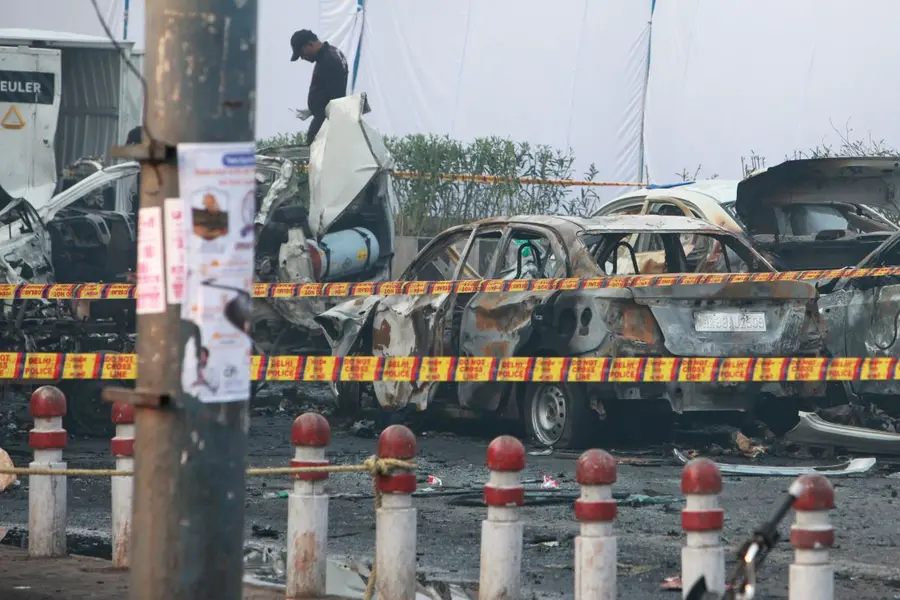
New Delhi: The ongoing investigation into the Red Fort blast in Delhi is increasingly pointing to a direct role by Pakistan’s Inter-Services Intelligence (ISI), officials said.
The authorities noted that an operation of this scale, which included setting up a Faridabad module, could not have been executed without institutional support.
It has now been revealed that Faisal Iqbal played a central role in establishing the module. According to Intelligence Bureau officials, Iqbal is an ISI operative who was specifically brought in to orchestrate the operation, which involved plans for at least 200 blasts.
While Iqbal’s Pakistani identity and role have been confirmed, agencies are still determining whether he was operating from Pakistan or Afghanistan.
“The ISI had planned on orchestrating this entire episode outside of Pakistani soil as they did not want the trail to lead up to them,” an official said.
Investigators are analysing chat logs between the module members and their handlers. Agencies have identified three handlers behind the operation, each assigned distinct roles. The most important handler, Faisal Iqbal, gave instructions on setting up Telegram channels and advised the accused on maintaining discretion during planning and module setup.
Officials believe the module had been in preparation since 2019, taking shape in 2021, and becoming fully operational by 2023. “The manner in which the module operated with such precision and managed not to come under the radar clearly suggests that a top ISI official was part of the operation,” an official said.
The operation mirrors the planning style of the 2008 Mumbai 26/11 attacks, where top-level professionals maintained secrecy throughout. Investigators say the operation involved senior ISI officials and members of the Pakistan armed forces overseeing planning, training, logistics, and execution.
The Faridabad module was entirely managed by ISI professionals. “The amount of ammonium nitrate that was seized and the plan that the module had in mind is a clear indicator of the magnitude of the operation,” said an officer investigating the blasts.
The probe identified the other two handlers as Ukasha and Hashim, operating from the Tora Bora mountains. Along with Iqbal, they guided and radicalised module members from abroad.
Officials said the ISI also enlisted a local operative, Mufti Irfan Ahmed Wagay from Jammu and Kashmir. Chat transcripts show Wagay’s direct involvement in the operation. He was behind the Jaish-e-Mohammad propaganda posters seen in Nowgam in October, which prompted a Jammu and Kashmir police investigation that ultimately uncovered the Faridabad module.
A cleric from Shopian, Wagay, reportedly assisted in transferring funds and weapons and played a key role in indoctrinating Faridabad module members. He remained in close contact with Dr. Shaheen Saeed, who oversaw radicalisation and recruitment.
Other conspirators include Muzammil Ahmed Ganai, whose rented flat in Faridabad contained about 350 kg of ammonium nitrate, Adeel Ahmed Rather, and Dr Umar Nabi, who drove the i20 vehicle that exploded near the Red Fort. IANS
Published: 24 Nov 2025, 01:04 pm IST
Related Topics
Disclaimer: Kindly avoid objectionable, derogatory, unlawful and lewd comments, while responding to reports. Such comments are punishable under cyber laws. Please keep away from personal attacks. The opinions expressed here are the personal opinions of readers and not that of Mathrubhumi.
