
During Mann Ki Baat, PM Modi highlights Operation Sindoor, progress in Maoist-affected areas, and community resilience across India.
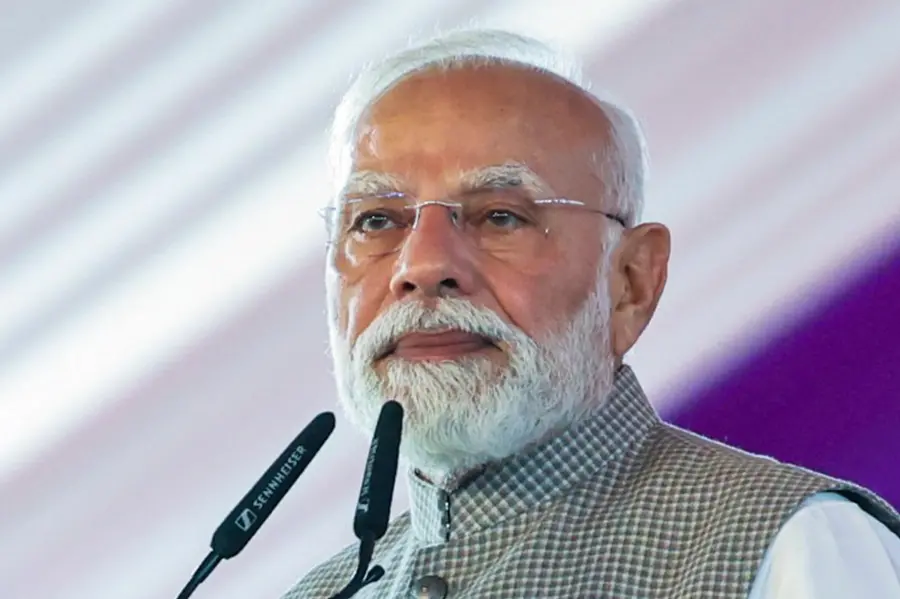
Prime Minister Narendra Modi, in the 127th episode of his monthly radio programme Mann Ki Baat on Sunday, shifted from routine policy discussions to a broad reflection on India’s progress — from national security and Swadeshi efforts to coffee cultivation, cultural celebrations, and environmental achievements.
The broadcast, aired through more than 500 All India Radio centres and translated into 22 Indian languages, 29 dialects, and 11 foreign languages including Arabic and Chinese, also paid a sweeping tribute to Sardar Vallabhbhai Patel ahead of Rashtriya Ekta Diwas.
Operation Sindoor
The Prime Minister laudined Operation Sindoor, saying it had “truly filled every Indian with pride.” He also emphasised that areas earlier tormented by Maoist violence were now illuminated by “lamps of happiness,” reflecting the people’s desire for lasting peace and unity.
He said the government operation symbolised the nation’s determination to eliminate the Maoist menace completely, turning once-troubled regions into examples of hope and recovery.
National progress through Swadeshi and cleanliness efforts
Continuing on the theme of national rejuvenation, Modi spoke of the encouraging response to his post-Diwali letter highlighting India’s achievements and self-reliance.
He mentioned the “great enthusiasm” among citizens regarding the GST Bachat Utsav and appreciated the massive increase in the purchase of Swadeshi products during the festive season.
The Prime Minister also praised citizens for positively responding to his appeal for a 10 per cent reduction in cooking oil usage, calling it a step towards a healthier and more responsible lifestyle.
- Cleanliness initiatives: Modi highlighted Ambikapur’s Garbage Cafe in Chhattisgarh, where meals are served in exchange for plastic waste, as a creative approach to waste management.
- Citizen-driven change: He also appreciated Bengaluru engineer Kapil Sharma’s campaign to revive the city’s lakes, describing such initiatives as signs of growing public responsibility.
The rise of Indian coffee: from tea to a global brew
The Prime Minister turned his attention to India’s coffee sector, acknowledging the nation’s growing reputation in the global market. “You all know about my association with tea, but today I thought, why not discuss coffee in Mann Ki Baat?” PM Modi said.
He revealed that citizens from Odisha’s Koraput district had written to him expressing pride in their coffee. He praised the brew’s quality, quoting coffee lovers who say, “India’s coffee is coffee at its finest. It is brewed in India and loved by the world.”
Koraput’s transformation: Modi noted that coffee cultivation in Koraput has created a positive socio-economic impact, driven by passion and perseverance. “I have been told that Koraput coffee tastes amazing, and not only that; besides the taste, coffee cultivation is also benefiting people. There are people in Koraput who are cultivating coffee through their sheer passion,” he said.
Coffee belts of India: He listed key production zones—Karnataka’s Chikmagalur, Coorg, and Hassan; Tamil Nadu’s Pulney, Shevaroy, Nilgiri, and Annamalai ranges; Kerala’s Wayanad, Travancore, and Malabar; and the Biligiri region—while adding that coffee cultivation is now expanding into the Northeast.
Unique attributes: Indian coffee, mostly shade-grown and often intercropped with spices, is known for its mild, full-bodied flavour and distinct aroma. The traditional method has also given rise to India’s famous ‘filter coffee’. Modi reminded listeners that coffee cultivation in the country began as early as 1600 AD.
Chhath Puja: celebrating faith, nature, and social harmony
Shifting focus to the festive season, Modi extended warm wishes for Chhath Puja, praising the festival’s deep connection with nature and discipline. He said, “The way women who observe the Chhath fast prepare for this festival with dedication and sincerity is truly inspiring in itself.”
He described the four-day festival, which began with Nahay-Khaay on Saturday, as a reflection of harmony between nature, humanity, and purity.
Social unity: “The great festival of Chhath is a reflection of the deep unity between culture, nature and society. At the Chhath Ghats, people from every section of society stand together. This scene is the most beautiful example of India’s social unity,” Modi said.
Rituals and legacy: He outlined the significance of Kharna, the festival’s second day, when devotees fast without food or water until sunset. Chhath Puja, he said, traces back to the Satyuga and Dwapara Yuga, and is among the oldest forms of Sun worship, celebrated to dispel negativity and bring peace.
Security forces embrace indigenous K9 units
The Prime Minister praised the BSF and CRPF for integrating Indian dog breeds into their contingents, noting that this followed his call five years ago to adopt local breeds better suited to India’s conditions.
Focus on native breeds: The BSF’s National Training Centre in Tekanpur, Gwalior, has prioritised the Rampur Hound and Mudhol Hound, while the CRPF’s Dog Breeding and Training School in Bengaluru trains Mongrels, Kombai, Pandikona, and Mudhol Hounds.
Training and achievements: The BSF has revised training manuals to highlight the strengths of indigenous dogs. A Mudhol Hound named ‘Riya’, trained by the BSF, won first prize at the All India Police Duty Meet in Lucknow last year. An indigenous CRPF dog also detected eight kilograms of explosives in a Maoist-affected area of Chhattisgarh.
Ekta Diwas parade: Modi announced that, for the first time, the BSF will showcase a marching contingent of Indian breed dogs during the upcoming Ekta Diwas Parade at Ekta Nagar, Gujarat, on October 31. The BSF has also begun giving Indian names to its dogs.
Sardar Vallabhbhai Patel: an enduring legacy of unity
Ahead of Rashtriya Ekta Diwas on October 31, the Prime Minister paid homage to Sardar Vallabhbhai Patel, describing him as one of the greatest “luminaries” of modern times.
He highlighted Patel’s achievements as an exceptional student and lawyer who excelled both in India and Britain before dedicating himself to the freedom movement. Modi recalled Patel’s leadership in the Kheda Satyagraha of 1918 and the Borsad Satyagraha of 1923 against British-imposed land taxes.
He also emphasised Patel’s historic work as head of the Ahmedabad Municipality, where he prioritised good governance and cleanliness. As India’s first Deputy Prime Minister and Home Minister, Patel laid the foundation for the nation’s bureaucratic system.
The Prime Minister urged citizens to join the Run for Unity being organised nationwide on October 31 to honour the “Iron Man of India.”
Gujarat’s mangrove success: strengthening coastal resilience
Modi commended Gujarat’s mangrove conservation efforts, calling mangroves the “green guardians” that protect coastlines and sustain marine life. “Jungles bind the soil in hills and plains; similarly, mangroves are the lifeline of our coasts,” he said.
Dholera transformation: The Gujarat Forest Department has planted over 3,500 hectares of mangroves, primarily Avicennia marina, in the Gulf of Khambhat over the past five years under the MISHTI (Mangrove Initiative for Shoreline Habitats and Tangible Incomes) scheme launched in 2023. The state’s mangrove cover now stands at 1,175 square kilometres—the second largest in India after the Sundarbans—with 19,020 hectares afforested in two years.
Biodiversity boost: Modi said the ecological revival is visible in Dholera, where “dolphins are frolicking in greater numbers” and crabs are thriving—“nature’s way of thanking us.” The 2024 wildlife census confirmed positive trends, including a 26 per cent rise in wild asses in the Rann of Kutch, along with more otters, jackals, and seabirds.
Kori Creek and new plans: The Kori Creek in Kutch, home to one of India’s richest mangrove belts, has a dedicated restoration centre. Inspired by these successes, the Ahmedabad Social Forestry Division will conduct its first marine life survey to assess fish stocks, invertebrates, and dolphin movements.
Call to action: Modi urged people to participate in his green drive: “Wherever we live, let us plant a tree in the name of our mother – under ‘Ek Ped Maa Ke Naam’,” encouraging citizens to join via MyGov or the NaMo App.
Published: 26 Oct 2025, 11:43 am IST
Related Topics
Disclaimer: Kindly avoid objectionable, derogatory, unlawful and lewd comments, while responding to reports. Such comments are punishable under cyber laws. Please keep away from personal attacks. The opinions expressed here are the personal opinions of readers and not that of Mathrubhumi.
