
Disguised as a swamiji and Sikh, he secretly met jailed activists, distributed anti-government literature via innovative methods
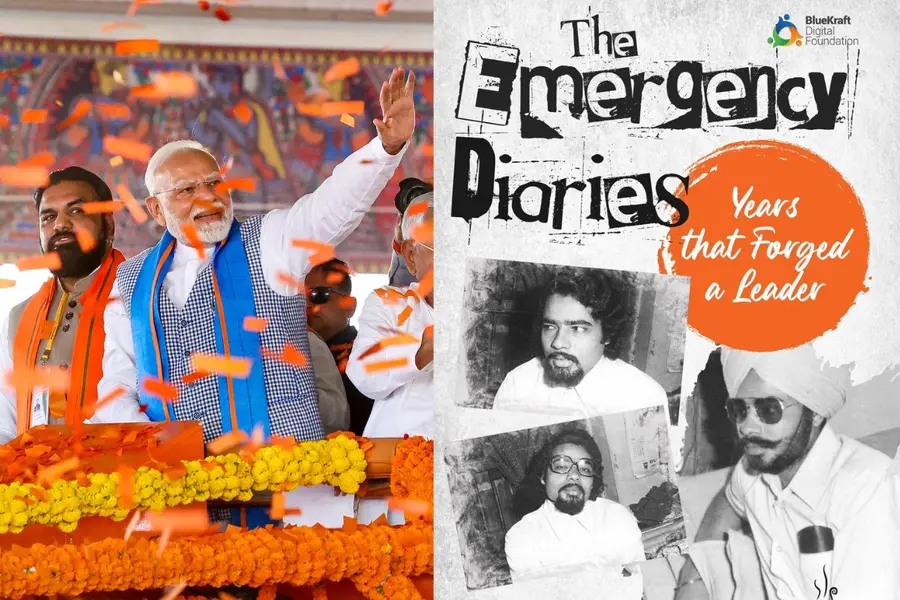
New Delhi: A new book titled ‘The Emergency Diaries – Years that Forged a Leade’r, published by BlueKraft, delves into Prime Minister Narendra Modi’s underground activities during the Emergency period, revealing a young RSS pracharak who adopted multiple disguises, travelled across states, and continued to mobilise support despite the high risks involved.
Disguises, secret meetings and jail visit
The book recounts how Modi, evading detection as a member of the banned Rashtriya Swayamsevak Sangh (RSS), travelled under various aliases.
In one instance, he even visited a jail in Bhavnagar disguised as a swamiji to meet incarcerated activists, including journalist Vishnu Pandya.
Pandya recalls, “It was a suitable opportunity for Modi to come to jail and meet us. In September 1976, after extensive preparations, Modi arrived in Bhavnagar. He entered the jail premises in the guise of a swamiji and successfully obtained permission to meet his 'followers'. He joined us at the central office of the jail and stayed with us for about an hour.”
“We talked about the jail administration and the situation of the families of the imprisoned, which was a significant concern as the earning members were in jail and the entire family was outside.
The third topic of discussion was how to promote the anti-Emergency publications further. After that, he left. No one suspected that the person who came to meet us was Modi.”
Underground communication
The book describes Modi’s innovative strategies to disseminate anti-Emergency literature across Gujarat and other states.
“He not only ensured the regular publication of anti-Emergency literature but also took on the perilous responsibility of distributing it throughout Gujarat. In those dark times, literature and publications played a vital role in keeping the democratic flame burning in the hearts of the citizens,” it says.
Modi frequently used a Sardarji disguise to avoid detection.
“His Sardarji disguise was so convincing that even his close acquaintances failed to recognise him,” the book adds.
Hasmukh Patel, an RSS volunteer from Nadiad, Gujarat, notes Modi's tactical thinking even then. He recalls Modi suggesting the placement of anti-Emergency literature in barber shops and with religious leaders, “where people from different walks of life gathered” or “came to listen to them”.
Avoiding detection with railway routes and coded meetings
According to the book, recognising the risk of using the postal system, Modi suggested transporting materials using the railway network.
“He believed that approach would make it easier to send anti-Emergency literature to other states while minimising the risk of getting caught. He loaded materials related to the Constitution and the Congress government's excesses onto trains departing from Gujarat and successfully disseminated such literature to various parts of the country with a considerably lower risk of detection.”
Nagar Bhai Chavda, a long-time RSS volunteer, reveals that secret meetings were often referred to using the code term “Chandan ka Karyakram”.
“Modi introduced them to these terms,” Chavda states, adding that Modi carefully chose houses with two or more exit routes in case of police raids.
Support for affected families and coordinated resistance
Modi also collaborated with senior RSS leaders such as Nath Zagda and Vasant Gajendragadkar to keep organisational lines open and support systems intact.
He encouraged RSS workers to remain in contact with families and organised underground meetings to keep morale high.
The book highlights that he also played a key role in supporting the families of those arrested or harassed. As a member of the national-level 'Sangharsh Samiti', Modi coordinated efforts to provide assistance and maintain resistance during the Emergency regime of then Prime Minister Indira Gandhi.
Modi reflects on Emergency years
In a post on social media platform X, Prime Minister Modi acknowledged the book and his role during those turbulent years.
He wrote, “The Emergency Diaries chronicles my journey during the Emergency years. It brought back many memories from that time.
I call upon all those who remember those dark days of Emergency or those whose families suffered during that time to share their experiences on social media. It will create awareness among the youth of the shameful time from 1975 to 1977.”
Political roots and rise to leadership
Modi joined the RSS at a young age, gaining prominence for his organisational skills. He was later moved to the BJP, where he worked at both state and national levels before becoming the Chief Minister of Gujarat in 2001.
In 2014, he led the BJP to a majority in the Lok Sabha and has served as Prime Minister since.
‘The Emergency Diaries – Years that Forged a Leader’ provides a detailed and personal glimpse into those critical 21 months that shaped one of India’s most significant political figures.
PTI inputs
Published: 25 Jun 2025, 06:05 pm IST
Related Topics
Disclaimer: Kindly avoid objectionable, derogatory, unlawful and lewd comments, while responding to reports. Such comments are punishable under cyber laws. Please keep away from personal attacks. The opinions expressed here are the personal opinions of readers and not that of Mathrubhumi.
