
Prime Minister Narendra Modi inaugurated the Rashtriya Prerna Sthal in Lucknow on Thursday, commemorating the 101st birth anniversary of former Prime Minister Atal Bihari Vajpayee
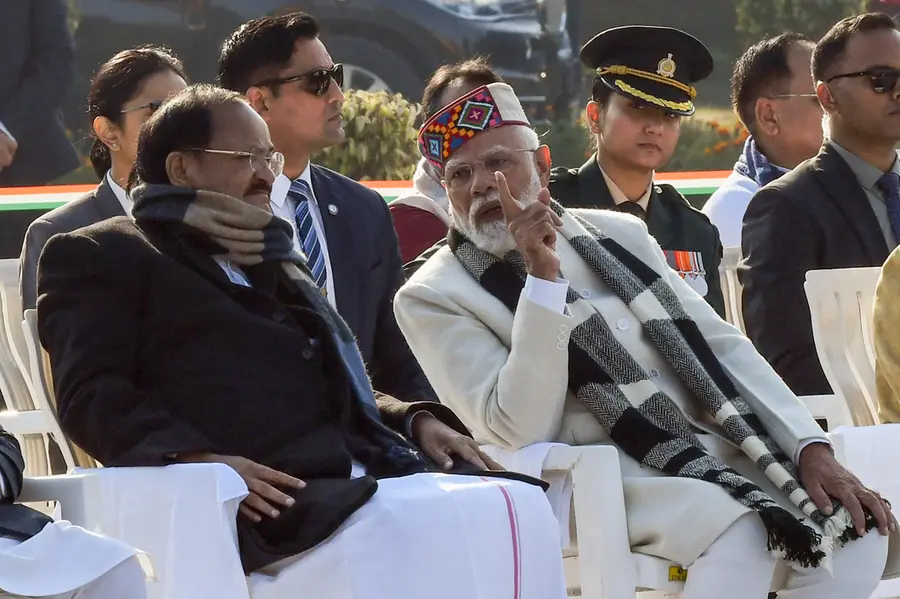
Lucknow: Prime Minister Narendra Modi on Thursday inaugurated the Rashtriya Prerna Sthal, a landmark national memorial dedicated to celebrating the life and ideals of Bharat Ratna Atal Bihari Vajpayee, in Lucknow. The inauguration coincided with Vajpayee’s 101st birth anniversary.
What is Article 370?
Article 370, a constitutional provision, granted special autonomy to Jammu and Kashmir, allowing it to have its own constitution, flag, and control over most internal matters. The Indian government’s decision to abrogate the article in August 2019 ended the state’s special status, fully integrating it with India and bringing all central laws into effect.
Also Read

Modi was accompanied by Defence Minister Rajnath Singh, Governor Anandiben Patel, Chief Minister Yogi Adityanath, and other senior leaders. He received a warm welcome from crowds waving the tricolour and raising slogans in his honour.
The sprawling complex features 65-foot-high bronze statues of BJP ideologues Syama Prasad Mookerjee and Pandit Deendayal Upadhyaya, alongside Vajpayee. A state-of-the-art museum, designed in a lotus-shaped structure and spread over 98,000 square feet, allows visitors to explore the contributions of these leaders to nation-building.
After the inauguration, the prime minister and other leaders toured the museum, viewing displays dedicated to Vajpayee, Mookerjee, and Upadhyaya.
According to officials, the Rashtriya Prerna Sthal, developed at an estimated cost of Rs 230 crore over 65 acres, is intended as a permanent national asset to promote leadership values, national service, cultural awareness, and public inspiration.
Described as an “inspirational complex of enduring national significance,” the memorial aims to motivate present and future generations, reflecting the pivotal role of Vajpayee, Mookerjee, and Upadhyaya in shaping India’s political thought and public life.
During the event, PM Modi also expressed pride in the government’s achievement in removing the wall of Article 370, underscoring its significance in India’s national integration.
(With PTI inputs)
Published: 25 Dec 2025, 04:19 pm IST
Disclaimer: Kindly avoid objectionable, derogatory, unlawful and lewd comments, while responding to reports. Such comments are punishable under cyber laws. Please keep away from personal attacks. The opinions expressed here are the personal opinions of readers and not that of Mathrubhumi.