
Parliament gears up for a crucial day as the Lok Sabha takes up the Insolvency and Bankruptcy Code (Amendment) Bill, 2025, while the Rajya Sabha discusses the CAPF Bill. A debate on eliminating left-wing extremism ahead of the March 31 deadline adds political heat.
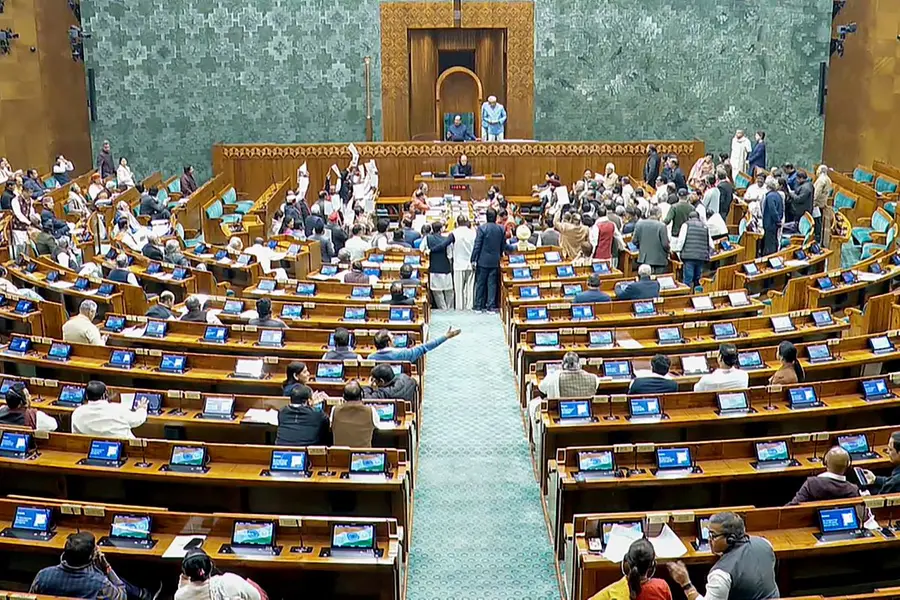
New Delhi: Both Houses of Parliament are set for a packed and politically significant day, with a mix of legislative business and high-stakes discussions scheduled across the Lok Sabha and the Rajya Sabha.
In the Lok Sabha, the spotlight will be on the Insolvency and Bankruptcy Code (Amendment) Bill, 2025, which seeks to address persistent delays in insolvency resolution and streamline procedures for both companies and individuals.
Finance Minister Nirmala Sitharaman is expected to move the Bill for passage after it is taken up for consideration by the House.
The proposed amendments follow recommendations from a Select Committee, with a focus on improving timelines, reducing litigation bottlenecks, and strengthening creditor confidence.
Focus on insolvency reforms and legislative business
The proposed changes to the Insolvency and Bankruptcy Code come at a time when resolution delays and low recovery rates in several high-profile cases have raised concerns among stakeholders.
The government has maintained that procedural reforms are necessary to ensure faster resolution and to maintain the Code’s effectiveness as a key economic reform tool.
The Lower House will also conduct its regular proceedings beginning with Question Hour, followed by the laying of papers by multiple ministries, including Education, Finance, Jal Shakti, Environment, Labour, Youth Affairs, and Corporate Affairs.
In addition, several committee reports will be tabled, offering insight into the functioning of public sector undertakings and critical sectors.
These include findings by the Committee on Public Undertakings on foodgrain storage by the Food Corporation of India, the modernisation of Mishra Dhatu Nigam Limited (MIDHANI), and performance reviews of major PSUs such as NMDC, BSNL, BHEL, Oil India Limited and IRFC.
The Standing Committee on Communications and Information Technology is also set to present a report examining the impact of emerging Artificial Intelligence technologies, a subject gaining increasing policy attention.
Ministers are expected to make statements on the implementation of recommendations related to the petroleum sector PSUs, as well as flagship sports initiatives such as Khelo India and the Sports Authority of India.
Naxalism debate and CAPF Bill stir political contest
Alongside legislative business, the Lok Sabha will take up a discussion under Rule 193 on efforts to eliminate left-wing extremism in the country.
The debate gains urgency as the government’s stated deadline of March 31, 2026, to make India free of Naxalism approaches.
Members Dr Byreddy Shabari and Shrikant Eknath Shinde are set to raise the issue, while Union Home Minister Amit Shah is expected to respond, reiterating the government’s position and outlining progress made so far.
Meanwhile, in the Rajya Sabha, attention will turn to the Central Armed Police Forces (General Administration) Bill, 2026, which is slated for further consideration and passage.
Introduced by Minister of State for Home Nityanand Rai, the Bill proposes a structured deputation system for senior-level appointments in CAPFs.
As per the provisions, 50 per cent of Inspector General posts and at least 67 per cent of Additional Director General posts will be filled through deputation.
All positions at the level of Special Director General and Director General are to be filled through deputation.
The proposed legislation has triggered opposition criticism, with several members arguing that it contradicts a 2025 Supreme Court judgment that recommended gradually reducing deputation in CAPFs up to the Senior Administrative Grade.
The debate is expected to see sharp exchanges, reflecting broader concerns over cadre management and institutional autonomy within the forces.
With key reforms, security discussions and policy debates converging, the day’s proceedings are likely to be closely watched for both legislative outcomes and political messaging.
Published: 30 Mar 2026, 11:43 am IST
Related Topics
Disclaimer: Kindly avoid objectionable, derogatory, unlawful and lewd comments, while responding to reports. Such comments are punishable under cyber laws. Please keep away from personal attacks. The opinions expressed here are the personal opinions of readers and not that of Mathrubhumi.
