
Prime Minister Narendra Modi tells Lok Sabha that the ongoing West Asia war has posed unexpected challenges for India, impacting key sectors like energy and supply chains.
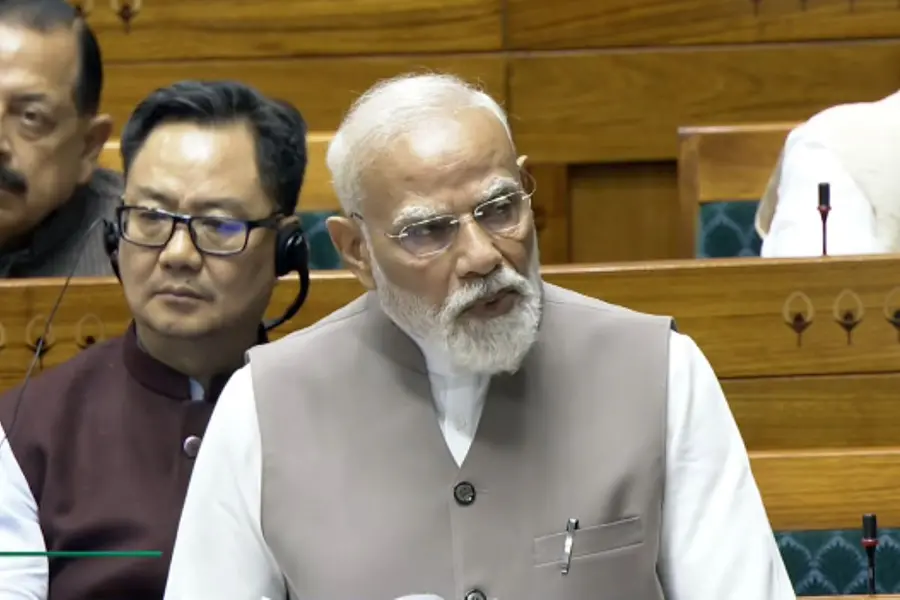
New Delhi: Prime Minister Narendra Modi on Monday told the Lok Sabha that West Asia remains a critical trade route for India, underscoring the country’s deep economic and strategic stakes in the region amid the ongoing war.
“West Asia is a key route for our trade,” Modi said while addressing the House during the Budget Session, as he outlined the government’s response to the escalating conflict and its potential impact on India.
The Prime Minister emphasised that India’s concerns stem not only from trade dependencies but also from the large Indian diaspora in the region.
"Over one crore Indians live and work in Gulf nations. Due to several such reasons, India is worried, and that is why we must raise a common voice in the world,” he said.
Modi highlighted the government’s efforts to diversify energy sources over the past decade, noting that India now imports energy from 41 countries, up from 27 earlier. He also pointed to the country’s strategic petroleum reserves, stating that India currently holds 53 lakh metric tonnes of reserves to cushion against disruptions.
Reassuring the House, the Prime Minister said that there is no immediate shortage of essential fuels such as LPG, petrol, or diesel, and that the government is actively working on alternative supply chains to mitigate risks arising from disrupted shipping routes in the Gulf.
“The government is keeping an eye on shipping routes in the Gulf so that oil, gas, or fertiliser shipments reach India safely,” he said, adding that coordinated efforts are underway across ministries to ensure an uninterrupted supply of critical resources.
Modi also informed Parliament that around 1,000 Indians have been safely brought back from Iran, including more than 700 medical students. He said he had personally spoken to leaders in West Asia in two rounds of phone calls, all of whom assured the safety of Indian nationals.
However, he acknowledged that the conflict has not been without cost. “Some Indian nationals have died, and those injured are receiving treatment,” the Prime Minister said.
The Prime Minister’s address came a day after a high-level meeting of the Cabinet Committee on Security (CCS), where ministers were tasked with preparing short-term, medium-term, and long-term strategies to deal with potential disruptions in energy supplies and key raw materials.
He stressed that the government is working to minimise the impact of the crisis on the domestic economy. “The whole world is affected, and we are making efforts that India feels the effect the least,” Modi said, adding that India’s strong economic fundamentals provide resilience in uncertain times.
The address is seen as a comprehensive overview of India’s preparedness as the West Asia conflict continues to evolve, with implications for global markets, energy security, and geopolitical stability.
Published: 23 Mar 2026, 01:39 pm IST
Related Topics
Disclaimer: Kindly avoid objectionable, derogatory, unlawful and lewd comments, while responding to reports. Such comments are punishable under cyber laws. Please keep away from personal attacks. The opinions expressed here are the personal opinions of readers and not that of Mathrubhumi.
