
Once a year, a single street carries the weight of a city’s memories. Park Street at Christmas is not just a celebration — it is Kolkata remembering who it is.
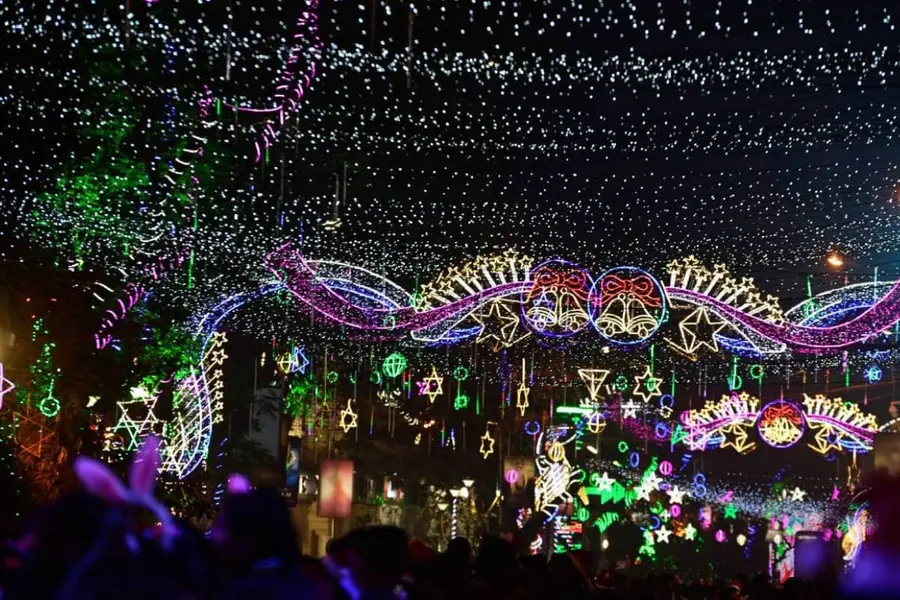
Every December, Kolkata’s Park Street undergoes a transformation that few Indian roads can rival. What is otherwise a bustling commercial artery turns into a glowing corridor of lights, music, prayer, and celebration — a place where Christmas is not merely observed but collectively lived.
Often referred to as 'The Christmas Capital of India,' Park Street’s festive legacy is deeply rooted in the city’s colonial past, its Christian institutions, and Kolkata’s long-standing tradition of cultural inclusivity.
A colonial road with sacred beginnings
Originally known as Burial Ground Road during British rule, Park Street earned its name from the many cemeteries and churches that came up in the area in the late 18th and early 19th centuries. The presence of institutions such as St. Xavier’s College (1860), Loreto House, and historic churches like St Thomas’ Church and Sacred Heart Church ensured that Christmas celebrations here were never confined to private homes.
As Kolkata emerged as the capital of British India until 1911, Park Street became a social and cultural hub for Europeans and Anglo-Indians. Christmas masses, choir performances, and midnight prayers gradually spilled out of churches and into the streets, laying the foundation for a public, participatory celebration.
When the city learnt to celebrate together
What distinguishes Park Street’s Christmas is not just its Christian heritage but the way the festival was embraced by the wider city. By the mid-20th century, Bengalis of all faiths had begun associating December with strolls down Park Street, window shopping, bakery hopping, and soaking in the festive ambience.
Restaurants like Flurys, Peter Cat, Mocambo, and Trincas became as integral to Christmas as midnight mass. Plum cakes, marzipan, roast chicken, and yule logs turned into seasonal rituals, irrespective of religious identity.
This blending of faith and festivity turned Park Street into a rare urban space where religion did not divide but invited participation.
Lights, crowds, and the modern spectacle
The modern visual spectacle of Park Street Christmas — elaborate lighting installations, themed arches, LED chandeliers, and music-filled walkways — took shape in the late 20th century, with local traders’ associations and the Kolkata Police working together to manage crowds that now run into lakhs.
Every year, from December 23 to Christmas night, Park Street becomes a pedestrian-heavy zone, drawing visitors from across West Bengal and beyond. Carol singing groups, street performers, Santa hats, and selfie-seeking crowds define the stretch from Park Street Crossing to Camac Street.
Despite the scale, the celebration remains largely peaceful, reflecting Kolkata’s reputation for orderly public festivities.
More than a festival, a cultural statement
Park Street Christmas is not just about December 25. It represents Kolkata’s larger ethos — a city where festivals transcend faith and history merges seamlessly with the present.
In a country often marked by cultural boundaries, Park Street stands out as a reminder that shared public joy can become tradition. Long after the lights come down, the idea of Park Street at Christmas continues to glow in Kolkata’s collective memory.
Published: 25 Dec 2025, 07:06 pm IST
Related Topics
Disclaimer: Kindly avoid objectionable, derogatory, unlawful and lewd comments, while responding to reports. Such comments are punishable under cyber laws. Please keep away from personal attacks. The opinions expressed here are the personal opinions of readers and not that of Mathrubhumi.
