
No pre-booking needed! Mumbai-Ahmedabad bullet train to run every 10 minutes during peak hours, offering metro-like convenience.
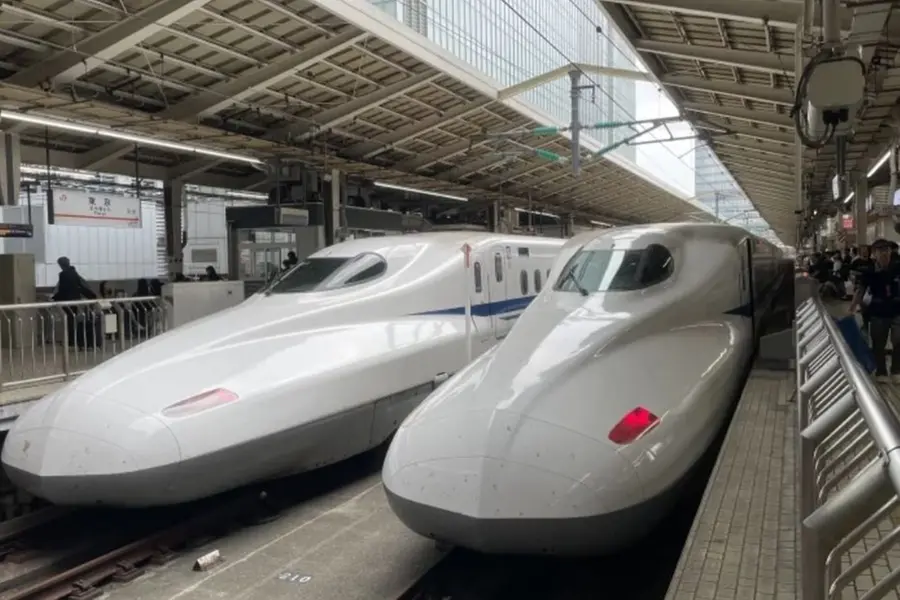
Mumbai: In a move set to redefine high-speed rail travel in India, Union Railway Minister Ashwini Vaishnaw announced that the upcoming Mumbai-Ahmedabad bullet train will eventually eliminate the need for pre-reserved tickets, allowing passengers to walk in and board a train every ten minutes during peak hours.
“During peak hours, morning and evening, trains will run every half hour. Initially, trains will run every half hour during peak hours. Later, when the entire network stabilizes, service will be available every ten minutes during peak hours. This means that if you want to travel from Mumbai to Ahmedabad, the system of pre-reserving tickets will be eliminated,” Vaishnaw said while addressing the media during a project breakthrough event in Ghansoli.
The plan is to operate trains every 30 minutes during initial peak-hour operations, with a goal to scale up to every 10 minutes, mimicking the convenience of metro services but on a high-speed intercity scale.
A seamless, metro-like travel experience
Once fully operational, the Mumbai-Ahmedabad High Speed Rail (MAHSR) corridor will enable commuters to complete the 508 km journey in just two hours, with no need for advance booking.
The goal is not just speed, but ease and spontaneity, a system where high-frequency bullet trains become as accessible as local transport. "Simply arrive at the station, catch a train in ten minutes, and reach your destination in two hours. This will create a new approach to the entire service," Vaishnaw explained.
Major construction milestones achieved
The announcement coincided with a major tunnelling breakthrough in the project: a 4.88 km tunnel between Shilphata and Ghansoli was completed on Saturday using a controlled blast technique. This tunnel is part of a 21 km underground stretch that includes a challenging 7 km segment beneath Thane Creek.
Constructed using the New Austrian Tunneling Method (NATM), the tunnel connects the Savali shaft to the Shilphata portal, linking it with the elevated viaduct segment of the high-speed corridor. Work on the tunnel began in May 2024, and the first major 2.7 km breakthrough was achieved in July. An additional intermediate tunnel (ADIT) enabled dual-end excavation to accelerate progress.
Features of the tunnel
The completed tunnel features a single-tube structure with twin tracks, 13.1 metres in diameter and 12.6 metres in internal width. After excavation, the tunnel will undergo waterproofing, lining, and equipment installation. The remaining 16 km of underground work will be executed using Tunnel Boring Machines (TBMs).
ALSO READ: Major breakthrough achieved in Mumbai-Ahmedabad bullet train tunnel construction | WATCH
The project also adheres to stringent safety protocols, with systems like piezometers, strain gauges, inclinometers, and air ventilation systems in place for worker safety.
India's first bullet train nears reality
The Mumbai-Ahmedabad bullet train is India’s first high-speed rail project. As per NHSRCL, construction has been completed for 321 km of viaduct, 398 km of piers, 17 river bridges, 9 steel bridges, and over 4 lakh noise barriers across 206 km of the corridor.
The track bed construction has been finished on 206 km, and more than 2,000 overhead equipment masts have been installed covering 48 km of the mainline viaduct.
Published: 20 Sept 2025, 02:13 pm IST
Related Topics
Subscribe to our Newsletter
Disclaimer: Kindly avoid objectionable, derogatory, unlawful and lewd comments, while responding to reports. Such comments are punishable under cyber laws. Please keep away from personal attacks. The opinions expressed here are the personal opinions of readers and not that of Mathrubhumi.
