
The Opposition has submitted a no-confidence motion against Lok Sabha Speaker Om Birla escalating tensions in Parliament
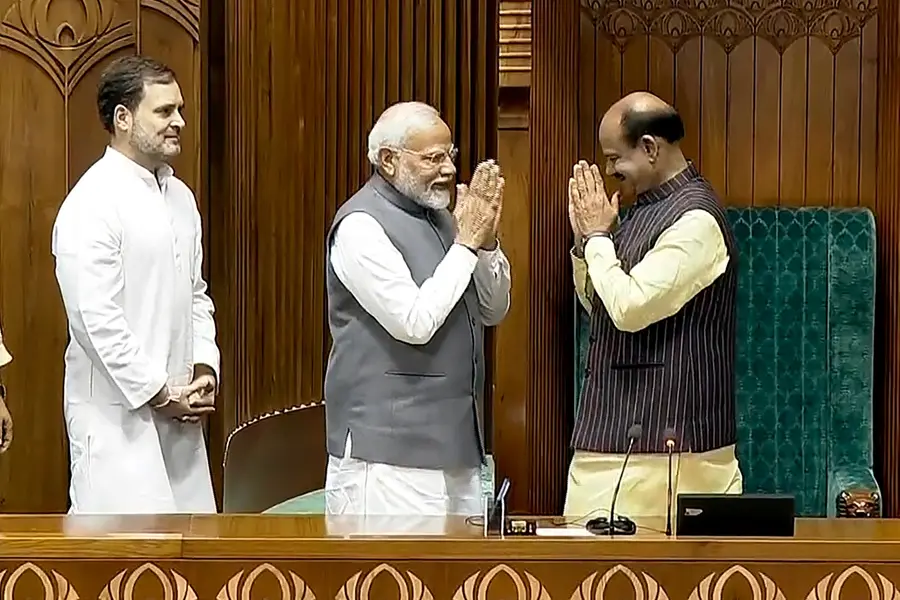
In a significant political development, the Opposition has moved a no-confidence motion against Lok Sabha Speaker Om Birla, alleging that the Chair acted unfairly during proceedings in the ongoing Budget session. The notice has been submitted to Lok Sabha Secretary General Utpal Kumar Singh and will be examined and processed according to parliamentary rules.
Why the no-confidence motion was moved
Also Read

The move comes after the Opposition claimed that Leader of Opposition (LoP) Rahul Gandhi was not allowed to speak fully during the discussion on the Motion of Thanks to the President’s Address. Gandhi had referred to General M M Naravane’s unpublished memoir while speaking about the 2020 India-China standoff.
Speaker Om Birla ruled that unpublished material should not be cited in the House, leading to objections from Opposition members. They argued that Gandhi was prevented from presenting his arguments, calling it an attempt to suppress discussion on matters of national importance.
The controversy intensified when Rahul Gandhi questioned claims that the memoir had not been published. Referring to a social media post by the former Army Chief, Gandhi said: “Here is a tweet from Mr Naravane which says – ‘Just follow the link to my book’. The point I am making is – either Mr Naravane is lying or it is Penguin which is lying. I don't think the former Army chief will lie... Penguin says the book has not been published. But the book is available on Amazon. Gen. Naravane has tweeted, ‘Please buy my book in 2023.’ I believe Naravane ji over Penguin. Do you believe Penguin over Naravane ji?”
Gandhi further stated that he believed certain statements in the book were “inconvenient for the Government of India and the Prime Minister of India”.
Political support and divisions
According to sources, the Congress has initiated the motion and secured support from the Samajwadi Party (SP) and the Dravida Munnetra Kazhagam (DMK). However, the Trinamool Congress (TMC) has reportedly decided not to sign the motion, creating divisions within the broader Opposition bloc.
Under parliamentary procedure, a no-confidence motion against the Speaker is a rare and serious step. Unlike a no-confidence motion against the government, which tests the majority support for the Council of Ministers, this motion questions the impartiality and functioning of the Speaker, who is expected to conduct proceedings in a non-partisan manner.
Why it matters
The development is significant because the Speaker’s role is central to maintaining order and ensuring balanced debate in the Lok Sabha. A no-confidence motion against the Speaker reflects a breakdown of trust between the Chair and sections of the House.
While the ruling National Democratic Alliance (NDA) holds a majority in the Lok Sabha, making the passage of the motion unlikely, the political message is substantial. It signals escalating confrontation during the Budget session and highlights disputes over parliamentary procedure and freedom of speech within the House.
Such motions also bring attention to procedural rules regarding the citation of unpublished material, and whether rulings by the Chair are seen as consistent and impartial.
Reactions from the ruling alliance
Union Minister and Lok Janshakti Party (Ram Vilas) MP Chirag Paswan strongly criticised the Opposition’s move. Speaking to reporters, he said:
“The Opposition has created a strange situation... Rahul Gandhi's petulance has washed out the Budget session. Due to this, he did not let the other Opposition MPs speak. You are bringing a no-confidence motion against a Speaker who always tried to give both the ruling and opposition sides a chance to speak. It is condemnable what the Opposition is doing.”
Paswan described the motion as politically motivated and defended Om Birla’s conduct as fair to both sides of the House.
What happens next
The notice will now be examined as per Lok Sabha rules. If admitted, the motion would require support from a specified number of members to be taken up for discussion and voting.
Given the current strength of the ruling alliance, the motion is unlikely to succeed numerically. However, it has intensified political debate and could further disrupt proceedings in the ongoing Budget session.
The episode underscores continuing friction between the government and the Opposition over parliamentary functioning, rules of debate and the limits of political speech in the House.
Published: 10 Feb 2026, 02:09 pm IST
Related Topics
Disclaimer: Kindly avoid objectionable, derogatory, unlawful and lewd comments, while responding to reports. Such comments are punishable under cyber laws. Please keep away from personal attacks. The opinions expressed here are the personal opinions of readers and not that of Mathrubhumi.