
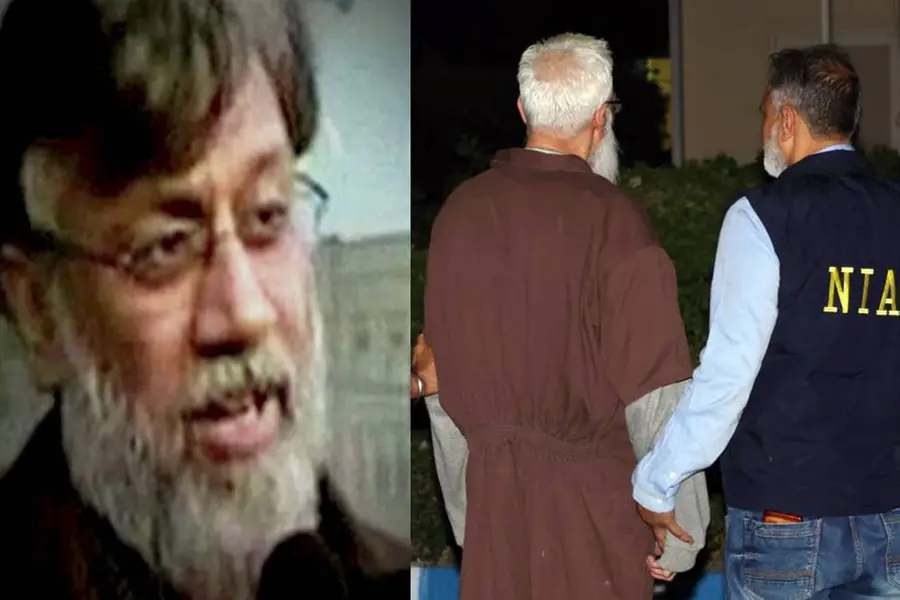
New Delhi: The National Investigation Agency (NIA) is interrogating Tahawwur Hussain Rana, a key accused in the 2008 Mumbai terror attacks, for 8 to 10 hours each day to uncover the broader conspiracy behind the deadly strikes that left 166 dead and over 230 injured, official sources said Monday.
Rana, recently extradited from the United States, is being questioned at the NIA’s headquarters in Delhi’s CGO Complex. His interrogation is being led by Chief Investigating Officer Jaya Roy and her team. The focus of the probe is on Rana’s role in plotting the attacks along with David Coleman Headley, his co-conspirator and childhood friend, who is currently imprisoned in the U.S.
Sources confirmed that Rana is cooperating with investigators. So far, he has requested only three items — a pen, a notepad, and a copy of the Quran — all of which have been provided. He has made no special dietary requests and is being given food as per standard protocol for detainees.
The 64-year-old Pakistani-origin Canadian businessman is being held in a high-security cell under round-the-clock surveillance. The NIA is questioning him based on evidence including call records, travel history across India, and intelligence leads.
Rana was formally arrested by the NIA on April 10 after landing at Delhi’s Indira Gandhi International Airport, following a years-long extradition battle. A Delhi court granted the NIA 18 days of custody.
He faces charges under various Indian laws, including criminal conspiracy, murder, and terrorism-related offences under the Unlawful Activities (Prevention) Act (UAPA) and SAARC Convention (Suppression of Terrorism) Act.
The NIA had filed its case on November 11, 2009, naming Rana, Headley, and others. The investigation has also identified top operatives from Lashkar-e-Taiba (LeT) and Harkat-ul-Jihad al-Islami (HuJI) as conspirators, including Hafiz Saeed, Zaki-ur-Rehman Lakhvi, Sajid Majid, Ilyas Kashmiri, and Abdur Rehman Hashim Syed, along with Pakistani ISI officers known as Major Iqbal and Major Sameer Ali.
Published: 14 Apr 2025, 05:24 pm IST
Related Topics
Disclaimer: Kindly avoid objectionable, derogatory, unlawful and lewd comments, while responding to reports. Such comments are punishable under cyber laws. Please keep away from personal attacks. The opinions expressed here are the personal opinions of readers and not that of Mathrubhumi.
