
The arrest of US national Matthew VanDyke in India has revealed major security leads, exposing his links to global conflicts, armed groups and covert operations.
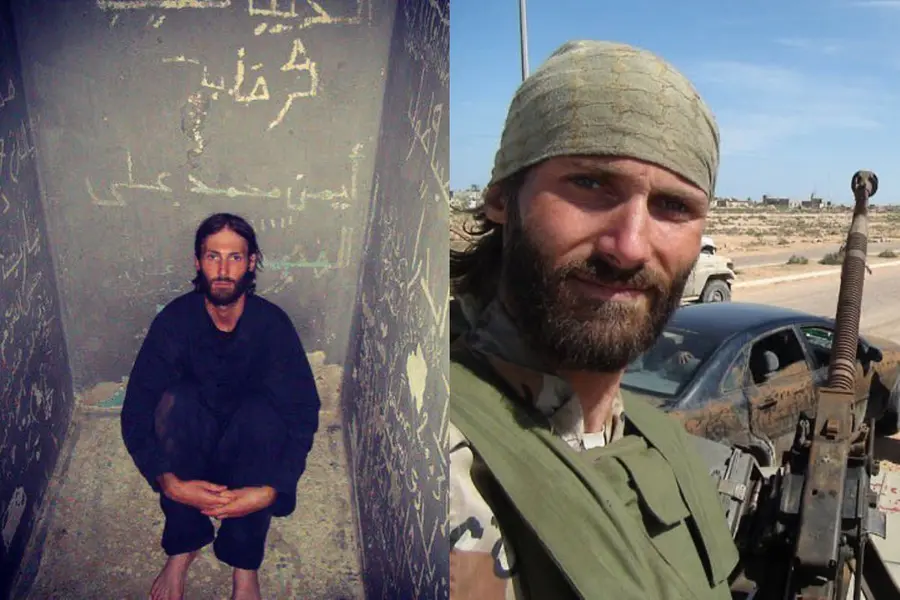
The arrest of American national Matthew Aaron VanDyke in India has opened a significant national-security investigation, with officials uncovering extensive links to foreign conflict zones, global rebel movements and alleged training of armed groups in South Asia. VanDyke was detained alongside six Ukrainian nationals after they allegedly crossed into Myanmar illegally through India, an operation the National Investigation Agency says was part of a wider conspiracy involving insurgent organisations.
Authorities are now probing how VanDyke reached India’s northeast, what his objective was, and whether he had ties to anti-India groups. The US embassy has confirmed awareness of the case but declined further comment.
Modern warfare operative with a global footprint
Although VanDyke described himself online as a security analyst, filmmaker and war correspondent, investigators say his past reveals far more. According to sources, he has long operated as a mercenary military instructor with previous associations with the United States military, including deployments in Iraq. He is believed to have provided “special forces-style” training involving guerrilla tactics, drone operations and advanced combat disciplines.
Officials reviewing his devices have reportedly found footage and material tying him to multiple foreign conflicts and paramilitary operations.
Early years
Born in Baltimore in 1981, VanDyke first gained attention during the Libyan Civil War. After university, he embarked on a solo motorcycle journey across North Africa and the Middle East, becoming the only American to cross Libya by motorbike under Muammar Gaddafi. His travels drew him into Libya’s 2011 uprising, where he joined anti-Gaddafi rebels. Captured and held in solitary confinement for about six months, he escaped and later returned to the front.
His transition from adventurer to combatant continued as he planned a documentary on Syria. But the executions of US journalists James Foley and Steven Sotloff, both his friends, shifted his focus toward training armed groups rather than documenting them. He went on to found the non-profit Sons of Liberty International (SOLI), positioning it as an organisation offering military training worldwide.
Calls to mercenaries and training of armed groups
Investigators say they discovered recordings suggesting VanDyke publicly endorsed rebellions and encouraged global fighters to aid insurgent movements. He is believed to have issued appeals urging mercenaries to join groups in Venezuela, Myanmar and Iran, while offering training in drone technology and modern warfare.
His presence in India has raised major concerns over whether the country was being used as a transit route and whether he engaged with proscribed organisations. Espionage angles are also under scrutiny.
Theories behind his India mission
Officials are examining three key possibilities surrounding his activities. One theory points to a broader international effort to destabilise India, citing long-standing allegations about covert operations by the Central Intelligence Agency.
A second angle involves potential links to Ukraine, especially after President Volodymyr Zelensky emphasised the need for special operations abroad, with past Ukrainian involvement reported in conflicts in Sudan, Mali, Syria and Libya.
A third hypothesis ties VanDyke’s movements to tensions from the Russia-Ukraine war, particularly India’s continued purchase of Russian oil and strategic engagement with Moscow.
Years across conflict zones
VanDyke’s history spans more than a decade across global hotspots. He lived in Iraq as a war correspondent, completed a major Iraq-Iran-Afghanistan motorbike trip with photographer Daniel Britt, and produced the award-winning documentary ‘Point and Shoot’ (2014). He faced repeated detentions in Iraq and at one point was accused of espionage by Iran.
During Syria’s war, he produced ‘Not Anymore: A Story of Revolution’ from Aleppo, aiming to rally international support for anti-Assad rebels. Later, he declared plans to “raise and train a Christian army to fight” ISIS. His organisation SOLI has been linked by some reports to anti-regime activities in Iran in 2023.
In 2022, he enlisted with the Ukrainian armed forces following Russia’s invasion of Ukraine. His organisation also offered counter-drone training, demining initiatives and tactical support to Ukrainian fighters. He reportedly trained civilians in Lviv and planned programmes near the front lines.
His footprint extends across countries where the United States has held foreign-policy stakes, ranging from Venezuela to the Philippines, Libya, Syria, Iraq, Iran, Afghanistan, Egypt and Turkey.
NIA’s case: Illegal entry, drone shipment, insurgent links
According to the NIA’s submission in court, VanDyke and the Ukrainian suspects entered India legally but travelled to Mizoram without the required Restricted Area Permit. They allegedly crossed into Myanmar to contact ethnic armed groups with ties to banned Indian insurgent organisations.
Investigators say these groups were “supporting some proscribed Indian Insurgent Groups by way of supplying weapons and other terrorist hardware and training them.” Officials also claim VanDyke and the others brought a large consignment of drones from Europe.
His Myanmar-linked movements also intersect with wider geopolitical interests. The Myanmar junta enjoys support from Russia and China, making the region a strategic pressure point amid the Russia-Ukraine war.
With VanDyke’s arrest, Indian authorities believe they may have disrupted a prolonged pattern of covert operations spanning continents.
He and the six Ukrainians have been charged under Section 18 of the Unlawful Activities (Prevention) Act for conspiracy to carry out illegal or terrorist acts. Investigators are now determining whether his latest mission endangers India’s internal security, and what networks, if any, he may have been acting on behalf of.
(With inputs from agencies)
Published: 19 Mar 2026, 07:28 am IST
Related Topics
Disclaimer: Kindly avoid objectionable, derogatory, unlawful and lewd comments, while responding to reports. Such comments are punishable under cyber laws. Please keep away from personal attacks. The opinions expressed here are the personal opinions of readers and not that of Mathrubhumi.
