
Ahead of Maharashtra’s municipal council and nagar panchayat elections, NCP chief Sharad Pawar has laid down a strategic framework for candidate selection and alliances
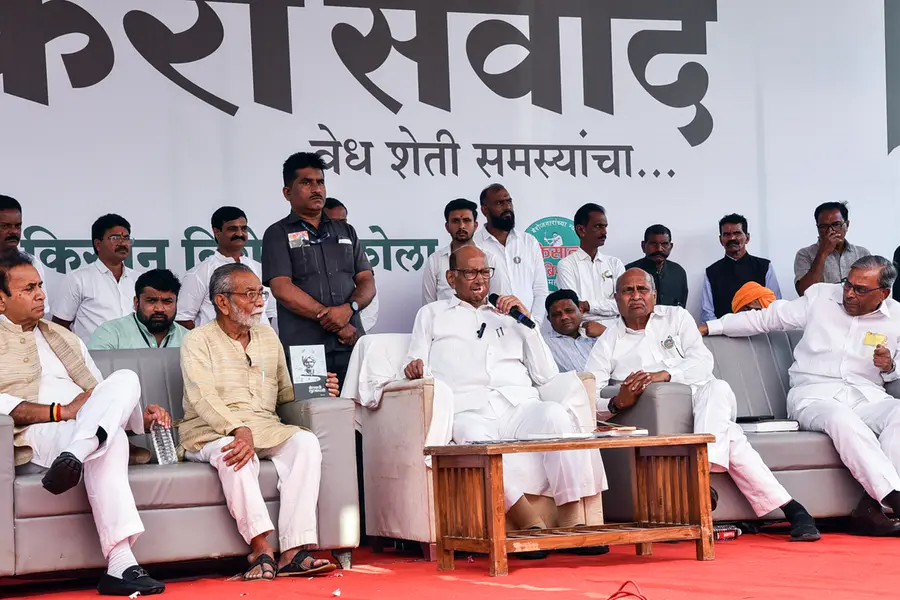
Mumbai: With the first phase of municipal council and nagar panchayat elections scheduled for December 2, Nationalist Congress Party (NCP) chief Sharad Pawar convened a key meeting in Mumbai on Sunday to review organisational preparedness and set a strategic direction for the polls.
The meeting, held at the YB Chavan Centre, included senior party leaders such as state president Shashikant Shinde, Jayant Patil, MP Supriya Sule, and several MPs and MLAs. Pawar emphasised that the party should avoid alliances with the Bharatiya Janata Party (BJP) at the local level, while leaving the door open for collaborations with other Mahayuti parties, including the Shiv Sena faction led by Deputy Chief Minister Eknath Shinde or the NCP faction headed by Deputy Chief Minister Ajit Pawar, depending on local political dynamics.
A key focus of the discussions was candidate selection for seats reserved for Other Backward Classes (OBCs), amid ongoing Maratha–OBC reservation tensions. Pawar instructed leaders to prioritise candidates from long-established OBC communities, while candidates from the Maratha community with newly issued Kunbi certificates should be considered only if local political calculations and candidate availability required it.
Party sources said Pawar’s guidance reflects a conscious effort to avoid the perception that the NCP is taking sides in the OBC–Maratha conflict over reservation entitlements. He also highlighted the need for rigorous verification of caste certificates for Scheduled Caste (SC) candidates, following past controversies involving fraudulent documents.
An NCP MP present at the meeting, requesting anonymity, explained: “On OBC seats, preference is for traditional OBC candidates. Candidates with newly issued Kunbi certificates will be considered only after assessing local caste arithmetic and availability of strong candidates. Alliance decisions can be taken locally, except with the BJP.”
Sharad Pawar’s directions come as Maharashtra’s municipal polls are poised to test the NCP’s organisational strength and strategic alliances. The party faces a delicate balancing act amid rising tensions between OBC and Maratha communities over reservation entitlements.
The emphasis on traditional OBC candidates reflects the NCP’s intent to maintain support among established voter bases, while selectively evaluating candidates from Maratha communities with recently acquired Kunbi certificates ensures flexibility in regions where caste arithmetic demands compromise.
Pawar’s insistence on verifying SC certificates addresses past allegations where candidates exploited fraudulent documentation to contest elections, underscoring a commitment to credibility and compliance with reservation laws.
The explicit ruling out of a tie-up with the BJP signals the party’s intent to preserve its identity and avoid being perceived as aligning with a rival at the local level. Meanwhile, tactical openness towards other regional allies indicates a pragmatic approach, allowing the NCP to adapt to local political exigencies while safeguarding its core voter base.
This framework sets the tone for candidate selection, alliances, and campaign strategies in the upcoming elections, reinforcing Pawar’s reputation for careful political calculation and attention to intra-party organisation.
Published: 09 Nov 2025, 11:05 pm IST
Related Topics
Disclaimer: Kindly avoid objectionable, derogatory, unlawful and lewd comments, while responding to reports. Such comments are punishable under cyber laws. Please keep away from personal attacks. The opinions expressed here are the personal opinions of readers and not that of Mathrubhumi.
