
Delcy Rodríguez has promised elections in Venezuela during her UN General Assembly address, while leaving the date of the vote undecided.
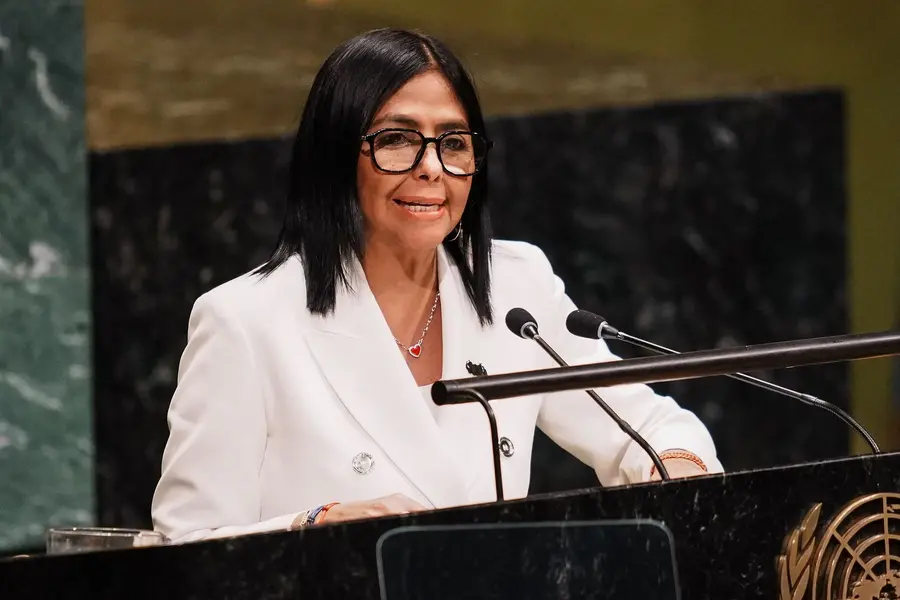
Venezuela’s acting President Delcy Rodríguez told the UN General Assembly that the country will hold elections as part of a transition to what she described as “full democracy”, but she did not provide a date for the vote.
Speaking at the 81st session of the UN General Assembly in New York on September 23, Rodríguez said Venezuela had begun a political transition and would eventually hold elections. She said the process would be “transparent, inclusive and verifiable” and that Venezuelans would determine when the elections should take place.
Also Read

She also said her government had begun dialogue with opposition sectors and that the process would allow political groups to compete on an equal footing. However, she did not set out a specific election timetable.
Rodríguez thanks Trump for renewed US ties
A major part of Rodríguez’s speech focused on Venezuela’s relationship with the United States.
She thanked US President Donald Trump for his stated willingness to resume diplomatic relations and cooperation with Caracas. Rodríguez said Venezuela wanted to rebuild relations with the US, neighbouring countries and the wider international community around cooperation, mutual respect and equality.
Her remarks came shortly after she met Trump in New York during the UN General Assembly. The meeting was the first between the two since Rodríguez became Venezuela’s interim president following Nicolás Maduro’s removal from office in January.
US-Venezuela discussions have also included energy, mining, debt restructuring and the future of Venezuela’s oil sector.
What did she say about Venezuela’s transition?
Rodríguez presented the political transition as a process aimed at moving Venezuela from its current period of uncertainty towards a democratic system.
She said she would assume “historic responsibility” for guiding the country towards a system recognised by Venezuelans and the international community.
The central announcement was that elections will take place, but the absence of a date leaves unanswered questions about when the transition will reach the voting stage.
Opposition questions remain
Rodríguez’s comments came amid continuing uncertainty over the participation of Venezuela’s opposition.
Opposition leader María Corina Machado’s advisers said she had been denied entry to Venezuela three times while attempting to return from exile, according to reports cited around the UNGA proceedings.
That context makes Rodríguez’s pledge of an inclusive electoral process significant, although the precise arrangements for future elections remain to be announced.
Venezuela and the US: what has changed?
Relations between Washington and Caracas have shifted considerably since Maduro was removed from office.
Rodríguez’s UN appearance followed her meeting with Trump and broader negotiations involving energy, debt and economic reconstruction. Reuters reported that US and Venezuelan officials were also discussing restructuring the country’s substantial debt.
The US has also been involved in discussions over Venezuela’s oil industry and economic recovery, while international institutions have begun engaging with the interim government on issues including reconstruction and financing.
Earthquake recovery also features in speech
Rodríguez also addressed the earthquakes that struck Venezuela in June.
She described the disasters as another major challenge for the country and spoke about rebuilding and national unity following the destruction.
Her remarks placed the political transition alongside the country's economic and humanitarian recovery efforts.
The election announcement establishes a political commitment but does not yet provide the practical details needed to assess how and when the transition will proceed.
Three issues are likely to remain central: the election timetable, opposition participation and the rules governing the vote.
Rodríguez's comments also come as Washington and Caracas expand engagement on economic and diplomatic matters. The US and Venezuela have been discussing energy, debt restructuring and other areas of cooperation, creating a broader framework around the political transition. For now, the clearest development from Rodríguez’s UN address is that her government says elections will take place, while leaving the timing and detailed electoral arrangements unresolved.
Published: 24 Sept 2026, 08:19 am IST
ABOUT THE AUTHOR
Related Topics
Disclaimer: Kindly avoid objectionable, derogatory, unlawful and lewd comments, while responding to reports. Such comments are punishable under cyber laws. Please keep away from personal attacks. The opinions expressed here are the personal opinions of readers and not that of Mathrubhumi.