
NCERT is likely to revise or remove the ‘judicial corruption’ chapter from a newly introduced Class 8 CBSE social science textbook after the Supreme Court raised objections over certain references to the judiciary. The textbook has been pulled from the NCERT website pending review.
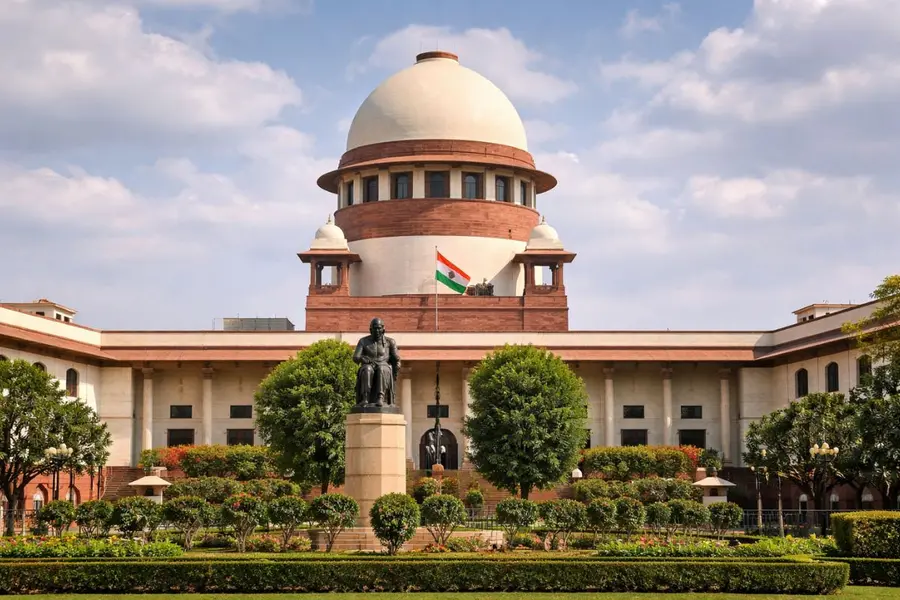
New Delhi: The National Council of Educational Research and Training (NCERT) is expected to make revisions to a newly introduced Class 8 CBSE social science textbook after the Supreme Court raised serious concerns over portions discussing judicial corruption, according to sources familiar with the matter.
The development follows the apex court’s decision to take suo motu cognisance of what it described as “objectionable” references to the judiciary contained in the textbook. The book, part of NCERT’s updated curriculum framework, was subsequently removed from the official NCERT website pending review.
A three-judge bench led by Chief Justice of India (CJI) Surya Kant, along with Justices Joymalya Bagchi and Vipul M Pancholi, examined the issue after senior advocate Kapil Sibal, supported by Abhishek Manu Singhvi, flagged the matter for urgent consideration.
During the proceedings, the bench reportedly expressed discomfort over how the judiciary was portrayed in the academic material.
Sources indicated that the court took exception to segments that referred to judicial inefficiencies, including case backlogs and alleged corruption, suggesting that the language used may undermine public confidence in the institution.
Observations made during the hearing emphasised that criticism of constitutional bodies must be framed responsibly, particularly in educational resources intended for young students.
Concerns over consultation and verification
Government sources stated that while data on pendency of cases and institutional challenges within the judiciary is publicly available through parliamentary records and the National Judicial Data Grid (NJDG), the Union Law Ministry had not been consulted for factual cross-verification before publication.
Officials privately suggested that greater inter-institutional consultation could have helped avoid controversy. Although NCERT functions as an autonomous academic body, it noted that references involving constitutional authorities require careful vetting.
A key point of contention appears to be the use of a quote attributed to former Chief Justice of India B R Gavai.
According to sources, the quote, which discussed corruption and misconduct affecting public trust, was allegedly presented without sufficient contextual framing.
In a speech delivered in July 2025, Justice Gavai had observed that instances of corruption and judicial misconduct can adversely impact citizens’ faith in the justice delivery system.
He had, however, stressed that transparency, accountability, and swift corrective mechanisms are essential to restoring trust. Sources suggested that the textbook’s representation may not have fully reflected this broader message.
Supreme Court’s observations
During the hearing, the bench underscored that no institution is beyond scrutiny but cautioned that academic commentary must avoid generalisations that could be construed as defamatory.
The court reportedly observed that educational content should balance institutional critique with an explanation of constitutional safeguards, ethical standards, and accountability mechanisms.
Legal experts noted that the judiciary itself has consistently acknowledged structural challenges, including heavy caseloads and vacancies, and has introduced reforms such as digitisation, live-streaming of proceedings, and improved transparency measures.
NCERT initiates internal review
Following the court’s intervention, NCERT is understood to have convened internal consultations involving subject experts, curriculum developers, and textbook approval committees. The review is expected to examine both factual accuracy and pedagogical framing.
Education policy observers said the episode highlights the growing sensitivity around how constitutional institutions are represented in school curricula. They argued that civics education must encourage critical thinking while ensuring that students receive nuanced and balanced perspectives.
Sources added that any potential revisions are likely to focus on language moderation, contextual clarity, and broader comparative treatment of corruption across the executive, legislature, and judiciary.
NCERT has not issued an official statement on the matter so far. However, officials indicated that the textbook would be reinstated on the website once the review process is completed.
Published: 25 Feb 2026, 07:15 pm IST
Related Topics
Disclaimer: Kindly avoid objectionable, derogatory, unlawful and lewd comments, while responding to reports. Such comments are punishable under cyber laws. Please keep away from personal attacks. The opinions expressed here are the personal opinions of readers and not that of Mathrubhumi.
