
The Delhi Police Special Cell has registered an FIR into the alleged leak of former Army Chief General MM Naravane’s unpublished memoir ‘Four Stars of Destiny’, saying the circulation appeared “organised” and that digital copies surfaced on international platforms before mandatory Defence Ministry clearance.
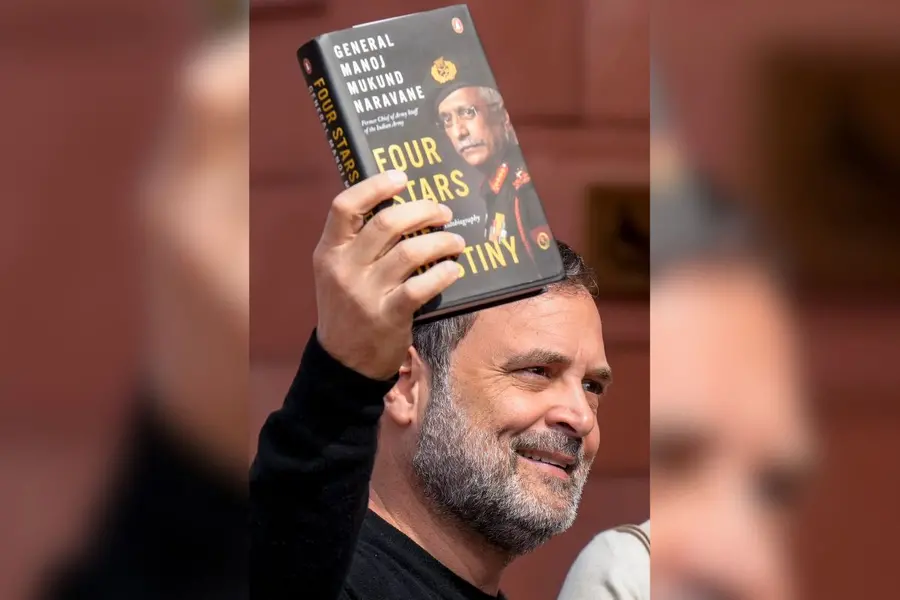
New Delhi: The controversy over former Indian Army Chief General MM Naravane’s unpublished memoir ‘Four Stars of Destiny’ has taken a sharper investigative turn, with the Delhi Police Special Cell concluding that the alleged leak of the book was a planned, organised operation that saw digital copies enter global markets without mandatory government clearance.
The Special Cell has registered a First Information Report (FIR) under charges including criminal conspiracy, after preliminary investigations found that the manuscript circulated online and appeared listed on foreign platforms before receiving clearance from the Ministry of Defence, a requirement for defence-related publications.
Also Read

According to police sources, investigators have traced listings and digital footprints of the leaked material to websites operating in the United States, Canada, Germany, and Australia, where versions of the book were allegedly made available ahead of authorisation.
A striking feature of the leaked copy was the presence of an ISBN (International Standard Book Number), which typically denotes a fully typeset version ready for commercial sale, raising fresh questions about how an unfinished, unauthorised edition entered formal publishing circuits before clearance.
The Delhi Police have also issued a notice to Penguin Random House India, the publisher associated with Four Stars of Destiny, demanding explanations about how a pre-print or digital version was allegedly accessible, given that the memoir has not been officially published or cleared.
Penguin India has repeatedly clarified that it holds exclusive publishing rights and that no authorised copy, in print or digital form, has been published, distributed, or sold. It has warned that any circulation of the manuscript amounts to copyright infringement.
The row has spilled into Parliament, where opposition leader Rahul Gandhi used what he said was a copy of the memoir in the Lok Sabha, a move that drew objections because the book has not been formally released and lacks government clearance.
As the probe continues, police are mapping digital and financial trails to identify individuals or networks behind the alleged “coordinated operation” that bypassed established approval mechanisms, potentially exposing sensitive defence material to improper circulation.
Published: 12 Feb 2026, 11:21 am IST
Related Topics
Disclaimer: Kindly avoid objectionable, derogatory, unlawful and lewd comments, while responding to reports. Such comments are punishable under cyber laws. Please keep away from personal attacks. The opinions expressed here are the personal opinions of readers and not that of Mathrubhumi.