
MP Higher Education Minister Inder Singh Parmar has walked back his claim that Raja Ram Mohan Roy was a “British agent”, calling it a slip of tongue. His apology, however, has failed to douse the political and academic backlash.
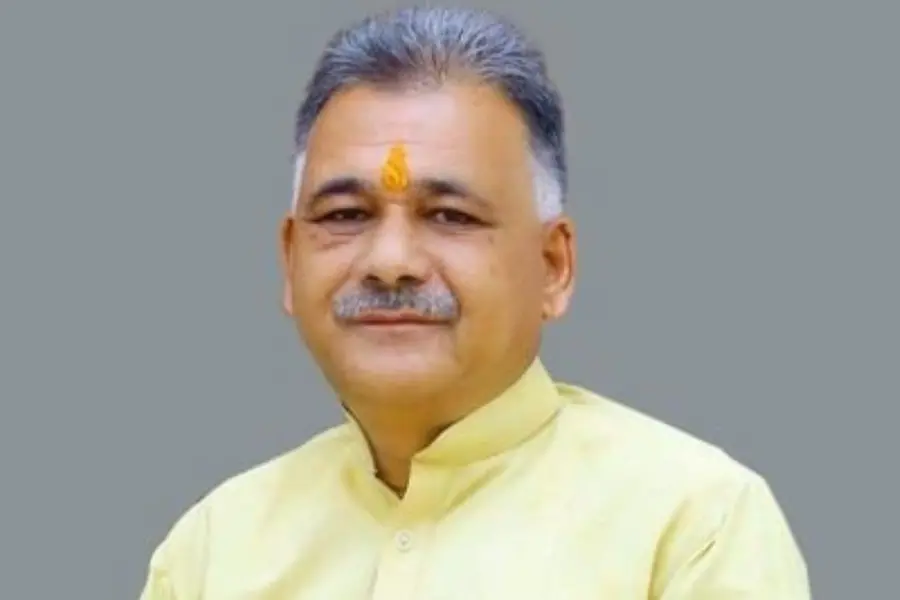
Madhya Pradesh Higher Education Minister Inder Singh Parmar, who sparked widespread backlash by calling Raja Ram Mohan Roy a “British agent”, has issued a public apology, describing the remark as a “slip of tongue”.
Parmar had made the controversial comment at an event in Agar Malwa marking the 150th birth anniversary of Birsa Munda.
He had claimed that Roy acted “on British directions” and linked English education in Bengal to a “vicious cycle” of religious conversion.
“During that period, missionary schools run by the British were the primary centres of education, where religious conversion efforts were underway,” he said at the event.
He added that Birsa Munda had distanced himself from such institutions after realising “missionary activities” and later joined the anti-colonial struggle.
Following intense criticism from academics, historians, and political parties, Parmar released a video message on Sunday.
“While speaking on the life of Bhagwan Birsa Munda, I accidentally misinterpreted Raja Ram Mohan Roy. I deeply regret this and I apologize,” he said, adding that Roy was a “renowned” reformer and that he held “personal respect” for him.
The apology, however, did little to quell the outrage. Congress spokesperson Bhupendra Gupta said the minister’s words were not only historically inaccurate but amounted to “an insult to India’s reformist legacy”.
“Was the abolition of Sati also some form of British brokerage? Those who were truly close to the British are today calling our reformers agents,” Gupta said, accusing the minister of attempting to rewrite history to suit “ideological narratives”.
Historians have also rejected the claim, noting that Roy’s contributions—from the abolition of Sati to advocating women’s rights and modern education—form the cornerstone of India’s 19th-century social renaissance.
This is not Parmar’s first brush with controversy. He earlier asserted that Vasco da Gama did not discover India, crediting instead a merchant named Chandan and alleging that “we have been taught the wrong history”.
His department also courted criticism for mandating colleges to stock 88 books, many authored by individuals associated with the RSS.
Published: 16 Nov 2025, 05:55 pm IST
Disclaimer: Kindly avoid objectionable, derogatory, unlawful and lewd comments, while responding to reports. Such comments are punishable under cyber laws. Please keep away from personal attacks. The opinions expressed here are the personal opinions of readers and not that of Mathrubhumi.
