
At a sprawling facility in Morbi, a 200-metre-long propane-powered kiln that normally operates nonstop has fallen silent
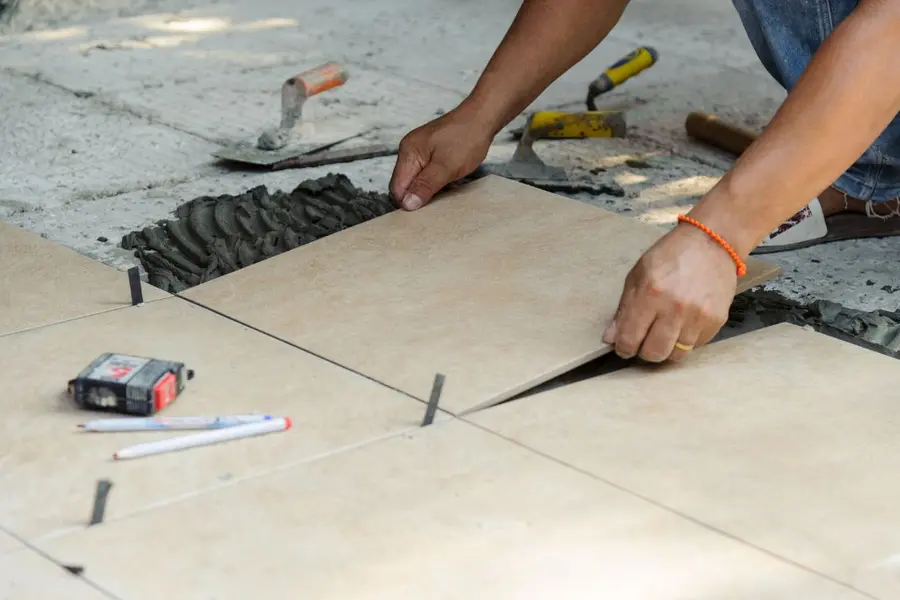
Morbi, Gujarat: Hundreds of ceramic factories in India’s $6.5 billion ceramics manufacturing hub of Morbi have been forced to halt production amid an energy shortage triggered by the ongoing Middle East conflict.
At a sprawling facility in Morbi, a 200-metre-long propane-powered kiln that normally operates nonstop has fallen silent. Thick layers of dust now cover grinding and pressing machinery, while a small team of workers clears the last batches produced three weeks ago.
Tile unit owner Kishor Dulera, who shut down three factories in early March, said, “We are suffering a lot,” adding that hundreds of workers have been sent home.
India, the world’s fourth-largest economy, imports about 60 percent of its liquefied petroleum gas (LPG), most of which passes through the Strait of Hormuz. Recent US-Israeli strikes on Iran have blocked this key waterway, disrupting global energy supplies.
ALSO READ | Israel hits deep in Tehran? IDF says command centres and missile sites targeted
The Indian government has prioritised LPG for households, leaving industries with reduced access. As a result, sectors including stainless steel, plastics, and ceramics have scaled back production.
Manoj Arvadiya, head of Morbi’s local manufacturing association, said more than 400 plants have shut after the gas supply chain was “broken.” He explained that keeping kilns running is critical, as emergency shutdowns can damage machinery.
Hitesh Detroja, whose Lexus Granito plant has closed, said the factory produced 30,000 tiles per day and described the halt as a “disaster,” adding that he struggles to pay fixed costs and $74,000 in monthly loans.
The energy crisis has affected workers as well. Bunty Goswami, a 29-year-old labourer at a closed factory, said, “We are confused about what to do — whether we should go home, or not.”
ALSO READ | Houthis continue attacks on Israel: How escalation fuels fears of wider Middle East war
The government has moved to ease the supply crunch by increasing domestic LPG production, arranging limited tanker shipments, and importing new cargoes from Australia and Russia. Some manufacturers, like Jitendra Aghara of Simpolo Tiles, have continued production by purchasing propane at more than double the pre-war price to meet customer orders.
Morbi’s tile industry grew due to abundant clay and transport connectivity but remains heavily reliant on imported energy. While companies such as Reliance Industries are developing green hydrogen production to reduce dependence on LPG, hybrid or electric kilns are not yet widely adopted, and alternative fuels cannot fully replace gas at present.
Aghara added, “If now we suffer a loss for two to three months, in the future we will get it back,” highlighting the industry’s resilience despite ongoing challenges.
(PTI)
Published: 29 Mar 2026, 02:44 pm IST
Related Topics
Disclaimer: Kindly avoid objectionable, derogatory, unlawful and lewd comments, while responding to reports. Such comments are punishable under cyber laws. Please keep away from personal attacks. The opinions expressed here are the personal opinions of readers and not that of Mathrubhumi.
