
PM Modi and Xi Jinping are likely to meet on September 12 at the BRICS Summit in New Delhi, marking their first bilateral talks since the 2020 Galwan clash.
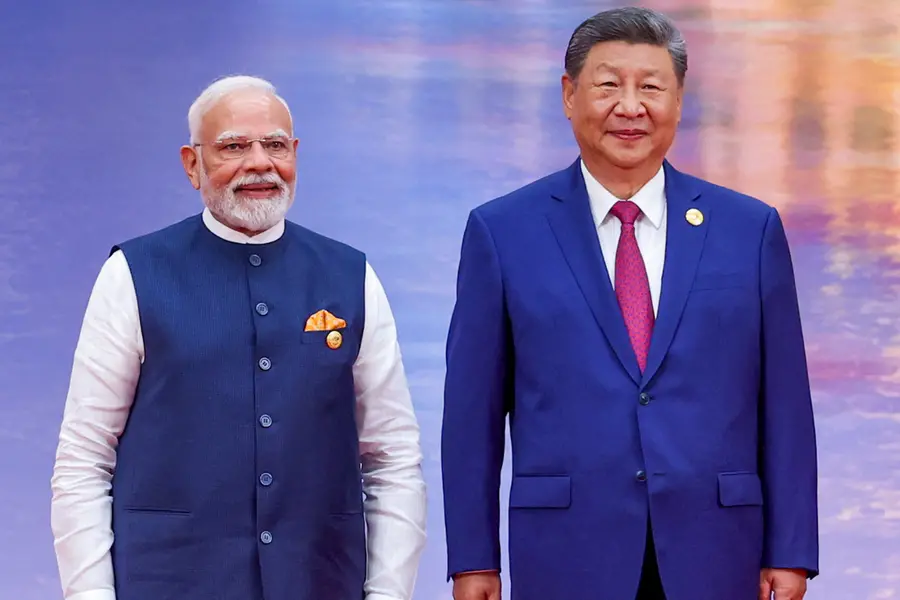
Prime Minister Narendra Modi is likely to hold a bilateral meeting with Chinese President Xi Jinping on September 12 on the sidelines of the BRICS Summit in New Delhi, in what would be their first bilateral talks since the 2020 Galwan Valley clash.
Indian Prime Minister Narendra Modi and Chinese President Xi Jinping are scheduled to meet on September 12, the opening day of the 18th BRICS Leaders’ Summit in New Delhi, according to the information provided. Xi is expected to arrive in India on Saturday for the two-day summit.
Also Read

The proposed meeting would be the first face-to-face bilateral talks between Modi and Xi since the deadly Galwan Valley confrontation in eastern Ladakh in June 2020. The two leaders have met in multilateral settings since then, including at the BRICS and Shanghai Cooperation Organisation summits, but their bilateral engagement has remained limited.
Neither New Delhi nor Beijing had formally confirmed the proposed bilateral meeting in the material provided.
India-China ties move towards cautious stabilisation
India-China relations deteriorated sharply after the Galwan clash, in which 20 Indian soldiers were killed. China later acknowledged the deaths of four of its soldiers.
The confrontation triggered a prolonged military stand-off along the Line of Actual Control (LAC), accompanied by diplomatic tensions and restrictions affecting broader economic ties.
Since then, the two countries have held repeated military and diplomatic negotiations. Troop disengagement at several friction points has helped reduce immediate tensions, although the wider boundary dispute remains unresolved.
Recent diplomatic contacts have included discussions through the Working Mechanism for Consultation and Coordination (WMCC) and meetings between the two countries' Special Representatives on the boundary question. National Security Adviser Ajit Doval has also held high-level discussions in China.
Arunachal Pradesh remains a major issue
The proposed Modi-Xi talks are also taking place against the backdrop of continuing differences over Arunachal Pradesh.
China claims the Indian state and refers to it as “Zangnan” or southern Tibet. India rejects the claim and maintains that Arunachal Pradesh is an integral part of the country.
The two countries have also repeatedly clashed over China's practice of issuing alternative names for places in Arunachal Pradesh. New Delhi has rejected the move, maintaining that changing names cannot alter the territory's status.
Trade and economic issues could feature
Beyond the border dispute, the two leaders could discuss trade, market access, investment, technology and economic cooperation.
India has concerns over its trade deficit with China and has sought greater market access for Indian businesses. High-tech investment policies and supply-chain issues are also relevant to the broader relationship.
The meeting would therefore be significant not only for border management but also for determining whether the recent improvement in ties can develop into wider economic and diplomatic engagement.
What the Modi-Xi meeting could mean
A bilateral meeting at the BRICS Summit would signal that India and China are willing to maintain high-level political engagement despite unresolved differences along the border.
For India, the priority is likely to remain peace and stability along the LAC while protecting its strategic and economic interests. For China, improved ties with India could strengthen cooperation within BRICS and other multilateral forums.
However, the meeting would not by itself resolve the boundary dispute. The key test will be whether political engagement is followed by continued progress on border management, economic concerns and mechanisms to prevent future military tensions.
The proposed meeting comes after several years in which India-China relations were dominated by the consequences of the Galwan clash. The recent disengagement process has created space for renewed diplomatic engagement, but the relationship remains fragile.
The LAC dispute, China's territorial claims over Arunachal Pradesh and the economic imbalance between the two countries remain unresolved. Any summit-level dialogue is therefore likely to be viewed as part of a broader effort to stabilise relations rather than as a breakthrough on the border question.
The BRICS setting also gives the meeting wider significance, as India and China are major members of the grouping and both have an interest in maintaining cooperation on issues where their interests overlap.
Published: 10 Sept 2026, 10:58 am IST
ABOUT THE AUTHOR
Disclaimer: Kindly avoid objectionable, derogatory, unlawful and lewd comments, while responding to reports. Such comments are punishable under cyber laws. Please keep away from personal attacks. The opinions expressed here are the personal opinions of readers and not that of Mathrubhumi.