
PM Modi and Vladimir Putin are set to meet in New Delhi on September 11, a day before the BRICS Summit, with trade, payments, economic ties and Ukraine likely to feature in discussions.
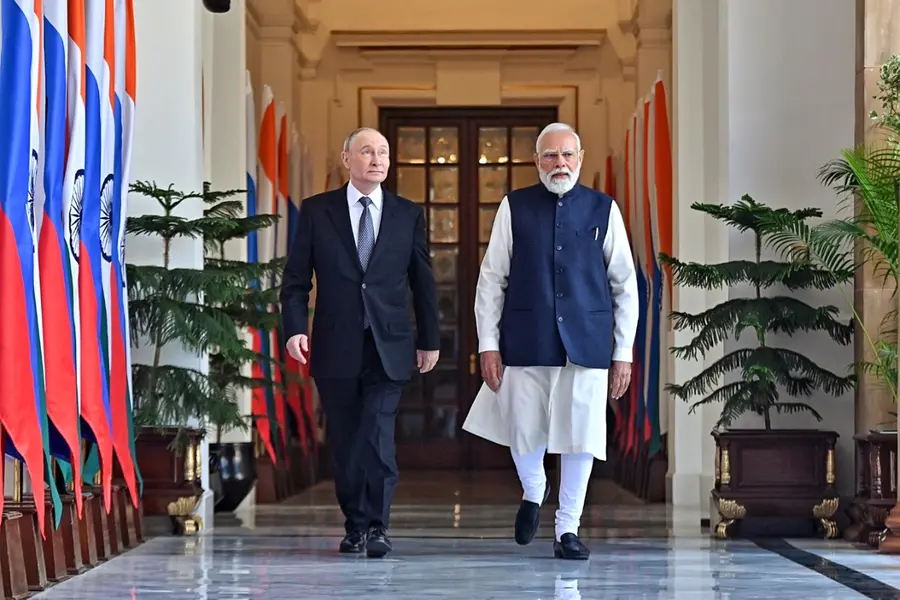
Prime Minister Narendra Modi and Russian President Vladimir Putin are scheduled to hold bilateral talks in New Delhi on September 11, a day before the 18th BRICS Summit begins, with trade, economic cooperation and other bilateral issues expected to feature in the discussions.
Kremlin spokesperson Dmitry Peskov confirmed on September 8 that Putin and Modi are scheduled to hold another bilateral meeting during the Russian president's India visit.
Also Read

Peskov said the leaders are expected to discuss the bilateral agenda, including trade and economic cooperation. Putin is scheduled to visit India for the BRICS Summit, which will be held at Bharat Mandapam in New Delhi on September 12 and 13.
India assumed the BRICS chairship on January 1, 2026. The summit will bring together leaders of the grouping's member countries, partner nations and invited participants.
India-Russia trade and economic cooperation in focus
According to Peskov, trade and economic cooperation will form part of the bilateral discussions.
The meeting comes as India and Russia continue efforts to expand economic ties, including trade and payment mechanisms. Peskov said Russia now conducts a large share of transactions with BRICS countries in national currencies.
The issue of alternative payment mechanisms has gained importance amid Western sanctions on Russia and restrictions affecting international financial transactions.
Ukraine war likely to remain an important issue
The Ukraine conflict is also expected to remain relevant to the India-Russia discussions.
Modi and Putin last met on the sidelines of the Shanghai Cooperation Organisation summit in Bishkek, Kyrgyzstan, on August 31. During that meeting, Modi reiterated India's position that the conflict should move towards a peaceful resolution.
Modi said the Ukraine issue had featured in his discussions with Putin at every meeting and that India supported efforts aimed at peace.
Putin's BRICS visit
Putin has confirmed his participation in the 18th BRICS Summit in New Delhi.
The summit will take place on September 12 and 13, with India hosting the grouping for the fourth time. The current core group comprises Brazil, China, Egypt, Ethiopia, India, Indonesia, Iran, Russia, Saudi Arabia, South Africa and the United Arab Emirates.
Indonesia became a full BRICS member in 2025. The wider BRICS framework also includes partner countries such as Belarus, Bolivia, Cuba, Kazakhstan, Malaysia, Nigeria, Thailand, Uganda, Uzbekistan and Vietnam.
What is India seeking from BRICS?
India's 2026 BRICS chairship is centred on four broad themes: resilience, innovation, cooperation and sustainability.
New Delhi's agenda covers areas including trade, agriculture, healthcare, energy, digital technology, startups, MSMEs, climate action and cultural cooperation.
Financial cooperation is another key area. Russia has advocated greater use of national currencies for transactions between BRICS members, while India has also supported mechanisms that can facilitate smoother cross-border trade and payments.
Why the Modi-Putin meeting matters
The bilateral meeting comes at a strategically important time, with India balancing its longstanding relationship with Russia alongside its growing engagement with Western economies and other major powers.
For India, the talks provide an opportunity to discuss trade, energy, defence cooperation, payments and the Ukraine conflict directly with Putin. For Russia, the meeting comes as Moscow seeks to strengthen economic and diplomatic ties with BRICS countries.
The timing of the meeting, immediately before the BRICS Summit, also gives the two leaders an opportunity to address bilateral issues before wider multilateral discussions begin.
The September 11 meeting is significant because it combines a longstanding bilateral relationship with the broader agenda of an expanding BRICS grouping.
Trade and payments: Russia's push for greater use of national currencies is likely to remain an important economic issue. Alternative payment mechanisms could help maintain trade flows amid sanctions and restrictions affecting Russia's access to parts of the global financial system.
Published: 08 Sept 2026, 03:39 pm IST
ABOUT THE AUTHOR
Related Topics
Disclaimer: Kindly avoid objectionable, derogatory, unlawful and lewd comments, while responding to reports. Such comments are punishable under cyber laws. Please keep away from personal attacks. The opinions expressed here are the personal opinions of readers and not that of Mathrubhumi.