
The actor said the film focuses on soldiers, their families and the circumstances faced by troops on both sides of the India-China border
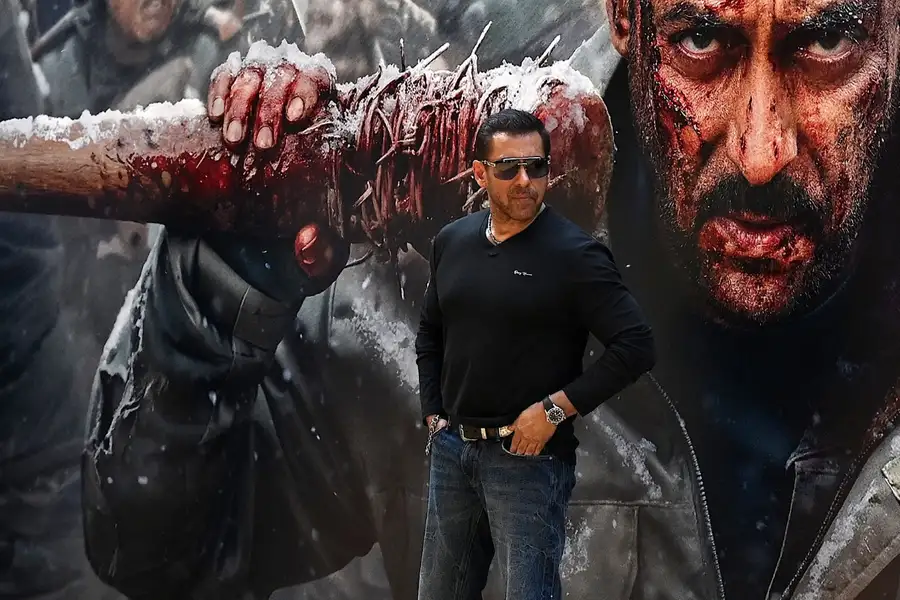
Bollywood actor Salman Khan has dismissed reports claiming that the Government of India asked the makers of his upcoming war drama 'Maatrubhumi' to make changes to its script. The actor described the claims as baseless, clarifying that the film is not intended to portray China negatively.
Salman addressed the speculation while attending a special event for the film in Andheri West, Mumbai, on Friday. He was accompanied by his co-stars at the event.
Speaking to the media, the actor said reports suggesting that the government had pressured the team to rewrite the screenplay because of its portrayal of China were untrue.
"So, this narrative that we are going against China, and our government has put pressure on us to change its script, and rewrite it, all this is nonsense. It's not true at all," he said.
Salman Khan says 'Maatrubhumi' is about soldiers and their families
Explaining the film's central theme, Salman said the story focuses on the lives of soldiers, their families and the difficult situations they face while serving their countries. He also pointed out that the film explores the experiences of soldiers on both sides of the border rather than portraying one side as a negative force.
"We have made a film on soldiers, their families, and what they go through, what the soldiers from both sides go through. So, there are no negative forces in this," he told reporters.
The actor further explained that the conflict in the film stems from circumstances rather than personal hatred between the soldiers. According to him, the characters may share a mutual understanding, but their duty to their respective nations takes precedence when a difficult situation arises.
"These are just circumstances. Circumstances are negative. And how these soldiers, their nation comes first. They like each other, but then when a situation comes, the nation comes first. And both the sides are trying to solve this," he added.
What is the Galwan clash that inspired 'Maatrubhumi'?
The film, which was initially announced as 'Galwan', draws inspiration from the violent confrontation between Indian and Chinese troops in the Galwan Valley of eastern Ladakh on June 15, 2020.
The incident took place during a prolonged military stand-off along the Line of Actual Control (LAC), the disputed border between the two countries. Tensions escalated when troops from both sides confronted each other while attempting to patrol areas along the border.
The clash resulted in the deaths of 20 Indian Army personnel. China also acknowledged casualties on its side, although it did not immediately disclose the full extent of its losses. The confrontation was the deadliest military face-off between India and China in more than four decades.
The incident further strained diplomatic ties between the neighbouring countries, prompting increased military deployments along the border and several rounds of diplomatic and military-level discussions aimed at preventing further escalation.
Since then, India and China have taken steps to ease tensions through diplomatic engagement, including discussions on border arrangements and the reopening of communication channels.
Agency inputs
Published: 07 Nov 2026, 11:12 am IST


ABOUT THE AUTHOR

Related Topics
Disclaimer: Kindly avoid objectionable, derogatory, unlawful and lewd comments, while responding to reports. Such comments are punishable under cyber laws. Please keep away from personal attacks. The opinions expressed here are the personal opinions of readers and not that of Mathrubhumi.