
Prime Minister Narendra Modi on Saturday launched two major agriculture schemes worth ₹35,440 crore, calling on farmers to raise production
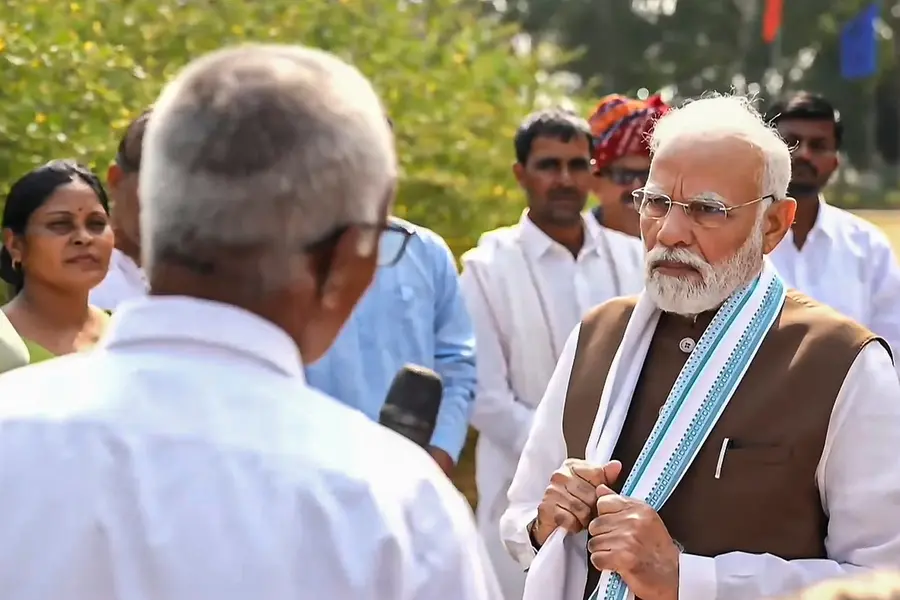
New Delhi: Prime Minister Narendra Modi unveiled two new agricultural initiatives on Saturday with a total outlay of ₹35,440 crore, aimed at boosting farm productivity and achieving self-reliance in pulses.
The schemes, launched at an event at Pusa campus in New Delhi, form part of the government’s long-term plan to strengthen the rural economy under its “Viksit Bharat 2047” vision.
Also Read

The first, Pradhan Mantri Dhan Dhaanya Krishi Yojana (PM-DDKY), involves ₹24,000 crore and will focus on transforming 100 low-performing agricultural districts using the Aspirational Districts Programme model. It aims to enhance crop productivity, promote diversification, improve irrigation and storage, and ease credit access for farmers.
The second, Mission for Aatmanirbharta in Pulses, worth ₹11,440 crore, seeks to increase India’s pulses acreage by 35 lakh hectares and raise production from 252.38 lakh tonnes to 350 lakh tonnes by 2030-31, significantly reducing import dependence.
Alongside the two schemes, Modi inaugurated projects worth over ₹5,450 crore in agriculture, animal husbandry, fisheries, and food processing, and laid foundation stones for additional projects totalling ₹815 crore.
The Prime Minister claimed that these initiatives would “change the fate of millions of farmers”, adding that agricultural exports and foodgrain output had doubled during his tenure. He also said recent GST reductions had benefited farmers by lowering the cost of machinery and equipment.
However, the new announcements come amid renewed farmer unrest in several states. Since February 2024, thousands of farmers from Punjab, Haryana, and western Uttar Pradesh have been staging protests demanding a legal guarantee for Minimum Support Price (MSP), debt waivers, and higher procurement prices. The protests are a continuation of the larger agrarian movement of 2020-21, which forced the repeal of three contentious farm laws.
Farmer unions argue that while large-scale funding and missions are announced regularly, many schemes suffer from bureaucratic hurdles, delayed payments, and lack of accountability at the implementation stage. They also point to rising input costs and stagnant farm incomes as evidence that small and marginal farmers remain under pressure despite government interventions.
Agriculture Minister Shivraj Singh Chouhan, Fisheries Minister Rajiv Ranjan Singh, and Minister of State Bhagirath Choudhary attended the event, where Modi emphasised that India’s farmers are central to achieving a developed nation by 2047.
(With PTI inputs)
Published: 11 Oct 2025, 03:15 pm IST
Related Topics
Disclaimer: Kindly avoid objectionable, derogatory, unlawful and lewd comments, while responding to reports. Such comments are punishable under cyber laws. Please keep away from personal attacks. The opinions expressed here are the personal opinions of readers and not that of Mathrubhumi.