
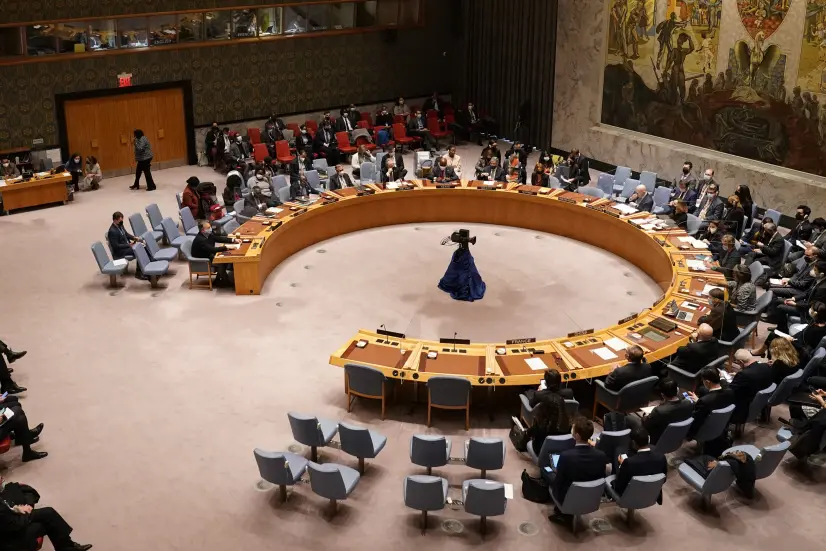
New York: During the UNSC Open Debate on Leadership for Peace, Tanmaya Lal, Secretary (West) of the Ministry of External Affairs, stressed the urgent need for reform within the United Nations Security Council (UNSC). He highlighted that the UNSC must become more representative, transparent, efficient, effective, democratic, and accountable to address the current global challenges.
The Inadequacy of Current Multilateral Responses
Lal noted that the world is facing devastating armed conflicts, and the existing multilateral responses are falling short in both preventing and resolving these crises. He stated, "Serious armed conflicts are impacting lives, economies, and societies across geographies in our interconnected world. The current multilateral response is falling seriously short in ending and preventing such conflicts, in tackling unrelenting threats from terrorism and transnational organized crimes, and in ensuring maritime security."
Emphasising the outdated nature of the UNSC's design, Lal pointed out that it was established eight decades ago during a time when many UN member states were still colonies. He remarked, "The UNSC has to become representative, transparent, efficient, effective, democratic and accountable. Text-based negotiations must begin. Those opposing a meaningful change to the global governance structure are damaging UN's legitimacy, overshadowing its contributions in developmental and humanitarian sectors."
India’s Position on Global Security Issues
In his address, Lal also condemned Pakistan for its alleged support of terrorism, urging the international community to take a stand against such actions. He declared, "... Their (Pakistan) support for the elaborate terror ecosystem, training and harbouring global terrorists is well documented. It is high time that Pakistan starts working for its own people. Their cynical export of terror in pursuit of their vicious agenda can never succeed. Such continuing threats to international peace and security must be firmly rejected by the international community."
India has been advocating for a permanent seat on the UNSC to better represent the interests of the developing world, and its efforts have gained momentum with increased international support. Currently, the UNSC comprises 15 member states, including five permanent members with veto power—China, the United Kingdom, France, Russia, and the United States—and ten non-permanent members elected for two-year terms.
Additionally, at the High-level Meeting to Commemorate and Promote the International Day for the Total Elimination of Nuclear Weapons at the United Nations, Lal reiterated India's commitment to nuclear disarmament. He stated, "Nuclear weapons continue to pose a grievous danger to humanity. India remains firmly committed to the goal of universal, non-discriminatory nuclear disarmament in a specified time frame."
ANI
Published: 27 Sept 2024, 07:01 am IST
Related Topics
Disclaimer: Kindly avoid objectionable, derogatory, unlawful and lewd comments, while responding to reports. Such comments are punishable under cyber laws. Please keep away from personal attacks. The opinions expressed here are the personal opinions of readers and not that of Mathrubhumi.
