
Parameswaran’s Fourth World thesis represented the second major challenge to the Kerala Left.
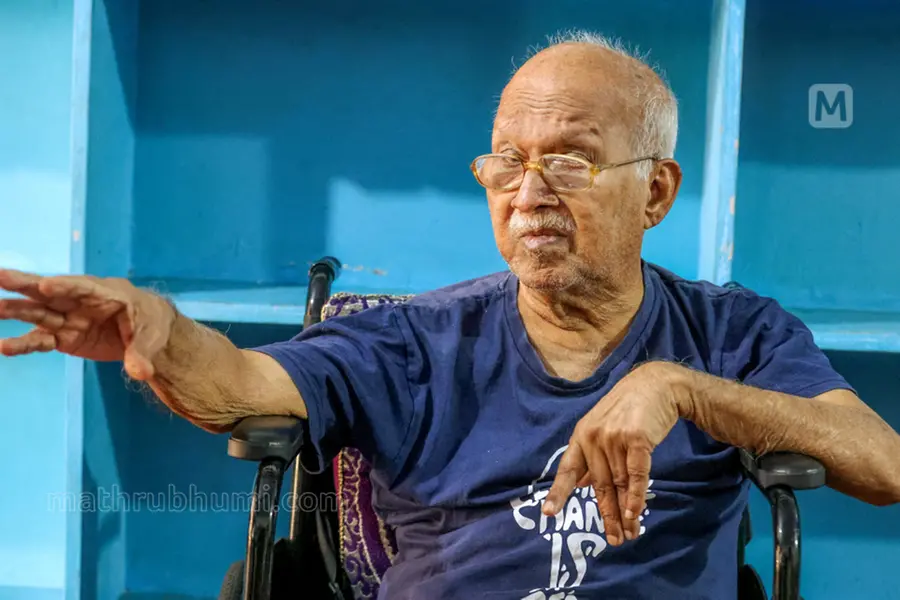
The dimple on his right cheek the sparkle in his eyes, the kind, shy smile that never seemed to fade, and that rapid, husky Thrissur Namboodiri diction—all remain etched in memory. The diminutive Marxist could embed a secret plan to change the world even in the design of a smokeless choola. His Gandhian passion, childlike innocence, simplicity and irrepressible positivity were infectious; everyone around him came to believe, at least for a while, that the revolution was just around the corner.
For me personally, MP Parameswaran, MP to everyone, was almost a family member from my childhood. He was among the stream of young, bright and radical minds who used to visit my father during the sixties to debate and dream, without end. I remember myself sitting wide-eyed and without a clue, watching their talk, arguments, gesticulations and loud laughter.
Also Read

Dr M.P. Parameswaran, who passed away in Thrissur on 11 August at the age of 91, deserves a distinct place in Malayali intellectual and socio-political history. Born into a conservative Brahmin family, the brilliant engineer went to Moscow in the 1950s and earned a PhD in the then-nascent field of nuclear technology. On returning to India, he joined BARC, the premier institution established by Homi Bhabha at Prime Minister Nehru’s initiative to drive scientific progress and nation-building.
A decade later, Parameswaran, always more passionate about working on the ground among people than in laboratories, returned to Kerala on deputation to join the newly established State Institute of Languages in Thiruvananthapuram. He was part of the project to make advanced scientific concepts accessible in Malayalam and soon became a leading figure in the Kerala Sasthra Sahitya Parishad (KSSP), the country’s largest voluntary popular science movement. To give his scientific and social commitments a firmer political footing, he later joined the CPM in which he remained for over a quarter century until it expelled him in 2004. Even during his association with the party, more than power or parliamentary office, MP was always involved in fields dear to him: mass literacy, environmental protection, popular science, rural development and appropriate technology. He was among the founders of the All India People's Science Network which worked on popularisation of science across the country and the Bharat Gyan Vigyan Samiti, a nationwide movement for mass literacy campaign.
Parameswaran argued that capitalism, communism and even the mixed economy, despite their ideological differences, were all driven in practice by an unquestioning faith in limitless growth, urban-based big industry, ever-expanding consumption and technological progress, while neglecting ecological limits. He called instead for a more inclusive development model centred on rural uplift, agriculture, small industry, environmental sustainability and gender justice—a striking convergence of Marx and Gandhi. Small, he argued, should not merely be beautiful, as E.F. Schumacher had famously suggested; it should also be powerful.
Some of these ideas had precedents among unconventional Marxist thinkers, particularly in Europe. But it was unusual, perhaps unprecedented in India, for an active member of a mainstream Communist party to demand such a radical rethinking.
The response was swift. Before any substantive debate could take place within the CPM, party leaders dismissed the thesis as ideologically heretical. The CPM eventually expelled the maverick in 2004. The episode revealed the tension between ideological innovation and party discipline—and the difficulty the Indian Left had in confronting ideas that questioned its inherited certainties.
One of the major criticisms of India’s century-old Communist movement is that, unlike some Western Marxist traditions, it has contributed relatively little to the Left’s corpus of ideological and philosophical thought. Its contribution to political practice, however, is undeniable. Few Communist movements anywhere have sustained such a long engagement with parliamentary democracy. Indian Communists have been elected to power repeatedly in three states and have governed for more than five decades. Yet 2026 marks the first year in half a century when neither of the two major Communist parties is in power in any Indian state.
The collapse of the Soviet bloc in 1991 forced Left parties worldwide to reconsider their future. Many disbanded or abandoned the word “Communist”; others openly blamed Soviet authoritarianism and bureaucratic distortions for the disaster. The CPM and CPI, however, largely attributed the collapse not to Marxism-Leninism or socialism itself, but to deviations from them, bureaucratisation, personality cults and errors in socialist construction. They argued that reforms such as Glasnost and Perestroika under Mikhail Gorbachev, rather than the Communist system itself, had dismantled the Socialist framework.
Thus, the Indian Left largely continued to swear by the inherited ideology without undertaking the deeper introspection that the Soviet collapse demanded. Yet its governments were already changing course, often without acknowledging it.
The first major sign came in West Bengal under Buddhadeb Bhattacharjee. His Left Front government launched an ambitious industrialisation drive, courting Indian and foreign private capital. Bhattacharjee was even compared with Deng Xiaoping and praised in some quarters as a “Pragmatist Communist”. The experiment eventually collapsed amid the upheavals of Singur and Nandigram. Still, it revealed a profound shift: the Left was being forced to respond to a radically changing economic and political environment.
Kerala followed a different path. The 1996 LDF government’s People’s Planning Programme (PPP) devolved a substantial share of state development resources to local bodies, enabling them to formulate and implement their own development projects. With the support of leaders such as EMS Namboodiripad, it represented a bold attempt to offer an alternative to the central government’s liberalisation, privatisation and globalisation agenda without abandoning the Left’s ideological commitments.
Parameswaran’s Fourth World thesis represented the second major challenge to the Kerala Left. Unlike the PPP, however, it was essentially his own intellectual intervention. More importantly, it went beyond an alternative development strategy to question several fundamental assumptions of Communist ideology itself.
Its rejection also needs to be understood against the intense factional struggle that engulfed the Kerala CPM during the 1990s. The ideological crisis following the Soviet collapse increasingly became entangled with the battle between competing factions. Prof. MN Vijayan, then a prominent intellectual voice associated with the party and editor of its weekly, became a fierce critic of the Nayanar government’s allegedly pro-capitalist policies. The Asian Development Bank loan and even the People’s Planning Programme were attacked as capitulation to the World Bank agenda. Supporters of the PPP, including M.A. Baby and Thomas Isaac, were denounced as “capitalist roaders” and “Gorbechevians”. KSSP too was attacked for supporting decentralisation and allegedly promoting “NGO-led representational democracy”.
This purist offensive, amplified by sections of the mainstream media, became an ideological weapon in V.S. Achuthanandan’s battle against Nayanar and Pinarayi Vijayan. What was fundamentally a factional power struggle increasingly presented itself as a battle between Communist purists and diluters.
It was in this atmosphere that Parameswaran’s Fourth World thesis became particularly inconvenient. As he and KSSP were strong advocates of the People’s Planning Programme, the official leadership was keen to distance itself from a thesis that could give its critics further ammunition. Parameswaran and his ideas thus became collateral casualties of the factional conflict. He was expelled without the serious debate his thesis deserved.
His Fourth World thesis was certainly not without flaws. Yet its significance lies precisely in the questions it raised. It sought to open the doors and windows of a closed ideological system to ideas that demanded debate, adaptation and reinvention. At a time when the Indian Left was confronting an existential crisis, it was arguably the most ambitious contemporary attempt from within its own ranks to imagine a different future.
Whether Parameswaran’s ideas will eventually receive the attention they deserve remains uncertain. But the Gandhian Communist, who thought ahead of his time, left behind an uncomfortable question that the Indian Left has still not fully answered: can a movement committed to changing society also change itself?
Published: 16 Aug 2026, 10:36 am IST
ABOUT THE AUTHOR
Disclaimer: Kindly avoid objectionable, derogatory, unlawful and lewd comments, while responding to reports. Such comments are punishable under cyber laws. Please keep away from personal attacks. The opinions expressed here are the personal opinions of readers and not that of Mathrubhumi.