
Admiral Tripathi warns of shifting maritime competition beyond energy in 2026. Discover how critical resource rivalry impacts global trade. Read the full analysis.
New Delhi: Escalating tensions in West Asia are beginning to ripple across global markets, with India raising concerns over energy security as disruptions intensify around the strategically vital Strait of Hormuz.
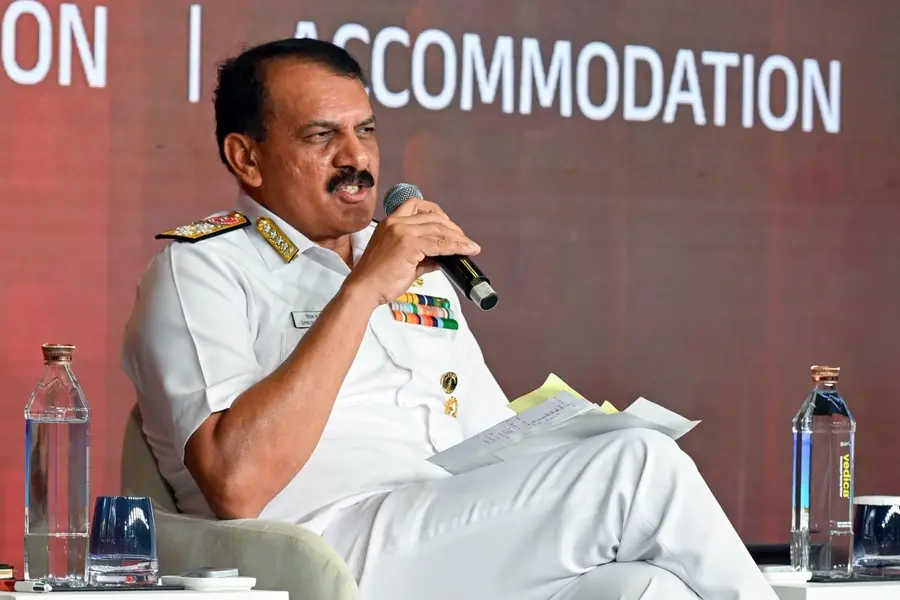
Speaking in Mumbai on Thursday, Indian Navy Chief Dinesh K Tripathi warned that instability in the region is already translating into “serious economic consequences” and volatility in energy supply chains.
“Disruptions in the Strait of Hormuz have caused severe economic impact and energy instability in the region,” the Navy chief said.
The Strait of Hormuz, a narrow maritime passage connecting the Persian Gulf to global waters, handles nearly one-fifth of the world’s oil shipments. Any disruption here has immediate global consequences, particularly for import-dependent nations like India.
Recent geopolitical tensions involving Iran, United States, and Israel have led to heightened military activity and fears of restricted maritime movement through the corridor.
Oil traders and shipping companies are already reacting, with freight costs rising and crude prices showing upward pressure, signalling a potential global oil shock if tensions persist.
Beyond oil, Admiral Tripathi emphasized a deeper shift underway in global maritime strategy.
“Competition in the sea no longer confined to oil and energy. It is now expanding to resources that will shape future growth such as rare earth elements, critical minerals, new shipping routes, and human data,” he noted.
He added that these pressures are driving a surge in deep-sea operations, alongside rising concerns over illegal activities such as unregulated fishing.
Published: 02 Apr 2026, 05:21 pm IST
Related Topics
Disclaimer: Kindly avoid objectionable, derogatory, unlawful and lewd comments, while responding to reports. Such comments are punishable under cyber laws. Please keep away from personal attacks. The opinions expressed here are the personal opinions of readers and not that of Mathrubhumi.
