
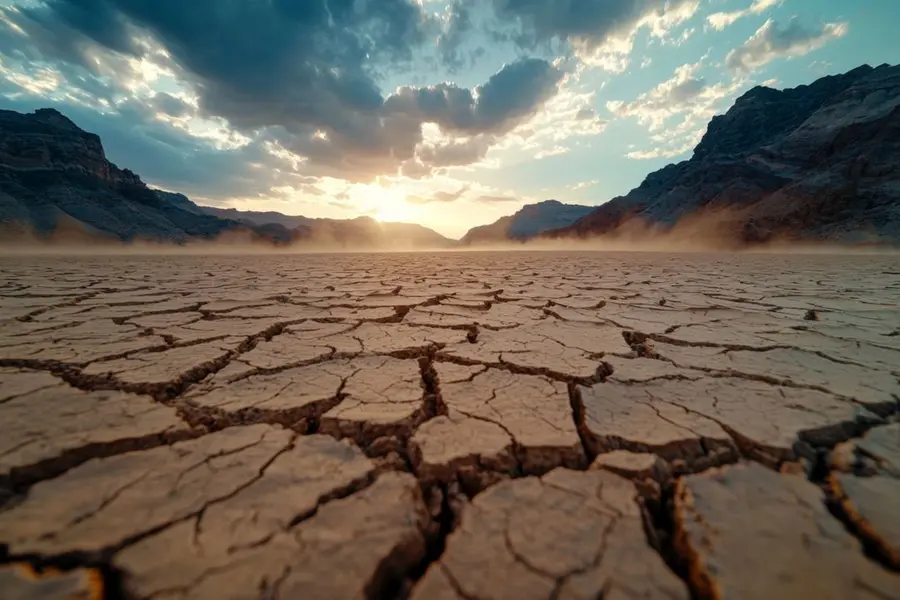
The Marathwada region of Maharashtra is currently grappling with an acute water crisis, driven by erratic rainfall patterns, aging infrastructure, and inequitable water distribution systems. This crisis is not merely an inconvenience; for the region's rural communities, it poses a severe threat to livelihoods, economic stability, and even lives.
Farmer Suicides and Economic Hardship
Water scarcity in Marathwada is severely affecting agricultural communities. Farmers are bearing the brunt of unreliable water supplies, leading to frequent crop failures and mounting debts. The resulting financial distress has driven many families into extreme poverty.
According to the National Crime Records Bureau (NCRB), Maharashtra accounts for 38% of all farmer suicides in India, with over 60,000 suicides reported between 1995 and 2013. In the past decade, about 10 farmers per day have taken their own lives, largely due to persistent water shortages and the associated economic strain.
Unpredictable rain patterns are further exacerbating Marathwada’s water woes. In 2023, the region recorded just 589.9 mm of rainfall, a 21.44% shortfall from the annual average of 751 mm. Drought has become a recurring issue, with 42 talukas being declared drought-hit in recent years, 14 of which are in Marathwada. Even when rain does come, it is often unseasonal, causing further damage to crops.
Past and Present Political Efforts
During the 2016 water crisis, a "Latur water train" was operated. The initiative involved transporting water to the drought-stricken city of Latur by rail. Fadnavis, who served as Chief Minister from 2014 to 2019, took steps to mitigate Marathwada’s water crisis, including the launch of the ambitious Marathwada Water Grid Project in 2019.
The Water Grid Project aims to establish a stable water network across Marathwada by connecting 11 major dams through a system of pipelines, allowing surplus water to flow from water-rich areas to drought-prone regions. The project, which was modeled after a power grid, seeks to ensure fair water distribution and reduce the region’s vulnerability to future droughts.
The BJP claims that the project faced setbacks after Fadnavis left office. When the Maha Vikas Aghadi (MVA) government came to power, bureaucratic delays and shifting political priorities significantly slowed progress on the Water Grid, BJP leaders said, adding that the stalling of this critical project had further deepened the water crisis in Marathwada.
The Water Grid Project gathered steam again in 2022 when Fadnavis returned as Deputy Chief Minister in the Mahayuti government, led by Chief Minister Eknath Shinde. In 2023, Fadnavis submitted the project proposal to the Maharashtra Water Resources Regulatory Authority (MWRRA), seeking Rs 20,000 crore in funding from the central government and financial assistance from international organizations like the World Bank.
When completed, the Water Grid Project will provide water security to over 12,000 villages, 79 talukas, and 76 towns across Marathwada's 64,000 square kilometers. The project's design includes a flexible pipeline network capable of reverse water flow, ensuring that even the most water-scarce areas receive much-needed relief.
In addition to the Water Grid, the Maharashtra government has launched several other water conservation and irrigation initiatives aimed at alleviating the water crisis. The Jalyukt Shivar Abhiyan, launched by Fadnavis in 2014, focuses on reviving local water bodies and reducing reliance on the monsoon. Other projects, such as the Nar-Par-Girna and Tembhu Lift Irrigation schemes, aim to divert surplus water to drought-prone areas, providing critical irrigation support.
Aiming for a water-secure Marathwada
Political stability and consistent leadership will be crucial for the successful completion of the Marathwada Water Grid Project. Fadnavis's continued involvement offers hope that the region’s water crisis will be addressed in the coming years. If realized, the project has the potential to transform Marathwada, ensuring long-term water security and improving the lives of millions of people.
Marathwada's future depends on a sustained commitment to addressing its water issues, and the success of the Water Grid Project may very well be the key to unlocking a more stable and prosperous future for the region.
Agencies
Published: 30 Oct 2024, 03:09 pm IST
Disclaimer: Kindly avoid objectionable, derogatory, unlawful and lewd comments, while responding to reports. Such comments are punishable under cyber laws. Please keep away from personal attacks. The opinions expressed here are the personal opinions of readers and not that of Mathrubhumi.
