
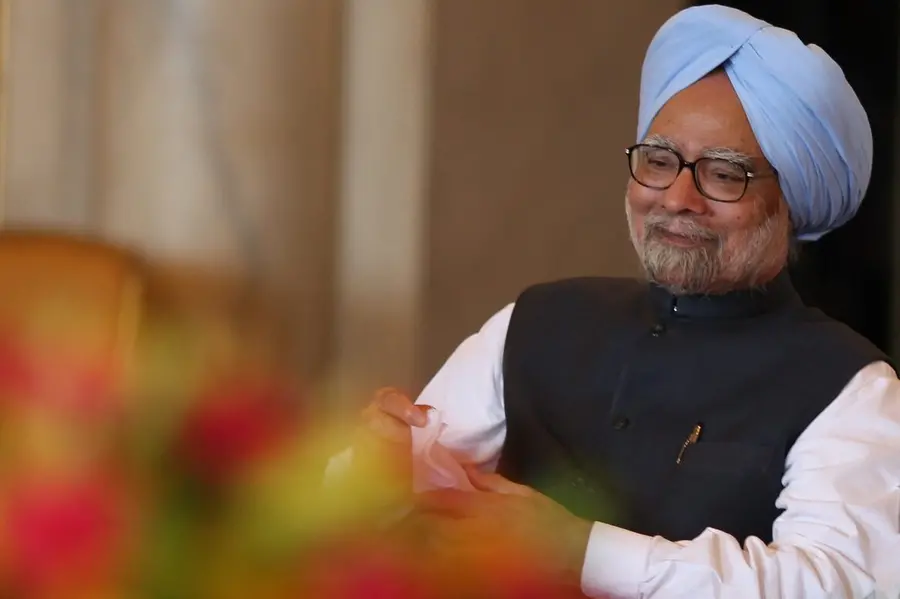
Manmohan Singh, the economist-turned-politician whose bold economic reforms in 1991 helped pull India back from the brink of financial collapse, has passed away at the age of 92.
Known for his calm, measured demeanour and intellectual rigour, Dr Singh played a pivotal role in reshaping India’s economy, transforming it from a closed, protectionist system to one of the world’s most dynamic emerging markets. Under his leadership, India embraced economic liberalization, paving the way for its rise as a global player.
Yet one statement by Dr Singh, made at his final press conference ahead of the 2014 Lok Sabha elections, now seems especially prophetic: "History will be kinder to me than the contemporary media." This remark came as he stepped down amid a tumultuous period of corruption scandals and public discontent, with his second term as Prime Minister overshadowed by rising inflation and internal government strife.
Dr Singh's career began in academia, but he soon moved into the world of economic policymaking. In 1971, he joined the Ministry of Commerce as an economic adviser, quickly rising through the ranks to become India’s Chief Economic Adviser, Deputy Chairman of the Planning Commission, and Governor of the Reserve Bank of India (RBI).
It was as Finance Minister from 1991 to 1996 that Singh made his most lasting impact. Faced with a dire fiscal crisis -- including a crippling balance of payments deficit and dwindling foreign exchange reserves -- he led the country through a series of groundbreaking economic reforms.
Dr Singh championed privatization of state-owned enterprises, liberalized trade policies, and deregulated key sectors, all of which revitalized India’s economy and set the stage for the rapid growth that followed.
Dr Singh’s political journey spanned decades, but he is best remembered for his tenure as the country's 14th Prime Minister, a post he held from May 22, 2004, to May 26, 2014.
Singh’s ascent to the office of Prime Minister in 2004 was seen by many as the result of his impeccable credentials and diplomatic tact. When Sonia Gandhi, then-President of the Congress Party, chose not to take up the Prime Minister's post following the party’s victory, Singh was selected as a consensus candidate. Though initially reluctant, Singh proved to be a steady and effective leader. His tenure saw significant strides in economic growth, poverty reduction, and India’s global standing.
Under his leadership, India earned praise on the international stage. Former United States President Barack Obama, upon Singh’s departure from office, described him as “one of the world’s most respected and admired public figures.” Obama said, “It has been a great pleasure to serve with you. There are very few people in public life that I have admired or appreciated more.”
Despite his international acclaim, Singh’s time in office was not without its difficulties. His second term was marred by a series of corruption scandals involving coalition partners and a rising tide of inflation that sapped the popularity of his government. Critics often described him as a "weak Prime Minister," a label he rejected, insisting that “history will be kinder to me than the contemporary media.”
Dr Singh’s leadership was also tested within his own party. In one notable incident, Congress Vice President Rahul Gandhi publicly criticized the UPA government’s decision to issue an ordinance that sought to negate a Supreme Court ruling on disqualifying convicted lawmakers, dismissing it as "complete nonsense."
Dr Singh, who was abroad on an official visit at the time, endured significant public humiliation. Additionally, his government faced tension with coalition allies like the DMK, which threatened to pull out of the alliance unless certain party members were given cabinet positions.
Yet, Dr Singh held his ground, and despite the occasional internal strife, he remained a figure of dignity and resolve. His international stature only grew, with his visits abroad drawing significant attention and respect. Singh’s tenure also saw the launch of several key programs, including the Mahatma Gandhi National Rural Employment Guarantee Act (MGNREGA), the Food Security Bill, and the Aadhaar project.
Dr Singh’s legacy will be defined by his commitment to economic reform, his intellectual leadership, and his humility. At a time when decisive action was needed, he acted swiftly and with foresight, lifting millions out of poverty and placing India on the global economic map. His quiet, transformative leadership will be remembered as one of the most significant chapters in modern India's history.
Published: 26 Dec 2024, 11:40 pm IST
Related Topics
Disclaimer: Kindly avoid objectionable, derogatory, unlawful and lewd comments, while responding to reports. Such comments are punishable under cyber laws. Please keep away from personal attacks. The opinions expressed here are the personal opinions of readers and not that of Mathrubhumi.
