
Major shrines, including Lingaraj and Kashi Vishwanath, witnessed massive footfall as devotees marked Maha Shivaratri with prayers and rituals.
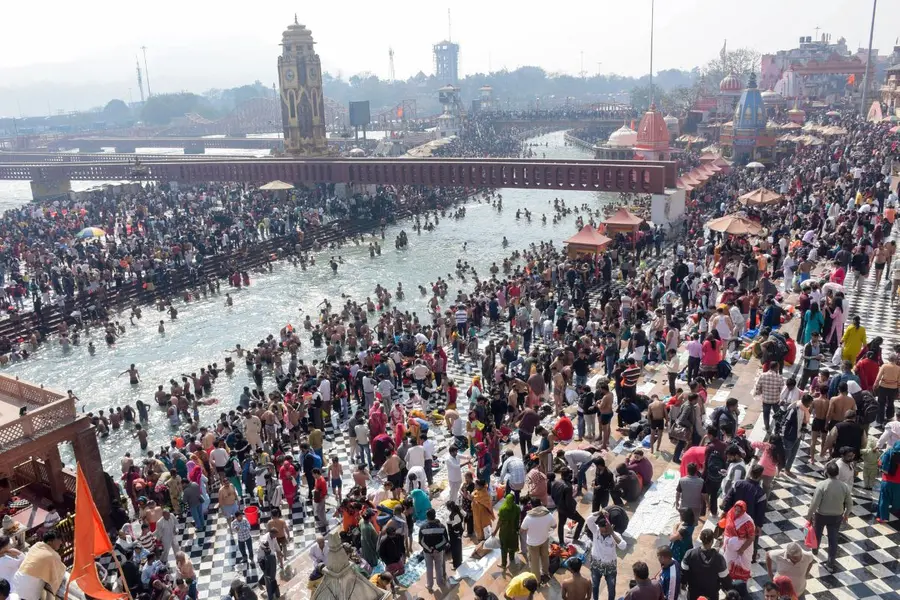
Bhubaneswar/Lucknow/Varanasi, Feb 15: Lakhs of devotees gathered at prominent Shiva temples across Odisha and Uttar Pradesh on the occasion of Maha Shivaratri, as chants, prayers, and sacred rituals marked one of Hinduism’s most revered festivals.
In Odisha, major shrines, including the Lingaraj Temple in Bhubaneswar, Loknath Temple in Puri, Chandrashekhar Temple at Kapilash in Dhenkanal, and the Dhabaleswar Temple in Cuttack district, witnessed a massive influx of devotees from early morning.
Also Read

The crowds swelled steadily through the day, culminating in late-night ceremonies centred around the raising of the Mahadeep (great lamp), a ritual regarded as the spiritual highlight of Shivaratri celebrations in the state.
Temples were adorned with flowers and illuminated with thousands of earthen lamps, creating a vibrant devotional atmosphere. Devotees were seen offering prayers, observing fasts, and chanting hymns dedicated to Lord Shiva well into the night.
Authorities across Odisha implemented elaborate crowd management and security arrangements to ensure smooth darshan.
At the Lingaraj Temple, officials announced the schedule for the Mahadeep ceremony, which was slated for around 10 pm. Enhanced security protocols included restrictions on drone usage in the temple vicinity.
Meanwhile, rituals at the Lingaraj Temple and Chandrashekhar Temple were briefly delayed following protests by a section of temple servitors over alleged police excesses.
The situation was later resolved after discussions between temple authorities, servitors, and local administration, allowing ceremonies to resume without further disruption.
In Uttar Pradesh, a similar wave of devotion swept across cities and temple towns. Thousands queued outside the Kashi Vishwanath Temple in Varanasi, where temple authorities estimated this year’s Maha Shivaratri footfall between 10 lakh and 15 lakh devotees.
Masi Maha Shivaratri at Rameswaram’s Ramanathaswamy Temple saw huge crowds as 100+ sadhus from Kashi, Ayodhya and Haridwar performed Ganga jal abhishekam and joined grand rituals and processions.
Last year, approximately 12 lakh devotees visited the shrine on the festival day. Temple officials said extensive arrangements were made for seamless darshan, including zig-zag barricades, entry through six gates, medical teams stationed at multiple points, and a continuously operating help desk.
Flower showers welcomed devotees waiting in long queues, and the temple was scheduled to remain open for 45 consecutive hours.
Chief Minister Yogi Adityanath performed Rudrabhishek at the Gorakhnath Temple in Gorakhpur, offering prayers for public welfare. Across districts such as Barabanki, Mathura, Ayodhya, and Bareilly, temples reported heavy footfall, devotional processions, and special pujas.
Police and local administrations enforced heightened security across UP, deploying CCTV surveillance, drone monitoring, and zonal crowd control systems, particularly in high-density pilgrimage centres.
Maha Shivaratri, observed during the Krishna Paksha of the Phalgun month as per the Hindu calendar, commemorates the divine marriage of Lord Shiva and Goddess Parvati. The festival is traditionally associated with night-long vigils, fasting, and offerings to Lord Shiva.
Published: 15 Feb 2026, 08:50 pm IST
Related Topics
Disclaimer: Kindly avoid objectionable, derogatory, unlawful and lewd comments, while responding to reports. Such comments are punishable under cyber laws. Please keep away from personal attacks. The opinions expressed here are the personal opinions of readers and not that of Mathrubhumi.