
Madras High Court reserves verdict on petitions challenging eligibility criteria in a ₹120 crore CCTV surveillance tender for Tamil Nadu Assembly elections.
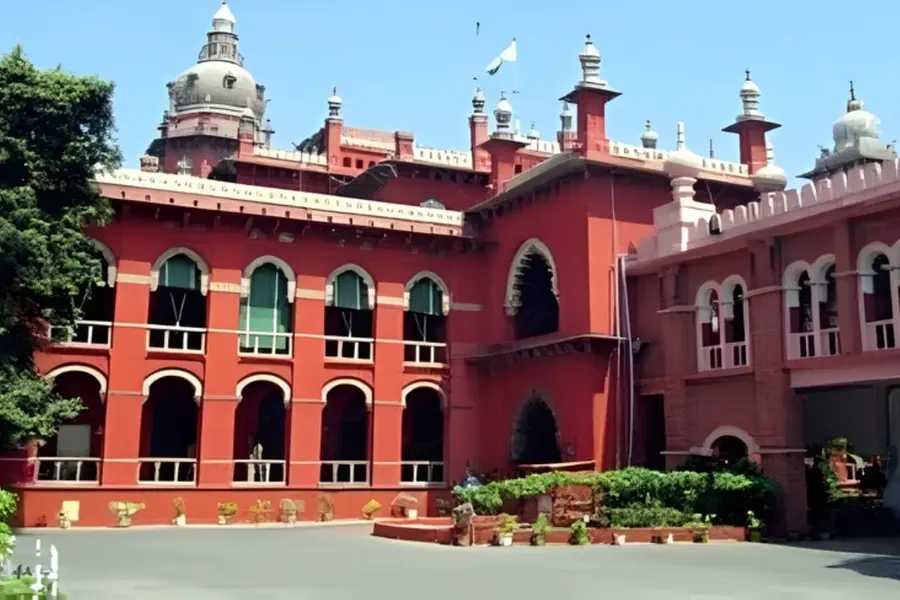
Chennai: The Madras High Court on Tuesday reserved its order on writ petitions challenging the eligibility criteria in a CCTV surveillance tender for the upcoming Tamil Nadu Assembly elections, a project estimated to be worth about ₹120 crore.
The case has drawn attention over concerns that the tender conditions for election surveillance cameras may restrict fair competition in the high-value public contract.
The petitions were filed by Innovatiview India Limited and I-Net Secure Labs Private Limited, which alleged that the tender floated by the office of the Election Commission of India through the state’s Chief Electoral Officer imposed stringent eligibility criteria that effectively excluded several potential bidders.
Court hears arguments, order expected soon
A division bench comprising Chief Justice Sushrut Arvind Dharmadhikari and Justice G Arul Murugan heard detailed arguments from all parties.
Considering the urgency of the matter, the bench said it would attempt to deliver its verdict at the earliest, as the deadline for submission and opening of technical bids was scheduled later in the day.
Large-scale CCTV deployment for polling and counting
The tender involves installing around 1.5 lakh CCTV cameras across nearly 75,000 polling stations and 3,744 cameras at counting centres for live webcasting and election monitoring during the Tamil Nadu Assembly polls.
The surveillance system is intended to strengthen transparency, security and real-time monitoring of polling stations during the election process.
Also Read| Assembly Election 2026: Alliance game intensifies as India gears up for high-stakes polls
Petitioners question eligibility norms
Appearing for I-Net Secure Labs, senior advocate Siddharth Mridul argued that the public procurement conditions in the CCTV tender violated established norms.
He said the requirement that bidders must have a minimum annual turnover of ₹100 crore in each of the last three financial years was disproportionate compared with the total project value.
Citing guidelines issued by the Central Vigilance Commission, he argued that turnover criteria in government tenders should typically be limited to 30–40 per cent of the project cost.
He also objected to clauses prohibiting joint ventures and restricting experience evaluation only to the prime bidder in a consortium, saying such provisions reduce competition among technology vendors.
Additional experience clause challenged
Senior counsel Satish Parasaran, representing Innovatiview India Limited, challenged another condition requiring bidders to demonstrate prior experience of live web streaming from at least one lakh polling station cameras, along with the installation of 2,500 CCTV cameras in counting centres.
While acknowledging the need for experience in large-scale election webcasting, he argued that the additional requirement linked to counting centres was arbitrary and created unnecessary barriers for otherwise qualified firms.
Also Read| ‘Let Comrade Vijayan win; Keralam will win too; this is my opinion’: Kamal Haasan
Election Commission defends tender rules
Opposing the petitions, counsel for the Election Commission, Niranjan Rajagopal, defended the tender conditions, saying they were designed based on the scale and operational requirements of the Tamil Nadu Assembly elections.
He submitted that higher eligibility thresholds were necessary to ensure efficient execution of a large surveillance and webcasting project, given the scale of polling stations involved across the state.
The court has now reserved its verdict on the challenge to the CCTV tender, with the ruling expected soon as the Tamil Nadu election preparations move forward.
IANS
Published: 17 Mar 2026, 04:00 pm IST
Disclaimer: Kindly avoid objectionable, derogatory, unlawful and lewd comments, while responding to reports. Such comments are punishable under cyber laws. Please keep away from personal attacks. The opinions expressed here are the personal opinions of readers and not that of Mathrubhumi.
