
MK Stalin has launched the DMK's biggest organisational overhaul after the party's defeat in the 2026 Tamil Nadu Assembly elections, forming a 10-member panel to recommend sweeping reforms.
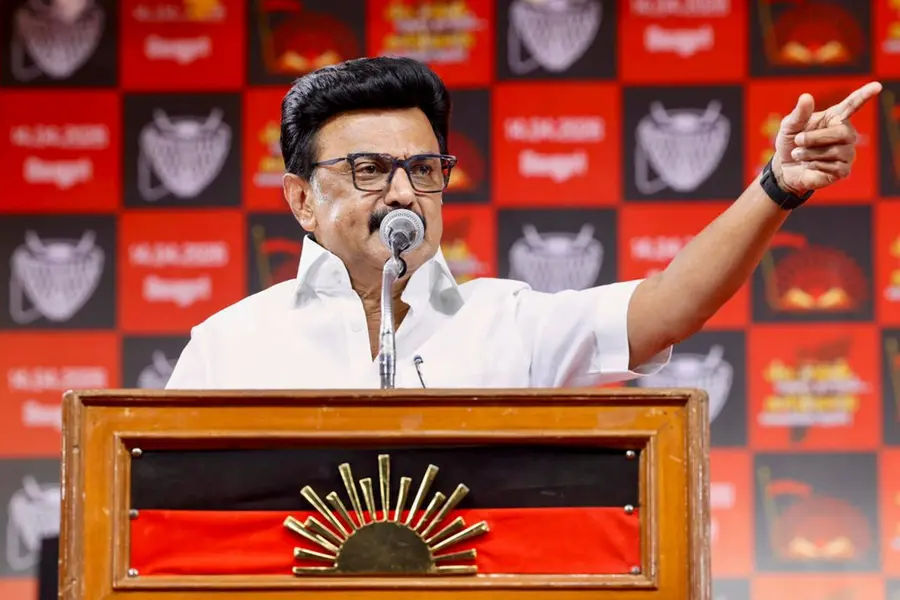
Chennia: After the DMK's worst electoral setback in decades, party president M.K. Stalin has launched a sweeping organisational overhaul by appointing a 10-member committee to recommend reforms aimed at rebuilding the party from the grassroots to the top leadership.
Dravida Munnetra Kazhagam (DMK) president M.K. Stalin has announced a major internal restructuring of the party following its crushing defeat in the 2026 Tamil Nadu Assembly elections.
Also Read

On Tuesday, Stalin constituted a 10-member party reorganisation advisory committee tasked with recommending wide-ranging structural reforms across every level of the organisation. The panel will examine everything from grassroots branch units to the party's top leadership as the DMK attempts to regain public confidence.
In a statement, Stalin said the party must address its shortcomings and rebuild itself to reconnect with voters.
"We must realise that reorganisation and reconstruction are absolutely essential for us to eliminate our past shortcomings and approach the public in a fresh format."
What prompted the overhaul?
The move comes nearly two months after actor-turned-politician C. Joseph Vijay's Tamilaga Vettri Kazhagam (TVK) stunned political observers by winning 108 seats in the 234-member Tamil Nadu Assembly.
The result ended nearly six decades of political dominance by the DMK and AIADMK, the two Dravidian parties that have alternated in power since 1967.
The DMK, which was seeking a second consecutive term, managed to win only 59 seats—its worst performance in decades. Vijay was sworn in as Chief Minister on May 10 with the support of allied parties.
The defeat prompted the party to launch one of its most extensive internal reviews in recent history.
AI and six lakh feedback responses shaped the review
Before announcing the reforms, the DMK deployed 38 field study teams across Tamil Nadu to collect feedback from party workers and local leaders.
The party also received nearly six lakh online responses from cadres and members of the public. According to Stalin, the responses were analysed using artificial intelligence to identify organisational weaknesses, voter concerns and areas requiring improvement.
The review reportedly pointed to declining grassroots engagement, organisational inefficiencies and the need for a more modern election strategy.
What will the new committee do?
The 10-member committee includes senior leaders Thangam Thennarasu, Geetha Jeevan, R. Sakkarapani, S.S. Sivasankar, Tamilarasi Ravikumar, M.M. Abdullah, I. Paranthamen, S. Murasoli, M.P. Ezhilan and S.K.P. Karuna.
It has been asked to submit its recommendations during the first week of August.
Among the reforms under consideration are:
- Reorganising party districts and grassroots units.
- Restructuring the DMK's various organisational wings.
- Creating a permanent election management system.
- Establishing a dedicated policy and research think tank.
Strengthening communication between party leaders and grassroots workers.
Expanding the number of district secretaries from 78 to more than 120 to decentralise decision-making.
The recommendations will be discussed with the party's senior leadership and district secretaries before implementation.
Why the reforms matter
The DMK's restructuring goes beyond recovering from a single electoral defeat. It reflects a significant shift in Tamil Nadu's political landscape, where the emergence of TVK has broken the long-standing dominance of the state's traditional Dravidian parties.
How successfully the DMK reforms its organisation, reconnects with grassroots workers and adapts to changing voter expectations could determine whether it can re-establish itself as the principal opposition and mount a strong challenge in future elections.
Published: 01 Jul 2026, 02:26 pm IST
Related Topics
Disclaimer: Kindly avoid objectionable, derogatory, unlawful and lewd comments, while responding to reports. Such comments are punishable under cyber laws. Please keep away from personal attacks. The opinions expressed here are the personal opinions of readers and not that of Mathrubhumi.