
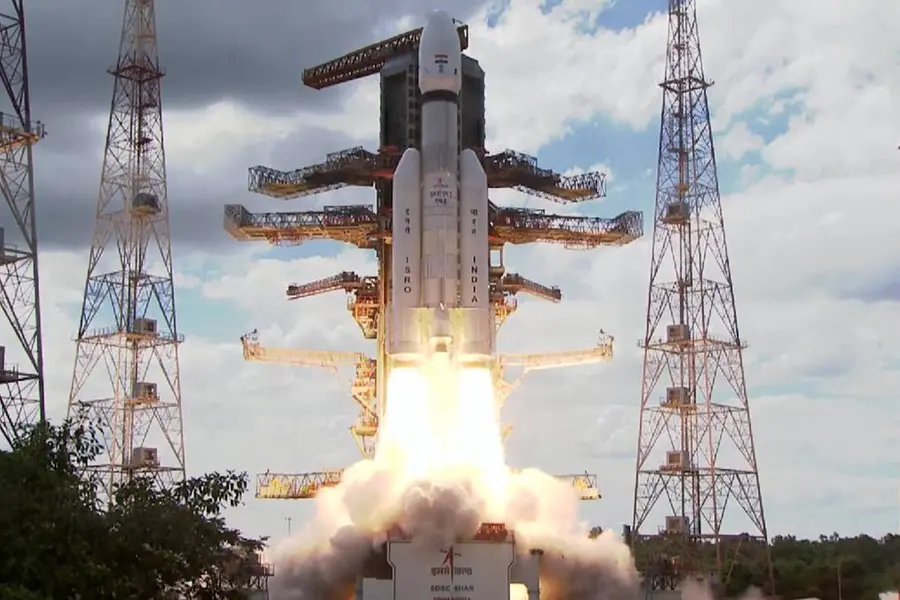
New Delhi: India's SpaDeX mission's launch vehicle has been integrated and moved to the First Launch Pad of the Satish Dhawan Space Centre, Sriharikota, for further integration of satellites and final launch preparations. The Indian Space Research Organisation (ISRO) announced the milestone on Saturday, marking a key step in the mission's journey.
The SpaDeX mission aims to develop and demonstrate critical in-space docking technology, which involves the ability to dock and undock spacecraft in space. According to ISRO, this cost-effective technology demonstrator will utilise two small spacecraft launched by the Polar Satellite Launch Vehicle (PSLV). SpaDeX will play a pivotal role in India’s space ambitions, including the country's lunar missions and the creation of the Bharatiya Antariksh Station (BAS).
ISRO highlighted that in-space docking technology is crucial for missions requiring multiple rocket launches to meet shared objectives. With this mission, India is on the path to becoming the fourth country globally to achieve this capability.
Following the successful PSLV-C59/Probas-3 mission on December 9, ISRO Chairman S. Somanath had mentioned that SpaDeX would follow in December with the launch of PSLV-C60. SpaDeX will see the simultaneous launch of two small spacecraft, SDX01 (the Chaser) and SDX02 (the Target), into a 470 km circular orbit with a 55° inclination. These spacecraft will demonstrate rendezvous, docking, and undocking technologies essential for future missions.
ISRO and ESA Forge Collaboration for Human Space Exploration
The Indian Space Research Organisation (ISRO) and the European Space Agency (ESA) have signed a cooperation agreement aimed at astronaut training, mission implementation, and research experiments. The agreement was signed by ISRO Chairman S. Somanath and ESA Director General Dr. Josef Aschbacher. This collaboration marks a new phase in human space exploration.
The agreement focuses on various areas, including astronaut training, support for experiment development and integration (utilising ESA’s International Space Station (ISS) facilities), human and biomedical research experiments, and joint educational initiatives. ISRO’s upcoming collaboration with ESA includes the Axiom-4 mission, which will involve both ISRO's Gaganyatri and an ESA astronaut. Together, they will implement experiments proposed by Indian Principal Investigators for the ISS.
S. Somanath emphasised ISRO’s roadmap for human spaceflight, pointing to the Bharatiya Antariksh Station (BAS) as a vital opportunity to foster interoperability between human spaceflight platforms. Dr. Aschbacher expressed his appreciation for ISRO's involvement and highlighted the agreement as a solid foundation for future cooperation. Both organisations stressed the importance of continuing collaborative efforts in human space exploration.
With ANI, PTI inputs
Published: 21 Dec 2024, 08:53 pm IST
Disclaimer: Kindly avoid objectionable, derogatory, unlawful and lewd comments, while responding to reports. Such comments are punishable under cyber laws. Please keep away from personal attacks. The opinions expressed here are the personal opinions of readers and not that of Mathrubhumi.
