
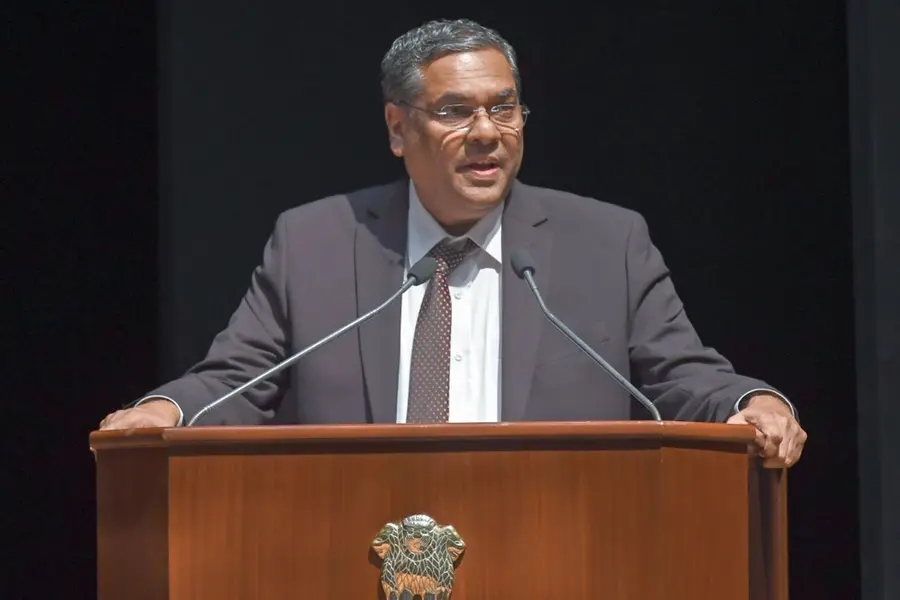
Justice Sanjiv Khanna, known for his role in several landmark Supreme Court judgments, including the ruling against the electoral bonds scheme and upholding the abrogation of Article 370, will be sworn in as the 51st Chief Justice of India on Monday. The oath of office will be administered by President Droupadi Murmu at the Rashtrapati Bhavan in a ceremony set to begin at 10 am.
Justice Khanna will succeed Justice DY Chandrachud, who retired on Sunday after serving as Chief Justice. His term as CJI will continue until May 13, 2025. The Centre confirmed Justice Khanna's appointment on October 24, following Justice Chandrachud's recommendation on October 16.
Here's what you should know about the new CJI
* Born on May 14, 1960, Justice Sanjiv Khanna studied law at the Campus Law Centre of Delhi University. His legal career began in 1983 when he enrolled as an advocate with the Bar Council of Delhi, practicing in district courts before moving to the Delhi High Court.
* Hailing from a distinguished legal family in Delhi, Justice Khanna is the son of former Delhi High Court judge Justice Dev Raj Khanna and the nephew of the renowned Supreme Court judge, Justice H R Khanna.
* Over the years, he served as the senior standing counsel for the Income Tax Department and held the position of standing counsel (Civil) for the National Capital Territory of Delhi in 2004. His contributions also extended to criminal law as an additional public prosecutor and amicus curiae at the Delhi High Court.
* Appointed as a Supreme Court judge in January 2019, Justice Khanna has been instrumental in significant rulings that have shaped the judicial landscape. Notably, he was part of the bench that upheld the use of electronic voting machines (EVMs), asserting their security and reliability. In April, a bench led by Justice Khanna dismissed suspicions regarding EVM tampering and rejected calls for a return to paper ballots.
* Justice Khanna also contributed to the decision declaring the electoral bonds scheme for political party funding unconstitutional. Additionally, he was part of the five-judge bench that upheld the 2019 abrogation of Article 370, which revoked the special status of Jammu and Kashmir.
* Justice Khanna's bench granted interim bail to former Delhi Chief Minister Arvind Kejriwal, allowing him to campaign during the Lok Sabha elections amid the excise policy scam cases.
* Justice H R Khanna is remembered for his dissenting opinion in the 1976 ADM Jabalpur case during the Emergency, a move that led to his resignation after being superseded for the position of Chief Justice of India. He was also pivotal in the 1973 Kesavananda Bharati case, which established the basic structure doctrine of the Constitution.
* Justice Khanna also served as the executive chairman of the National Legal Services Authority (NALSA), underscoring his commitment to accessible justice and legal aid.
Published: 10 Nov 2024, 03:38 pm IST
Disclaimer: Kindly avoid objectionable, derogatory, unlawful and lewd comments, while responding to reports. Such comments are punishable under cyber laws. Please keep away from personal attacks. The opinions expressed here are the personal opinions of readers and not that of Mathrubhumi.
