
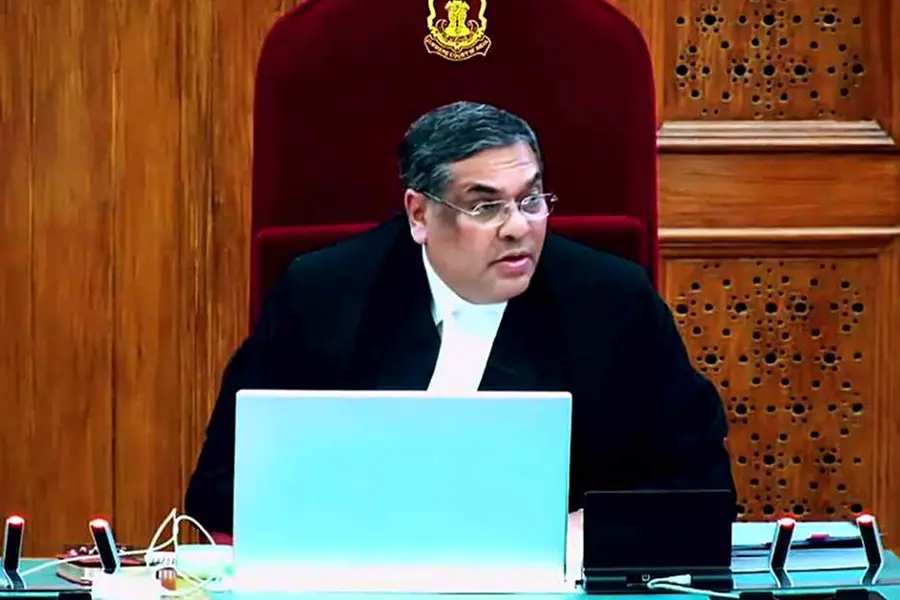
Justice Sanjiv Khanna was sworn in as the 51st Chief Justice of India on November 11, 2024, following the retirement of Justice DY Chandrachud. The oath was administered by President Droupadi Murmu at a ceremony held at Rashtrapati Bhavan. Justice Khanna, who will serve until May 13, 2025, has had a distinguished judicial career, known for his involvement in several landmark judgments that have shaped India’s legal and political landscape. Below are some of the significant rulings that define his career.
Upholding the integrity of Electronic Voting Machines (EVMs)
In 2024, Justice Khanna led a Division Bench that dismissed the plea for 100% VVPAT verification of votes cast on EVMs. The court ruled that the existing safeguards implemented by the Election Commission were sufficient to ensure free and fair elections, reaffirming the reliability and security of the EVM system.
Declaring the Electoral Bond Scheme unconstitutional
Justice Khanna was part of a five-judge bench that declared the Electoral Bond Scheme unconstitutional in 2024. In his concurring opinion, he emphasized that while donor privacy is essential, it should not override the public’s right to know about political donations. This ruling upheld the principle of transparency in political funding and ensured that voters could make informed choices.
Upheld the abrogation of Article 370
In a historic 2023 decision, Justice Khanna was part of the bench that upheld the government's move to abrogate Article 370, which granted special status to Jammu and Kashmir. The bench clarified that the provision was part of asymmetric federalism, not sovereignty, and its removal did not violate India’s federal structure, marking a significant shift in the region's political framework.
Affirming divorce under Article 142
In 2023, Justice Khanna authored a majority opinion in the Shilpa Sailesh vs. Varun Sreenivasan case, affirming the Supreme Court’s power to grant divorce directly under Article 142 of the Constitution. The ruling allowed for divorce on the grounds of an "irretrievable breakdown of marriage," aiming to deliver complete justice in marital disputes.
Right to Information (RTI) and judicial transparency
Justice Khanna’s 2019 ruling on RTI established that the Office of the Chief Justice of India could be subject to RTI requests. This landmark decision struck a balance between judicial transparency and the protection of judges' privacy, reinforcing the idea that judicial independence and transparency could coexist.
Granting interim bail to Arvind Kejriwal
In a significant 2023 ruling, Justice Khanna granted interim bail to Delhi Chief Minister Arvind Kejriwal during the Lok Sabha elections, despite his involvement in the excise policy scam case.
Published: 11 Nov 2024, 10:20 am IST
Related Topics
Disclaimer: Kindly avoid objectionable, derogatory, unlawful and lewd comments, while responding to reports. Such comments are punishable under cyber laws. Please keep away from personal attacks. The opinions expressed here are the personal opinions of readers and not that of Mathrubhumi.
