
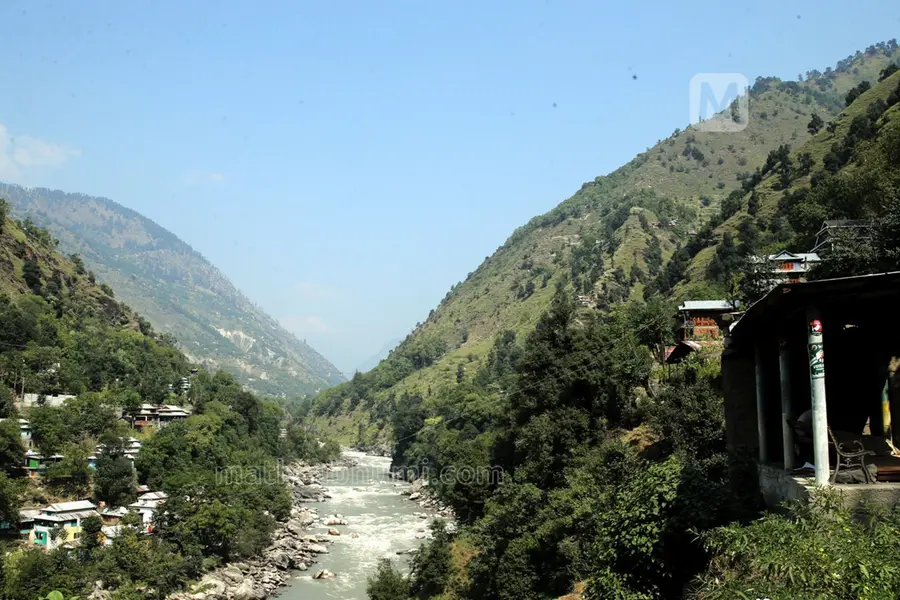
The river known as Krishna Ganga in India and Neelam in Pakistan serves as a natural boundary, with two mountain ranges dividing the population on either side. To the left lies Pakistan-Occupied Kashmir, while to the right is Seemari, the last village of North Kashmir. The Line of Control (LoC) runs through the middle, creating a stark division in both life and emotions.
Against a backdrop of war, bloodshed, gunfire, and shelling, these border villages are now preparing for elections. Campaign vehicles traverse the area, accompanied by heavy security and constant surveillance. These border villages will participate in the democratic process during the final phase of elections on Tuesday.
Also Read
It takes about five hours to reach remote villages like Karnah and Titholi, located 168 km from Srinagar. Access requires written permission from security forces, along with multiple checks at various security posts. The journey involves navigating steep mountain paths, with deep gorges on one side and towering peaks on the other. Kashmir willow trees, known for their use in cricket bat manufacturing, and towering deodar trees line the winding roads, reaching toward the sky.
Teetwal, located 82 km from the Kupwara district head, was once a thriving commercial centre before partition. Both countries maintain security in their respective territories, with India employing a three-ring security system. The Sharada Temple, which opened last year in Teetwal, features a Sikh Gurdwara and a prayer room displaying a portrait of Adi Shankaracharya. This small temple complex is monitored by the army.

A bridge over the Krishna Ganga-Neelam river connects Kashmir to Pakistan-occupied Kashmir. Until 2018, this bridge allowed limited access for families to meet from either side, sharing stories across the border. However, when tensions between India and Pakistan escalated, the bridge was closed. It remains closed today, surrounded by barbed wire.
Seemari panchayat, the last village in the Kupwara region, faces Pakistan-occupied Kashmir. Security forces are ever-present, and display boards from Pakistan loom above the villages on the other side of the river. Families separated during partition reside on both sides.
At 11 am, an election vehicle for Engineer Rashid’s Awami Ittehad Party, driven by candidate Raja Mansoor Ahmed Khan, passes through Teetwal, rallying for support. Upon reaching Seemari, the campaign vehicle of Naseer Ahmad Mir, the candidate from Sajjad Lone's People's Conference Party, was ready and waiting to begin the campaign.
For many years, late-night election campaigning was prohibited in these border constituencies due to security concerns. However, in the relatively peaceful atmosphere today, such practices have resumed. Political parties and leaders are now holding nighttime campaigns. The Chief Election Commissioner has noted the significance of this moment, likening it to the sound of a ballot over the bullet in Kashmir's border villages.
Third phase of elections
In the third phase, 40 constituencies from the border districts will participate in the elections including Kashmir’s border districts, Kupwara, Baramulla, Bandipora, Udhampur, Katwa, and Samba. The election includes 16 constituencies in the Kashmir region and 24 constituencies in the Jammu region.
Kashmir region (16 constituencies): Karnaha, Trehgam, Kupwara, Lolab, Handwara, Langate, Sopore, Rafiabad, Uri, Baramulla, Gulmarg, Wagura-Kreeri, Pattan, Sonawari, Gurez.
Jammu region (24 constituencies): Udhampur West, Udhampur East, Chenani, Ramnagar, Bani, Billawar, Basohli, Jasrota, Kathua, Hiranagar, Ramgarh, Samba, Vijaypur, Bishnah, Suchetgarh, RS Pura, Jammu South, Bahu, Jammu East, Nagrota, Jammu West, Jammu North, Marh, Akhnoor, Chumb.
Published: 30 Sept 2024, 12:20 pm IST
ABOUT THE AUTHOR
Disclaimer: Kindly avoid objectionable, derogatory, unlawful and lewd comments, while responding to reports. Such comments are punishable under cyber laws. Please keep away from personal attacks. The opinions expressed here are the personal opinions of readers and not that of Mathrubhumi.