
EAM S. Jaishankar explains why India allowed an Iranian ship to dock in Kochi amid regional tensions.
New Delhi: India’s External Affairs Minister S. Jaishankar on Saturday clarified India’s position after an Iranian naval vessel was sunk by the United States in international waters. Speaking at the Raisina Dialogue, Jaishankar said India took a humanitarian approach when it allowed another Iranian ship to dock at Kochi.
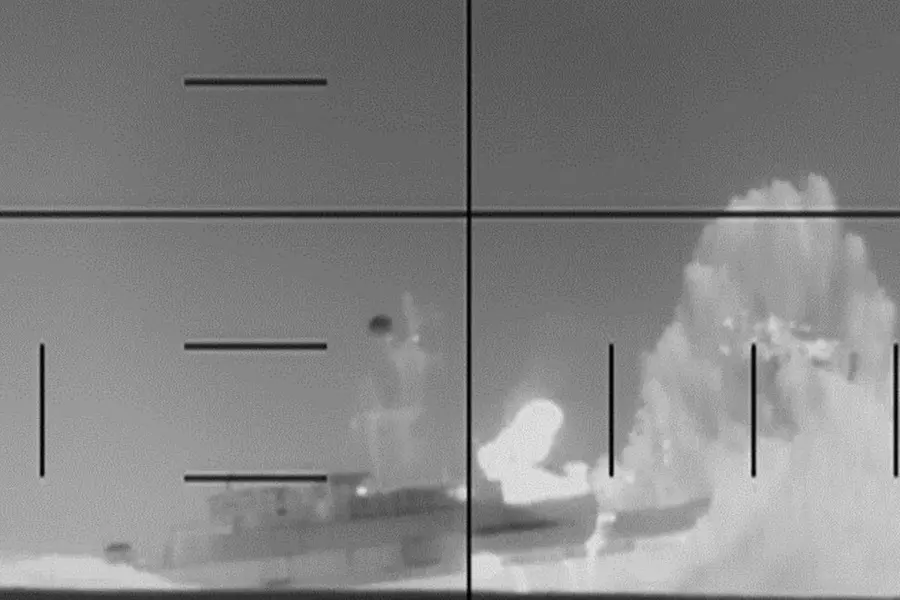
The development comes amid heightened tensions in the Indian Ocean after the Iranian vessel IRIS Dena was sunk south of Sri Lanka while returning from a naval event hosted by India.
What happened to the Iranian warship IRIS Dena?
The Iranian destroyer IRIS Dena was reportedly sunk by the United States while sailing in international waters south of Sri Lanka. The ship had earlier participated in the International Fleet Review and MILAN 2026, a multinational naval exercise hosted by the Indian Navy.
After the vessel sent a distress signal, search and rescue efforts were launched.
The distress alert was received by the Maritime Rescue Coordination Centre in Colombo, following which India deployed a long-range maritime patrol aircraft to assist the search operations led by Sri Lanka.
Jaishankar described the sinking of the vessel as “unfortunate.”
Why did India allow IRIS Lavan to dock in Kochi?
Another Iranian naval ship, IRIS Lavan, had requested permission to enter an Indian port after facing technical problems during the same deployment.
According to Jaishankar, Iran contacted India around February 28 requesting assistance.
India approved the docking request on March 1, allowing the vessel to enter Kochi port.
The ship’s 183 crew members, including several young cadets, have temporarily disembarked and are currently staying at naval facilities in Kochi.
Jaishankar said India’s decision was based on humanitarian considerations.
“We approached the situation from the point of view of humanity, other than whatever the legal issues were and I think we did the right thing,” he said.
Jaishankar added that discussions about the Indian Ocean should be based on ground realities rather than speculation on social media.
He noted that several foreign military presences already exist in the region, including bases in Djibouti, Hambantota, and Diego Garcia.
The minister stressed that the Indian Ocean is undergoing a major phase of recovery and rebuilding, particularly in trade routes, maritime connectivity, and economic cooperation.
According to him, India has invested significant diplomatic efforts over the past decade to strengthen partnerships across the region.
Why is the Indian Ocean important for India?
Jaishankar highlighted that the Indian Ocean is the only ocean named after a country, underscoring India’s central geographical and strategic position.
He said India’s growth would benefit other countries in the region.
“With our growth, other countries of the Indian Ocean stand to benefit. Those who work with us will get more benefits,” he said, emphasizing that India’s rise will depend on its own strength rather than the mistakes of other nations.
The External Affairs Minister also raised concerns about the safety of merchant ships operating in conflict-prone waters.
A large number of global cargo ships are staffed by Indian sailors, making India directly affected by maritime attacks.
Jaishankar noted that several Indian merchant mariners have lost their lives in recent incidents at sea.
He also highlighted that around 9–10 million Indians live in Gulf countries, making their safety a major factor in India’s foreign policy decisions.
Published: 07 Mar 2026, 01:28 pm IST
Related Topics
Disclaimer: Kindly avoid objectionable, derogatory, unlawful and lewd comments, while responding to reports. Such comments are punishable under cyber laws. Please keep away from personal attacks. The opinions expressed here are the personal opinions of readers and not that of Mathrubhumi.
