
Indian intelligence signals deep unrest in Jaish-e-Mohammad as cadres demand answers on chief Masood Azhar's fragile health.
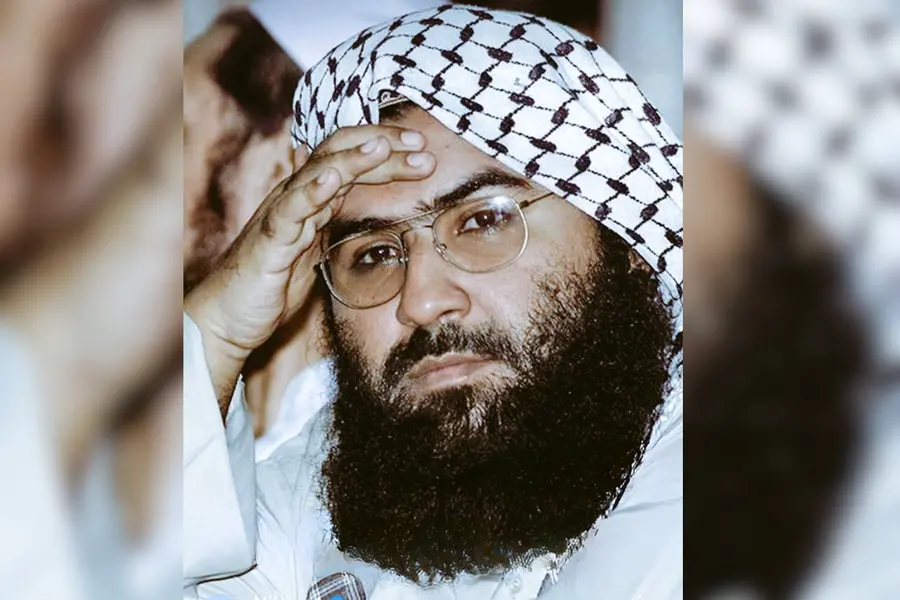
Intelligence inputs indicate growing unrest within the Jaish-e-Mohammad (JeM) amid swirling speculation over the health and whereabouts of its chief, Maulana Masood Azhar, with sections of the cadre openly questioning the outfit’s leadership.
According to officials tracking the Pakistan-based group, the rank-and-file have begun pressing senior commanders for clarity after a series of prayer gatherings were held for Azhar's recovery, triggering rumours that the 56‑year‑old is either on his deathbed or already dead.
While JeM's top leadership has dismissed such talk as "misinformation" and appealed for calm, Indian intelligence sources maintain that Azhar is alive but in poor health, both physically and psychologically.
Exposed! Pakistan's sinister false‑flag tactics in Balochistan
"His condition is fragile; he is being kept away from most cadres because his current state could shatter the image of a commanding, inspirational leader that the organisation has carefully built over decades," a senior intelligence official said, on condition of anonymity. Officials believe he is unlikely to resume full‑scale operational command of the group.
Azhar's apparent withdrawal from public view has been linked by agencies to the heavy personal and organisational losses suffered during India's 'Operation Sindoor' -- a series of precision strikes on terror infrastructure in Pakistan and Pakistan-occupied Kashmir last year, mounted in retaliation for the Pahalgam massacre in Jammu and Kashmir.
In the aftermath of the operation, Azhar is learnt to have privately acknowledged that at least 10 of his family members and several close aides were killed in the strikes on the Subhan Allah complex in Bahawalpur, his long‑time base.
Also Read: ISI's conspiracy to target India using solar spy cameras
Prior to the operation, despite recurring health concerns, Azhar routinely addressed large gatherings and was the central mobilising figure for JeM cadres, particularly in Bahawalpur and adjoining areas.
He was known for incendiary speeches and elaborate propaganda campaigns, including audio messages boasting that the group commanded “thousands” of suicide attackers ready for deployment against India.
"His popularity stemmed from that firebrand persona," an Intelligence Bureau officer said. "Once that aura fades, it directly impacts cadre morale."
In recent months, however, Azhar is believed to have confined himself to his heavily-guarded residence, limiting interactions to a small circle of trusted family members and senior lieutenants. Intelligence intercepts and human sources suggest that JeM functionaries convened multiple gatherings to offer prayers for his recovery, fuelling chatter across lower ranks that the chief’s condition is far worse than officially admitted.
The opaque handling of the situation has triggered visible unease within the outfit. Security agencies report that recruitment has slowed, with new entrants deprived of the customary introductory pep talk by Azhar that once served as a "rite of passage" for aspiring fighters.
In his place, lesser-known leaders have been pushed forward to interact with fresh recruits and local commanders, a move that has failed to fully convince sceptical cadres.
To buy time and maintain the illusion of normalcy, JeM media handlers have been amplifying old speeches and videos of Azhar on encrypted platforms and sympathetic social media channels, projecting them as “recent” appearances. But this strategy appears to be wearing thin.
Field reports suggest that discussions over the chief's true condition have now broken out into open debate within some units, challenging the leadership's narrative.
"Once such questions begin to surface publicly, it becomes harder for any clandestine group to hold the line," said one official familiar with counter‑terror assessments on Pakistan‑based outfits. "The mystique around the leader is central to cohesion, and that mystique is clearly under strain in JeM’s case."
Indian agencies assess that JeM's core command is now quietly exploring succession options, even as it continues to shield details of Azhar's condition from the wider organisation and supporters. Any formal announcement of a new operational head, they say, is likely to coincide with a more candid acknowledgment—direct or indirect—of the founder’s declining role.
"The full truth about Masood Azhar's health and authority cannot be masked indefinitely," an official noted. "Once a successor is formally projected, it will signal the most significant shift in JeM’s structure since its formation in 2000 and will redefine the outfit’s trajectory."
Published: 24 Apr 2026, 12:34 pm IST
Disclaimer: Kindly avoid objectionable, derogatory, unlawful and lewd comments, while responding to reports. Such comments are punishable under cyber laws. Please keep away from personal attacks. The opinions expressed here are the personal opinions of readers and not that of Mathrubhumi.
