
EOS-09 is advanced enough to capture high-resolution imagery of Earth’s surface in all weather conditions, both day and night
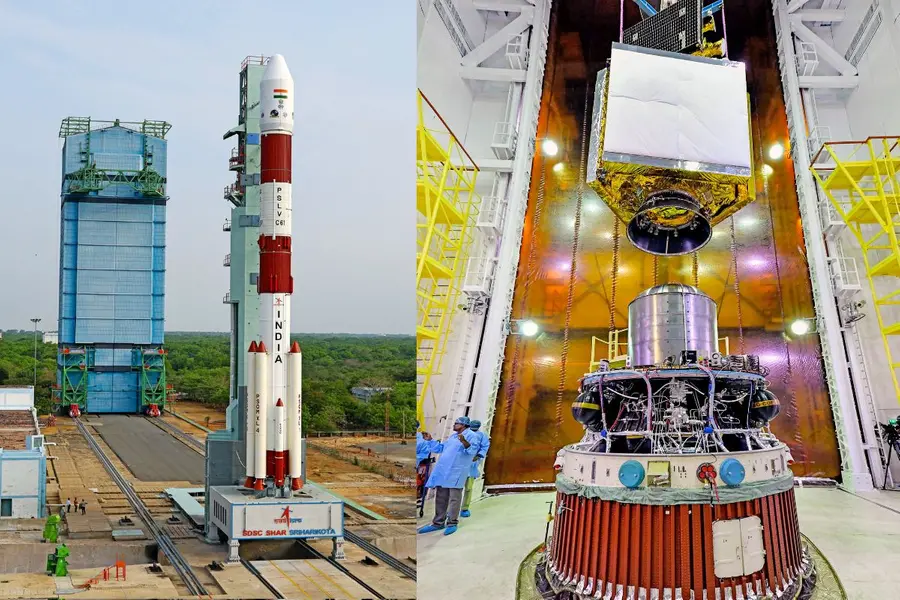
Sriharikota: The Indian Space Research Organisation (ISRO) has successfully launched its 101st satellite, EOS-09, on Sunday. The satellite was carried aboard the PSLV-C61 rocket from the Satish Dhawan Space Centre in Sriharikota.
“LIFTOFF! ISRO’s 101st launch mission takes flight aboard PSLV-C61,” the space agency announced on X (formerly Twitter), highlighting the importance of this milestone in India’s space journey.
The launch vehicle, PSLV-C61, deployed the Earth Observation Satellite EOS-09 into a Sun Synchronous Polar Orbit (SSPO). This marks the 63rd flight of the PSLV and the 27th flight in its PSLV-XL configuration, continuing the rocket’s impressive track record of reliable performance across a variety of payloads and orbital requirements.
EOS-09 is equipped with advanced C-band Synthetic Aperture Radar (SAR) technology, enabling it to capture high-resolution imagery of Earth’s surface in all weather conditions, both day and night. This makes it a valuable asset for a wide range of applications, including agriculture, forestry, disaster response, and national security.
In keeping with ISRO’s growing commitment to sustainable and responsible space operations, the satellite is equipped with deorbiting fuel to ensure safe disposal at the end of its mission. Following the deployment of EOS-09, the rocket’s PS4 stage will undergo an orbit-lowering procedure using Orbit Change Thrusters, followed by passivation to reduce its orbital lifetime, thereby minimising space debris.
Scientist W Selvamurthy praised ISRO and its collaborators, saying, “EOS-09 is part of a constellation of satellites that monitor Earth’s changes. From agriculture to military surveillance, this satellite is crucial for strategic and operational purposes.”
Although the mission was a technical success, it was not without disappointment for some space enthusiasts. Families and schoolchildren who had travelled long distances to witness the launch were unable to view it in person due to heightened security concerns arising from India-Pakistan tensions.
A child who had come from Ranipet expressed mixed emotions: “We travelled a long way, but we weren’t allowed to see the launch. Still, I’m proud to be here.” Another student, who hopes to one day lead ISRO, shared, “We came from a village 150 kilometres away. Though disappointed, I will definitely return for the next launch.”
Published: 18 May 2025, 06:31 am IST
Disclaimer: Kindly avoid objectionable, derogatory, unlawful and lewd comments, while responding to reports. Such comments are punishable under cyber laws. Please keep away from personal attacks. The opinions expressed here are the personal opinions of readers and not that of Mathrubhumi.
