
Justice Vipul Pancholi’s Supreme Court elevation triggers dissent from Justice BV Nagarathna and criticism over transparency, seniority and regional imbalance.
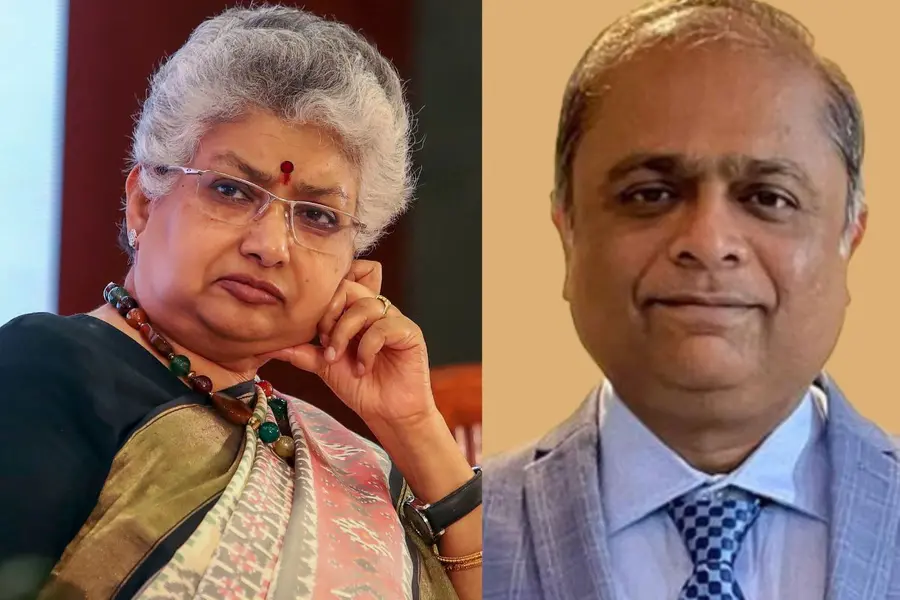
The Central government is reportedly fast-tracking the appointment process of Justices Alok Aradhe and Vipul Pancholi to the Supreme Court, despite opposition from a key member of the Collegium regarding the latter’s elevation.
Justice BV Nagarathna, currently part of the Supreme Court Collegium and set to become the Chief Justice of India in 2027, is understood to have expressed strong reservations against Justice Pancholi’s elevation. She is said to have described his appointment as potentially “counter-productive” to the administration of justice and harmful to the credibility of the Collegium system.
Justice Nagarathna reportedly highlighted in her dissent that Justice Pancholi currently ranks 57th in seniority among High Court judges and argued that several more experienced judges could be considered before him.
Despite her objections, the remaining four members of the Collegium — former chief justice of India DY Chandrachud and Justices Surya Kant, Vikram Nath and JK Maheshwari — supported the proposal, effectively overriding the dissent.
According to government sources cited by Bar and Bench, the appointment process is progressing swiftly. “The file containing the Collegium’s recommendation has already been forwarded to the Prime Minister’s Office and, following clearance, will be sent to Rashtrapati Bhawan for the President’s approval. The warrants of appointment are expected to be issued by the end of the week,” an official was quoted as saying by Bar and Bench.
If approved, Justice Pancholi would not only have a tenure of nearly eight years at the apex court, but is also in line to become India’s 60th Chief Justice in 2031. He would be the third sitting Supreme Court judge from the Gujarat High Court, following Justices MR Shah and JB Pardiwala.
Notably, the Collegium resolution dated August 25, which recommended the appointments of Justices Aradhe and Pancholi, did not disclose Justice Nagarathna’s dissent note. The lack of transparency in the decision has drawn criticism from legal advocacy groups.
In her dissent note, she reportedly warned that going forward with the appointment could undermine “whatever credibility the collegium system still holds.”
A key point of concern for Justice Nagarathna appears to be Justice Pancholi’s transfer from the Gujarat High Court to the Patna High Court in July 2023. The dissenting judge is understood to have remarked that this was “not a routine transfer, but a carefully considered move made after consultations with several senior judges, all of whom concurred with the decision”.
In addition to procedural objections, Justice Nagarathna is also said to have flagged regional imbalance in Supreme Court appointments, pointing out that Gujarat is already represented disproportionately when compared to other High Courts.
Sources indicated that Justice Nagarathna's reservations date back to May 2024, when the idea of Justice Pancholi’s elevation was initially discussed. At the time, Justice NV Anjaria was selected instead. However, when Justice Pancholi’s name resurfaced three months later, Nagarathna formally recorded her dissent.
Campaign for Judicial Accountability and Reforms (CJAR) takes strong exception
Meanwhile, the Campaign for Judicial Accountability and Reforms (CJAR) has publicly criticised the Collegium’s recent resolution, dated August 25, which recommended Justices Alok Aradhe and Vipul Pancholi for elevation.
“The CJAR notes with dismay the recent collegium statement of August 25 as uploaded on the Supreme Court website, which makes a mockery of the earlier resolutions with respect to standards of transparency in judicial appointments,” CJAR said in a statement.
The organisation also pointed to the lack of clarity behind the Collegium’s rationale in recommending Justice Pancholi, “As reported in the media, the collegium took a 4-1 split decision with respect to the elevation of Chief Justice of the Patna High Court, Justice Pancholi, as Judge of the Supreme Court."
Further criticising the move, CJAR said, “It is not clear what has swayed the Supreme Court collegium in recommending Justice Pancholi to the Supreme Court, since Justice Pancholi is not merely the third judge from Gujarat to be elevated to the Supreme Court (disproportionate to the size of the Gujarat High Court and leaving various other High Courts unrepresented), but he is also 57th in all India seniority list of High Court judges.”
The controversy has intensified ongoing concerns about the lack of transparency and regional equity in the Supreme Court appointment process.
(With PTI inputs)
Published: 27 Aug 2025, 11:21 am IST
Disclaimer: Kindly avoid objectionable, derogatory, unlawful and lewd comments, while responding to reports. Such comments are punishable under cyber laws. Please keep away from personal attacks. The opinions expressed here are the personal opinions of readers and not that of Mathrubhumi.
