
The aircraft is expected to feature stealth capabilities that can evade radar detection, along with the capacity to carry a heavy weapons payload. Once operational, the Indian Air Force will gain the ability to conduct long-range strategic strikes anywhere in the world.
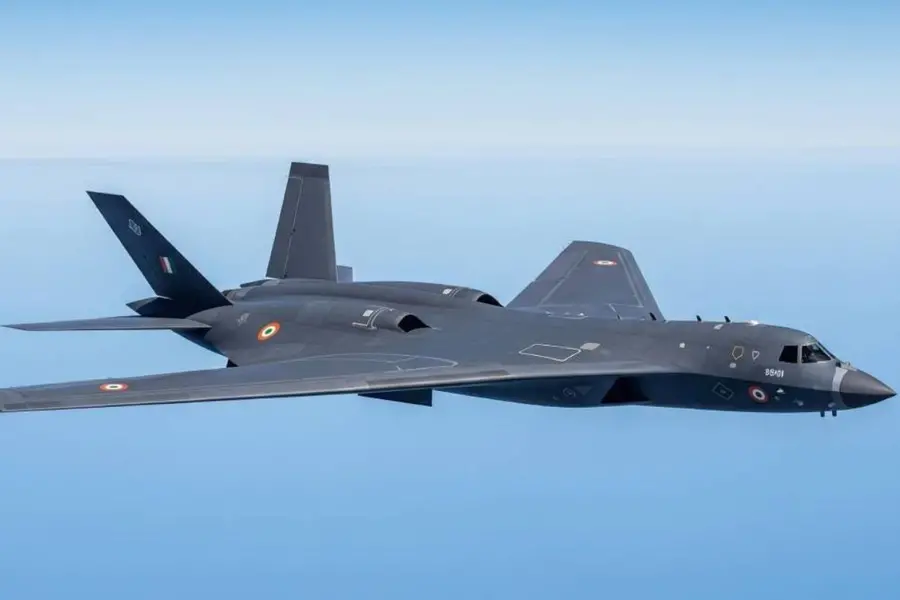
New Delhi: Only three countries in the world currently possess bomber aircraft capable of striking targets across continents: the United States, Russia and China. India is now preparing to join this elite group. According to media reports, India has initiated a project to develop a strategic bomber for its air force.
The proposed aircraft, known as the Ultra Long-Range Strike Aircraft (ULRA), remains largely under wraps, but initial reports suggest it will be capable of flying up to 12,000 kilometres to carry out precision strikes. India’s indigenous strategic bomber is reportedly being inspired by existing models such as Russia’s Tu-160 and America’s B-21.
The aircraft is expected to feature stealth capabilities that can evade radar detection, along with the capacity to carry a heavy weapons payload. Once operational, the Indian Air Force will gain the ability to conduct long-range strategic strikes anywhere in the world. In the event of a nuclear attack, the bomber would allow India to retaliate by delivering nuclear bombs deep into enemy territory. At present, India’s nuclear deterrent relies on intercontinental ballistic missiles (ICBMs), which have certain operational limitations that strategic bombers could overcome.
The ULRA is envisioned to carry around 12 tonnes (12,000 kilograms) of weaponry while covering a range of 12,000 kilometres. It is expected to be compatible with a wide range of indigenously developed armaments, including the BrahMos-NG supersonic cruise missile, Agni-1P short-range ballistic missiles, laser-guided bombs and anti-radiation missiles designed to destroy enemy radar systems. This multi-weapon compatibility is set to enhance India’s offensive capabilities in a huge manner.
Reports indicate that India is likely to receive technological support from Russia and France. Russia may share its expertise gained from the Tu-160 programme, especially in airframe design and propulsion systems. India is also expected to draw on French inputs for avionics and stealth technologies, aimed at maximising the aircraft’s survivability when operating in hostile airspace.
While the preliminary payload capacity under discussion is 12 tonnes, for comparison, Russia’s Tu-160 can carry up to 40 tonnes of weapons, and the US B-21 bomber has a payload capacity of 10 tonnes. The Tu-160 can fly a continuous range of 12,300 kilometres, while the B-21 has a range of approximately 10,000 kilometres.
A decision has yet to be made regarding the engine to be used for the ULRA. One of the primary options under consideration is Russia’s NK-32 engine, which powers the Tu-160 and can produce 245 kilonewtons of thrust. Another possible choice is the US-made General Electric GE-414 engine, which India is already familiar with. However, the GE-414 currently generates only 98 kilonewtons of thrust, and would need major upgrades to meet the power demands of a heavy bomber. Despite this, reports suggest the Russian engine remains the preferred option. The final aircraft is likely to feature either two or four engines, depending on the configuration, and engine selection will influence the final design phase.
Currently, India has a three-pronged nuclear delivery capability: land-based intercontinental ballistic missiles, submarine-launched ballistic missiles, and short-range missiles launched from fighter aircraft. The addition of a strategic bomber would enable India to conduct nuclear strikes via land, sea or air—across global distances—giving it true second-strike capability. Moreover, it would allow Indian aircraft to refuel at foreign airbases and continue operations, overcoming the limitations of current systems and enabling large-scale strikes in a single mission.
Reports suggest that design work is already underway on the bomber’s internal weapons bay. The aircraft’s preliminary design is expected to be unveiled in the coming years, with a target to begin prototype testing by 2035. Once completed, it will become India’s most ambitious aviation project after the fifth-generation Advanced Medium Combat Aircraft (AMCA). Initial plans indicate a requirement of 12 to 14 strategic bombers. Given the enormous costs involved, the project is likely to result in a substantial increase in India’s defence budget.
Published: 17 Jul 2025, 02:59 pm IST
Disclaimer: Kindly avoid objectionable, derogatory, unlawful and lewd comments, while responding to reports. Such comments are punishable under cyber laws. Please keep away from personal attacks. The opinions expressed here are the personal opinions of readers and not that of Mathrubhumi.
