
India sets SAF blending targets and prepares aviation sector for mandatory global carbon rules from 2027.
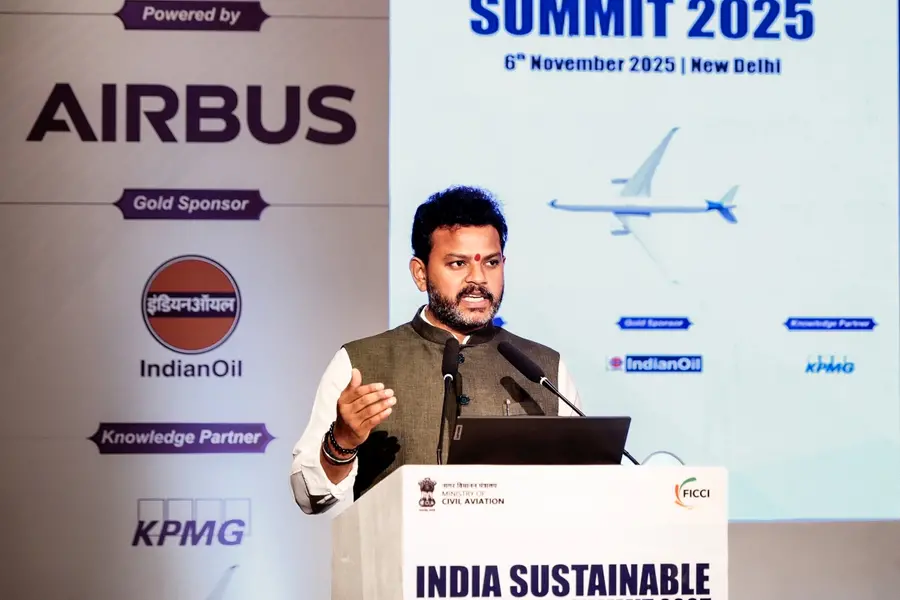
India has formally approved blending targets for Sustainable Aviation Fuel (SAF) and is preparing the aviation sector for mandatory global carbon-reduction rules that take effect in 2027, the Union Civil Aviation Ministry informed Parliament.
India is getting ready for major global carbon-reduction rules in aviation that will come into force in 2027. The International Civil Aviation Organization (ICAO) has adopted a system called the Carbon Offsetting and Reduction Scheme for International Aviation (CORSIA), which requires airlines to compensate for the growth of their carbon emissions. As a member of ICAO, India is required to follow these rules during the mandatory phase beginning in 2027.
CORSIA applies only to international flights, and it uses the year 2019 as the baseline. This means airlines will have to offset any emissions that go above their 2019 levels. The Union Civil Aviation Ministry shared these details in Parliament on Monday.
Answering a starred question in the Rajya Sabha, Union Civil Aviation Minister Ram Mohan Naidu said that India has already joined ICAO’s global programme called ACT-SAF (Assistance, Capacity-building and Training for Sustainable Aviation Fuels). Through this initiative, ICAO helps countries adopt Sustainable Aviation Fuel (SAF), build technical capabilities, and reduce emissions.
India is also an active contributor to ICAO’s Committee on Aviation Environmental Protection (CAEP). Indian experts participate in international working groups that create new environmental standards and guidelines for the global aviation sector.
The Ministry has advised all operational airports, as well as developers of new Greenfield airports, to work towards Carbon Neutrality and Net Zero. This includes steps such as switching to renewable energy, improving energy efficiency, and reducing waste.
So far, 93 airports in India have already transitioned to using 100% green energy, marking a major milestone in India’s push towards sustainable aviation.
During ICAO’s 41st Assembly, member countries adopted a long-term aspirational goal of achieving net-zero carbon emissions from international aviation by 2050. However, ICAO has clearly stated that each country can move toward this target based on its own circumstances, developmental needs and capabilities.
India has committed to becoming a net-zero economy by 2070, and the aviation sector’s greener transition will contribute to that national goal.
To encourage the use of cleaner fuels, the Indian government has approved formal blending targets for Sustainable Aviation Fuel:
- 1% by 2027
- 2% by 2028
- 5% by 2030
These targets will initially apply to international flights only.
Public sector oil marketing companies have already begun working on scaling up SAF production. However, challenges remain, especially the higher production cost of SAF and the limited availability of suitable feedstock.
Responding to another question in the Rajya Sabha, Minister of State for Civil Aviation Murlidhar Mohol said that India’s preparedness for CORSIA and its SAF roadmap are part of the country’s broader climate commitments under the Paris Agreement. India is working closely with airlines and fuel suppliers to ensure a smooth transition when CORSIA becomes mandatory in 2027.
The Ministry noted that the aviation sector is growing rapidly in India, and preparing early will help the industry manage future emissions more effectively.
Published: 01 Dec 2025, 11:32 pm IST
Related Topics
Disclaimer: Kindly avoid objectionable, derogatory, unlawful and lewd comments, while responding to reports. Such comments are punishable under cyber laws. Please keep away from personal attacks. The opinions expressed here are the personal opinions of readers and not that of Mathrubhumi.
